AllAccidentAgricultureArtAutomobileBankingBusinessCinemaCommerceCorporateCourtCricketCrimeCultureDefenceDeplomacyDevelopmentEconomicsEducationEntertainmentEnvironmentEssayFeatureFinanceGeneralHealthHistoryHuman rightsHuman storiesIndiaInformation TechnologyInternationalLawLiteratureMedicalNatural CalamitiesNatureObituaryPolicyPoliticsPsychologyReligionSchool Arts FestivalScienceSocial IssuesSpaceSportsTechnologyUncategorizedWorld
India’s net direct tax collections increased 13.21% to Rs 13.38 lakh crore so far in FY27
New Delhi, October 15,2026: India’s net direct tax collections rose 13.21 per cent year-on-year to Rs 13.38 lakh crore as of October 14 in the financial year 2026-27, according to data released by the Income Tax Department, with refunds rising at a faster pace and gross collections increasing 14.89 per cent during the period.Net direct tax collections stood at Rs 13,37,866.98 crore as of October 14, compared with Rs 11,81,786.98 crore in the corresponding period of the previous financial year, the data showed.Gross direct tax collections increased to Rs 16,03,066.12 crore from Rs 13,95,278.39 crore a year earlier. However, refunds rose 24.22 per cent to Rs 2,65,199.14 crore, compared with Rs 2,13,491.41 crore in the corresponding period last year.Among the major components, corporate tax collections stood at Rs 5,99,062.48 crore on a net basis, up from Rs 4,96,798.62 crore a year earlier.Net non-corporate tax collections, which include taxes paid by individuals, Hindu Undivided Families, firms and other entities, rose to Rs 6,91,965.71 crore from Rs 6,53,804.16 crore in the year-ago period.
Securities Transaction Tax (STT) collections increased to Rs 46,840.43 crore from Rs 30,901.81 crore, reflecting a rise in collections from transactions in securities.The data also showed that gross corporate tax collections rose to Rs 7,52,961.56 crore from Rs 6,43,721.45 crore, while gross non-corporate tax collections increased to Rs 8,03,245.26 crore from Rs 7,20,353.91 crore.Refunds against corporate tax rose to Rs 1,53,899.08 crore from Rs 1,46,922.83 crore. Non-corporate tax refunds increased more sharply to Rs 1,11,279.55 crore from Rs 66,549.75 crore.The figures indicate that the growth in gross collections was partly offset by the increase in refunds, leaving net direct tax collections 13.21 per cent higher than in the corresponding period of FY2025-26.The data covers collections up to October 14, 2026, and provides a snapshot of direct tax receipts during the first half of the current financial year.
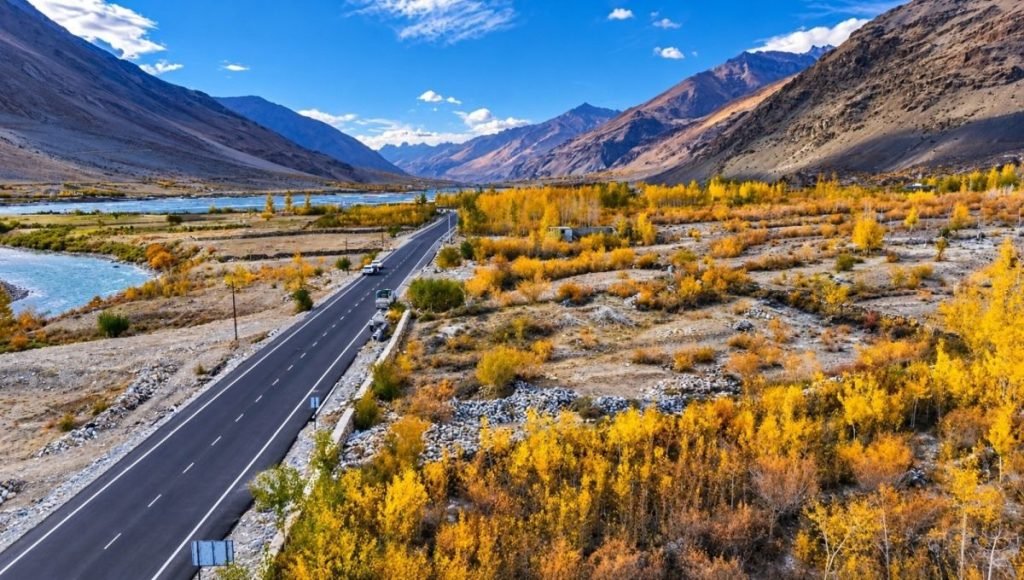
PM Modi inaugurates five major development projects over Rs.3,300 crore in Ladakh
New Delhi,Oct 15,2026: Prime Minister Narendra Modi on Thursday virtually inaugurated five development projects covering airport infrastructure and strategic road connectivity in Ladakh worth around Rs 3,350 crore.
The projects include a new passenger terminal at the Kushok Bakula Rimpochee Airport in Leh, built for Rs 640 crore. Spread over 23,800 square metres, the modern terminal is designed to handle 35 lakh passengers annually, officials said.
It incorporates geothermal energy to enhance energy efficiency and reduce its carbon footprint, reflecting the importance of sustainable infrastructure in Ladakh’s ecologically sensitive environment.
Blending modern passenger amenities with elements of Ladakh’s rich cultural heritage, the terminal will improve passenger convenience and strengthen air connectivity with the rest of the country, the officials said.
Modi also dedicated to the nation the 298-km-long Nimmu-Padum-Darcha Road, constructed by the Border Roads Organisation (BRO).
Connecting Nimmu in Leh with Darcha in Himachal Pradesh through the remote Zanskar Valley, the road provides an alternative connectivity corridor to Ladakh, supplementing the Srinagar-Leh and Manali-Leh highways, an official statement said.
Traversing the challenging Himalayan terrain, including the high-altitude Shinkun La Pass, the road marks a significant engineering achievement. Its strategic importance lies in enhancing operational mobility and strengthening logistical support for the armed forces, the statement said.
It will also benefit the residents of Zanskar by improving access to healthcare, education, markets and essential services, it said.
“Today, another chapter is being added to Ladakh’s progress and development. I am happy to be part of this occasion through technology. Several important development projects have been inaugurated in Ladakh today.
“These projects will make travel easier for many people, improve electricity facilities in some areas, increase water availability in others, and strengthen the preservation of our ancient heritage,” Modi said.
As part of the efforts to strengthen energy security and harness Ladakh’s renewable energy potential, the prime minister inaugurated the 9 MW Hanu small hydroelectric project and the 66 kV double-circuit Dah-Hanu-Khaltsi transmission line.
The projects will strengthen power evacuation infrastructure and improve the reliability of Ladakh’s electricity network, marking a step towards harnessing the region’s hydropower resources.
Recognising the importance of preserving Ladakh’s ancient archaeological heritage, the prime minister also inaugurated India’s first Petroglyph Conservation Park at Sindhu Ghat in Leh.
Ladakh is home to hundreds of prehistoric rock art sites featuring carvings of wildlife, human figures and symbolic representations that offer valuable insights into thousands of years of human history.
The prime minister also inaugurated 40 water bodies developed across 40 villages under Project Him Sarovar, an initiative aimed at addressing Ladakh’s unique geographical and climatic challenges through water conservation, in line with the objectives of Mission Amrit Sarovar.
Agriculture in Ladakh faces a seasonal imbalance between water availability and demand. Farmers often experience water scarcity during the crucial sowing season, even as snowmelt and glacial runoff provide substantial water resources during other periods.
Project Him Sarovar seeks to address this challenge by conserving water when it is available and ensuring its availability when required, thereby supporting irrigation, sustaining agricultural livelihoods and strengthening long-term water security in the region, the statement said.
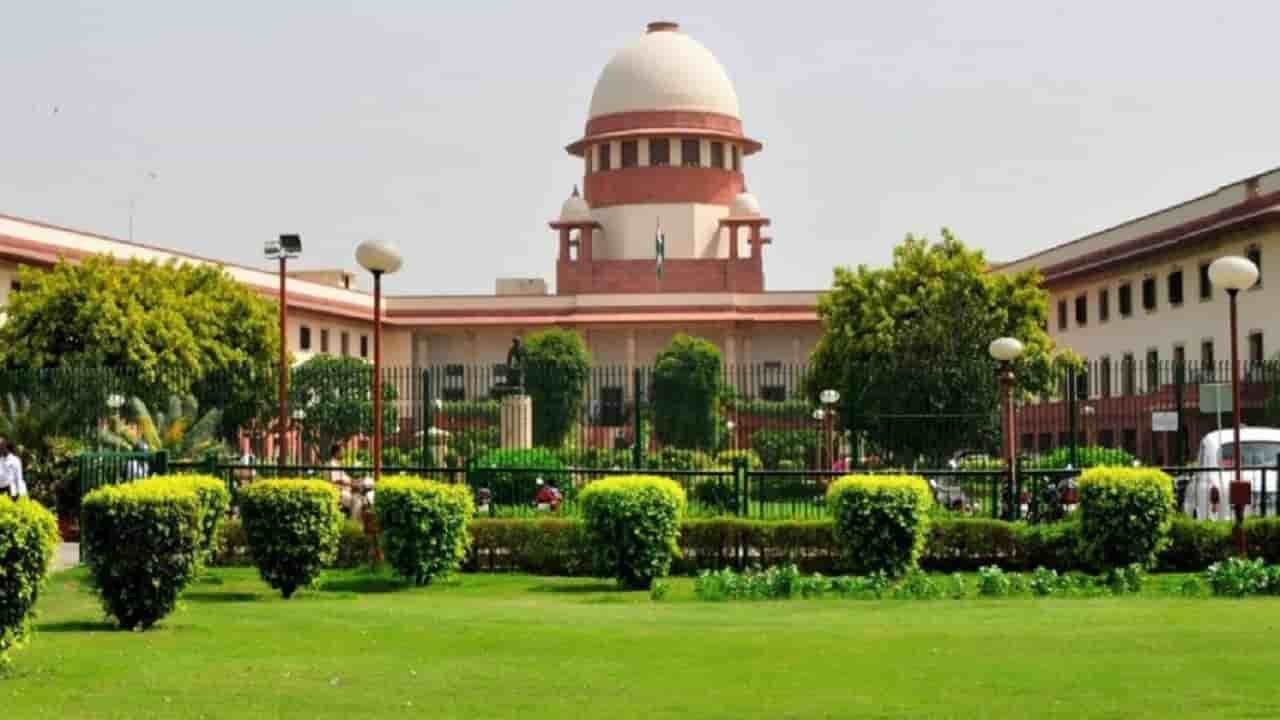
SC issues notice to ECI on SIR
New Delhi,Oct 15,2026: The Supreme Court on Thursday issued notice to the Election Commission of India (ECI) and others on a petition filed by Congress leader Rahul Gandhi and other Opposition leaders alleging large-scale voter deletions and irregularities in the poll panel’s Special Intensive Revision (SIR) of electoral rolls.
A bench comprising CJI Surya Kant and Justice Joymalya Bagchi sought responses from the ECI.
Delhi has witnessed several protests demanding the resignation of CEC Gyanesh Kumar over alleged irregularities in the electoral roll revision.
The petition, filed on October 12 by Gandhi and other INDIA bloc leaders, challenges the ECI’s decisions relating to the SIR of electoral rolls. The SC also issued notices to the Centre and others on various pleas related to the ECI filed by leaders including Asaduddin Owaisi.
The petitioners include Congress president Mallikarjun Kharge, Samajwadi Party chief Akhilesh Yadav, RJD leader Tejashwi Prasad Yadav, NCP (SP) leader Supriya Sule and Shiv Sena (UBT) leader Sanjay Raut, among others.
The petition, registered as W.P.(C) No. 001351/2026, was filed on October 12 and registered by the Supreme Court Registry on October 13 after initial procedural defects were addressed.
It seeks a judicial examination of whether the decisions were taken in accordance with Article 324 of the Constitution, the 2023 law governing the Election Commission and the Supreme Court’s ruling in T.N. Seshan vs Union of India.
Among the reliefs sought, the petition asks the court to ensure that no elector is deleted without notice and a reasonable opportunity of hearing. It also seeks the publication of booth-wise lists of deleted electors, along with the reasons for deletion and demographic details.

Ukraine says SpaceX limits Starlink operations, disrupting military
KYIV, Oct 14,2026: SpaceX has introduced a limit on some Starlink services in Ukraine, disrupting combat drone missions for which the technology is crucial, officials said on Wednesday.
The satellite internet terminals from Elon Musk’s company are vital for guiding Ukraine’s longer-range drone strikes in occupied southern and eastern Ukraine, which have wreaked havoc on Russian logistics.
“Our defence forces did not receive a warning about this limitation, and this led to the disruption of several missions,” presidential adviser Serhiy Beskrestnov wrote on Telegram.
Beskrestnov said SpaceX had stopped the operation of its military-grade version above 100 miles per hour (160 km/h).
Ukraine’s 7th Rapid Reaction Corps, deployed in the southeast, added that units had been forced to cancel some missions.
“According to our observations, during flights, the connection could drop for 10–20 seconds at speeds of just 110–120 km/h. The drones kept moving, but these interruptions made them harder to control,” it said in a statement to Reuters.
A source in Ukraine’s defence ministry added that the limitations significantly complicate logistics and some drone operations.
SpaceX did not immediately respond to a request for comment outside regular US business hours.
KYIV UNDER PRESSURE FROM WASHINGTON
Although it was not immediately clear why the Starlink service was throttled, the move comes as Washington pressures Kyiv to halt strikes on Russian oil refineries.
Starlink does not work inside Russia and the Ukrainian drones hitting Russia’s oil industry use other means of communication.
Ukraine has already said that it did not receive the usual advance warning from its allies about some recent missile strikes on the capital.
Since being turned on over Ukraine in the early days of Russia’s invasion in 2022, Starlink has been the lifeblood of Ukrainian battlefield communications, with units using its satellite internet to talk to each other.
Over time, its resistance to electronic signal jamming also made it a crucial tool for flying long-range attack drones as well as large hexacopters which drop supplies to Ukraine’s frontline.
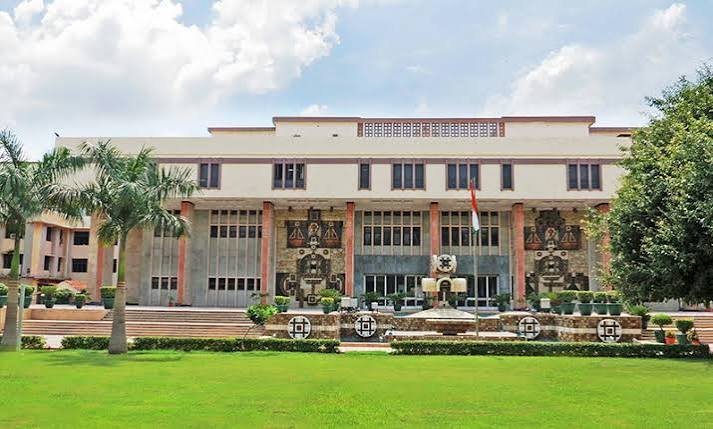
Delhi HC seeks Centre, FSSAI’s response on sale of non-dairy products as Paneer
New Delhi, October 14,2026: The Delhi High Court on Wednesday sought responses from the Centre, the Food Safety and Standards Authority of India (FSSAI) and the Delhi government on a public interest litigation alleging that non-dairy products are being sold and served as paneer without clearly informing consumers about their actual composition.A bench of Acting Chief Justice Nitin Wasudeo Sambre and Justice Sanjay Sharma issued notice on the plea seeking strict enforcement of food safety laws to prevent dairy analogue products from being passed off as genuine paneer in the national capital.Appearing for the petitioners, counsel told the court that customers ordering paneer dishes at hotels and restaurants naturally expect to be served a milk-based product. However, they have no effective way of knowing whether the dish contains genuine paneer or a substitute made from non-dairy ingredients, the counsel argued.
“It can be a replicate. It looks and tastes like paneer. There is no disclosure or way of knowing or discovering,” the counsel submitted.When the bench asked which statutory rights had been violated, the petitioners’ counsel referred to the Food Safety and Standards Regulations, 2011, which prescribe standards for food products and their ingredients.The counsel argued that consumers should be clearly informed when a product being sold or served as paneer is made from ingredients other than milk. The plea also raises concerns over the difference in nutritional composition between genuine paneer and certain non-dairy substitutes.The petitioners sought interim directions for sampling and inspections during the ongoing Navratri and Dussehra festive period, when the consumption of food products is a particular concern.The public interest litigation seeks directions for effective implementation of the Food Safety and Standards Act, 2006, and the rules and regulations framed under it in Delhi. It calls for stronger inspections, testing and enforcement to prevent consumers from being misled about the nature of products sold or served as paneer. The petitioners have also raised concerns over the use of dairy analogues in restaurants, hotels, eateries and other food-service establishments without adequate disclosure of their ingredients.The plea does not seek a blanket ban on all dairy analogue products but seeks action against their alleged misrepresentation as conventional milk-based paneer.
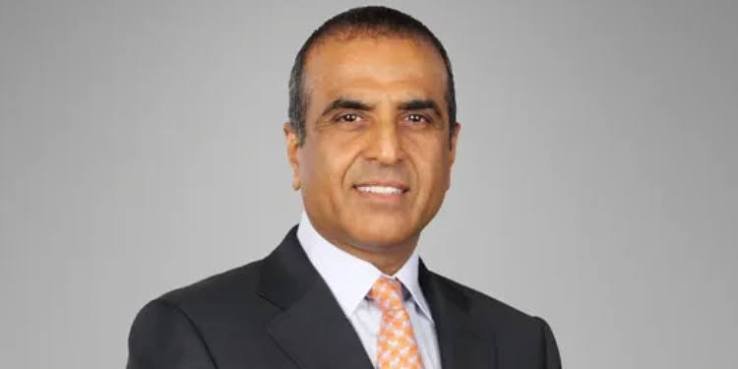
Sunil Mittal says Bharti ahead of Starlink in approval queue
New Delhi , October 14,2026: Bharti Enterprises Founder and Chairman Sunil Bharti Mittal has said his group is ahead of Elon Musk’s Starlink in the queue for regulatory approvals in India, asserting that Bharti has been waiting for clearance for years and is ready to roll out its satellite connectivity services.Speaking at the Bloomberg New Economy Forum, Mittal was asked about Musk’s recent remarks targeting India’s telecom billionaires in the context of Starlink’s plans to enter the Indian market.Responding to the question, Mittal said Bharti had applied for the necessary approvals five years ago and had its terrestrial network ready for the past three years. He added that the company’s satellites had been positioned over India for five years.
“We are all awaiting our approvals,” Mittal said, adding that Bharti was “significantly ahead of the queue” compared with Starlink.Mittal said India was at an advanced stage of preparations for satellite connectivity, with final security clearances being awaited. Once the approvals are granted, the company would be able to extend connectivity across the country, including areas that remain difficult to reach through conventional networks.He also highlighted Bharti’s experience in Africa, where satellite services have already been launched in partnership with a global provider. Emphasising the importance of digital infrastructure for economic growth, Mittal said taxes on digital goods and telecom services should be kept as low as possible to ensure that digital technology can serve as a multiplier for the economy.Turning to global trade and supply chains, Mittal said the international community had allowed China to establish a dominant position across several industries, including active pharmaceutical ingredients, automobile components and electronics.”Everybody is very happy that China produces high quality at low cost,” he said, pointing out that rising geopolitical tensions were now putting these supply chains and long-standing economic interdependence under pressure. Mittal said reducing dependence on China would be a difficult process for countries whose industries rely heavily on Chinese raw materials and components.Illustrating the challenge, he said a country with an annual trade deficit of USD 100 billion with China would find it difficult to reduce that figure to USD 50 billion because of its reliance on Chinese supplies across multiple sectors.He stressed that diversifying supply chains was necessary, but cautioned that the transition would take considerable time.”It’ll take a few decades,” Mittal said, adding that the world was increasingly recognising that while countries would remain economically interdependent, excessive dependence on a single country was not sustainable.The remarks come amid wider global efforts to diversify supply chains, strengthen economic resilience and reduce strategic vulnerabilities while maintaining international trade links.
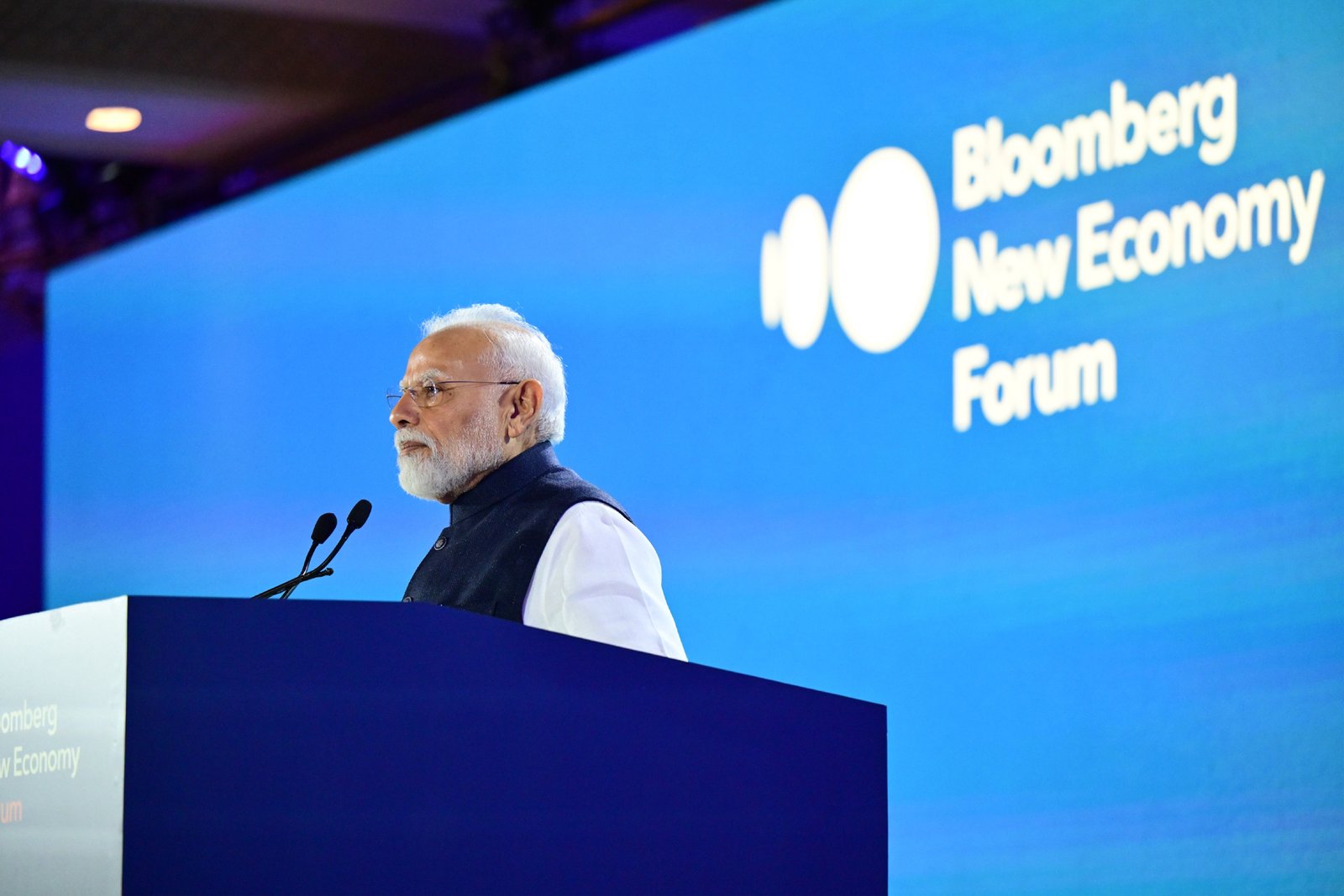
Modi’s address at the Bloomberg New Economy Forum in New Delhi
New Delhi,Oct 13,2026:
Friends,
This year’s Bloomberg Economic Forum is focused on the new powers emerging around the world. Every era has had its own sources of power and its own definition of power. But in the 21st century, especially in this third decade, a major transformation is taking place. Today, Technology is Power, Data is Power, Knowledge is Power, Innovation is Power.
But friends,
The real question is not who possesses power. Rather, the question is how that power is being used. Will technology advance only a few people? Or will it create new opportunities for millions? Will knowledge remain the strength of only a select few? Or will it enhance everyone’s capabilities? It is from here that a new idea emerges. And that idea is: Power to Empower. Power to Empower. Beyond Power to Control lies Power to Enable. Beyond Power to Compete lies Power to Collaborate. Beyond Power to Succeed lies Power to Help Others Succeed. And therefore, the vision with which I have come here today is: Power to Empower.
Friends,
This idea is not new to India. In our tradition, it is said: “Vidya Vivadaya Dhanam Madaya, Shaktih Paresham Paripidanaya; Khalasya Sadhoh Viparitam Etat, Jnanaya Danaya Cha Rakshanaya.” Its essence is that whoever possesses knowledge, wealth, or power, what matters is how they use it. In other words, the true value of power lies in its purpose. And it is very important to understand this philosophy in today’s world.
Friends,
This human spirit of Power to Empower is not merely a lesson meant to be preached to others. It is something that our traditions have taught us over thousands of years. And in India, we have demonstrated this by incorporating it into our governance and our work culture. Therefore, I will continue my remarks through examples from India itself.
Friends,
As all of you know, India is the Mother of Democracy. India has more than one hundred languages, nearly eighty thousand registered newspapers and publications, and more than one thousand satellite television channels. And not only that, in this age of social media, India has more than five hundred million YouTube users and more than five hundred million Instagram users. In our country, people openly debate different issues, and citizens discuss diverse viewpoints. In the present era, one factor that has played a major role in enabling this is digital power.
Friends,
Until about twelve or thirteen years ago, there was a time in India when access to mobile phones and the internet itself was a form of power. Whoever had access also had information, knowledge, and opportunities. After 2014, when a new government came to power in India and we were given the opportunity to serve, India placed great emphasis on making mobile data affordable. As a result, today a student in a small town can access digital learning. A small shopkeeper in a village can reach new customers. A young person can enroll in online courses. In other words, connectivity in India has not merely connected people; it has connected opportunities as well. This, indeed, is Power to Empower.
Friends,
To those guests who have come from abroad, I would encourage you to experience India’s digital payments ecosystem. In our country, a street vendor and a large car showroom may operate at completely different scales, but both use the same digital payments ecosystem. This is the strength of inclusive technology.
Friends,
Whatever capabilities India possesses, we do not believe in keeping them confined within our own borders. We continuously share them with the Global South and with our partner countries. We are sharing our experience in Digital Public Infrastructure with other nations so that they can develop digital systems according to their own needs. During the COVID period, we also developed the CoWIN platform, which was open source. In other words, our constant effort has been to ensure that India’s capabilities open new doors of possibility for other countries as well. In other words, our strength should empower humanity.
Friends,
The power of innovation works in the same way. Transforming an idea into a product, and turning a problem into a solution, is in itself a tremendous capability. But when such opportunities reach a larger number of people in society, the balance of power becomes more equitable and its impact multiplies many times over. India’s startup journey is an example of this transformation. Before 2014, India had only a few hundred startups. Today, the country has more than 250,000 startups. Nearly half of these startups come from small cities and towns. More than forty-five percent of startups have at least one woman Director or Partner. In other words, opportunities for innovation are reaching more people, new talent is emerging, and new solutions are being created.
Friends,
This focus on the purpose of power is equally important in governance. The government possesses authority, but its purpose should not be to make citizens dependent on the system. Rather, its objective should be to ensure that citizens become capable and empowered. India is moving along this very path. Following this path, India has lifted 250 million people out of poverty over the past decade, a number greater than the population of many countries in the world.
Friends,
You may also have heard about the JAM Trinity and Direct Benefit Transfer. By using technology, we have created a system through which government assistance reaches beneficiaries directly in their bank accounts. This has reduced corruption, increased convenience for citizens, and established a direct pathway between the government and the people.
Friends,
This same philosophy of Power to Empower is visible in India’s global engagement. During the COVID pandemic, vaccine manufacturing capacity became extremely important. The question at that time was whether the benefits of this capability would remain limited to only a few countries, or whether vaccines would also reach those nations and people who lacked such facilities and capabilities. India chose the path of empowering humanity. We supplied vaccines to more than one hundred countries. Our manufacturing capability became a source of assistance for other nations as well. Let me give you another interesting example. A few months ago, India hosted the AI Impact Summit, and Mr. Bloomberg has just spoken very highly of that summit. There, we discussed not only the use of AI for humanity, but also how animals could benefit from AI. Nandan, who is seated here, can later share much more information about how this was done. In other words, the more capable and stronger India becomes, the more beneficial it will be for humanity and for the world.
Friends,
Power is not just the ability to move ahead. It is also the ability to empower others to move ahead. India believes that competition is important, but compassion is equally important. Innovation is essential, but its benefits must also be widely shared. National strength is necessary, but we must also contribute solutions to global challenges. Whether it is climate change, water governance, public health, or the responsible use of emerging technologies, the world needs capabilities that provide solutions and create new opportunities.
Friends,
Let me give you another example. Under the Paris Agreement, India made a major commitment to address climate change. In 2015, we set ourselves the target of achieving 40 percent of our installed electricity capacity from non-fossil fuel sources by 2030. India achieved this milestone in November 2021 itself, nine years ahead of schedule. India became the first G20 nation to do so. This was not merely about fulfilling a commitment; it was also a reflection of India’s evolving energy journey.
Friends,
In 2014, India’s renewable energy capacity stood at about 75 gigawatts. Today, it has reached approximately 300 gigawatts. In other words, we have added nearly four times more capacity.
Friends,
This energy transition underway in India is also creating new opportunities. Today, we have schemes such as PM Surya Ghar and PM-KUSUM. One scheme is connecting households to solar power, while the other is enabling farmers to generate solar energy and reduce their input costs through its use. Through these two schemes, India has achieved more than 30 gigawatts of solar capacity. It is estimated that they will reduce carbon emissions by more than 30 million tonnes annually. In other words, solar power is not only becoming a means of protecting nature, but also a means of empowering people.
Friends,
In this global race for power, India is moving forward with a different mindset. And this decade itself bears witness to that.
Friends,
This decade of the twenty-first century has brought unprecedented global challenges. If we look back at the last six years, we witnessed a global pandemic. Then wars broke out in different regions. As if that were not enough, disruptions emerged in trade, critical minerals, and energy supplies. The world begins to find a way out of one crisis when another crisis appears. Things that once connected the world are now being turned into weapons. Supply chains, energy, minerals, payment systems, and technology are increasingly becoming instruments of pressure and dominance. The routes created by globalization over past decades have, in many cases, become chokepoints. Amid all this, Artificial Intelligence is transforming the way every sector functions. At the same time, many countries are facing rapidly growing challenges related to ageing populations. In such circumstances, the world is confronted with a fundamental question: trust. Trust that supplies will continue during times of need. Trust that promises made will also be fulfilled. Trust that a partner country will stand by you during moments of crisis. And it is here that India stands before you with a different outlook and a different way of thinking.
Friends,
India’s progress in the twenty-first century is a story of advancing together with everyone and carrying everyone along. When the world needs affordable medicines, one out of every five generic medicines comes from India. When solutions for digital identity and payments are required, the world looks to models developed in India. When the world needs talent, it places its trust in India’s skilled youth. Today, India is home to more than 2,000 Global Capability Centres that are providing services to companies across the world.
Friends,
It is clear that whenever the world needs a steady pillar, India extends its hand in support, recognizing its responsibility. We do not grow at anyone’s cost. We grow with the world, and for the world.
And friends,
India does not seek credit for what it does. The world proudly says that India gave Zero to the world. This Zero benefited all of humanity. Yet India never asked for royalties in return. Even today, India works with the same spirit. The ideas we offer for addressing contemporary challenges also reflect this outlook. Throughout history, many global organizations have been created, each serving its own interests. But consider the kind of global platforms India has created. Consider the institutions we have established and compare them with what has emerged elsewhere in the world. What have we contributed? The International Solar Alliance. What have we contributed? The Coalition for Disaster Resilient Infrastructure. What have we contributed? The Big Cat Alliance, the Global Biofuel Alliance, the India-Middle East-Europe Economic Corridor (IMEC), and Mission LiFE, Lifestyle for Environment. These are initiatives that benefit everyone and contribute to the well-being of all life.
Friends,
The ideas that India has brought forward are before you. The vision of One Sun, One World, One Grid. The belief in One Earth, One Family, One Future. The vision of One Earth, One Health. In other words, India places emphasis on connecting and coming together. And even in this, power is used to empower others.
Friends,
In a world filled with uncertainty, India offers the assurance of reliability and stability. In the April-June quarter of this year, India’s growth rate stood at 7.8 percent. And this growth rests on a strong foundation. Twelve to thirteen years ago, India’s current account deficit was more than four percent of GDP. Last year, it declined to approximately half a percent, standing at 0.61 percent. Today, our foreign exchange reserves exceed 700 billion dollars. Our banking system is in its strongest position in many decades.
Friends,
It is because of this strength that India’s sovereign ratings are being upgraded. Today, India’s confidence is at an unprecedented high. We are pursuing reforms with a clear policy direction. Through GST, we transformed a complex web of taxes into a national market. We enacted the Insolvency Law. Twenty-nine labour laws have now been consolidated into four simple labour codes. Hundreds of minor business-related offences have been decriminalized. And we have not stopped there. India’s reform express continues to move ahead at high speed. For us, reforms are not a compulsion. Reforms are our conviction.
Friends,
Thousands of years ago, our Vedas gave us a mantra: “Sangachchhadhwam Samvadadhwam Sam Vo Manamsi Janatam. Let us repeat that mantra today: Let us walk together. Let us speak together. Let us strive to understand one another. Because when we walk together, our strength grows. Through dialogue, our understanding deepens. And by understanding one another, we can jointly solve great challenges. This is the essence of Power to Empower. It means not limiting our power solely to our own progress, but using it to create new opportunities for others as well. I am confident that this very platform of the Bloomberg Economic Forum will become a major platform for advancing this spirit. Once again, my very best wishes to all the participants for this event. Thank you very much. Thank you.
Nobel Prize In Economics 2026 Awarded To US’ Robert E Hall, Michael Woodford
Stockholm:Oct 12,2026: American-born economists Robert E. Hall and Michael Woodford won the Nobel memorial prize in economics on Monday for their work on the microeconomic foundations of macroeconomic stabilisation.
Hall is affiliated with Stanford University in California, and Woodford with Columbia University in New York.
Press Release
This year’s laureates in the economic sciences, Robert E. Hall and Michael Woodford, have developed new macroeconomic models that have significantly improved our ability to implement effective stabilisation policy. On the basis of these models, well-timed fiscal and monetary policy measures can reduce the economy’s peaks and troughs.
The economy is characterised by alternating downturns and upturns. Ever since the economist John Maynard Keynes launched his theories almost a century ago, stabilisation policy has been important for tackling these fluctuations. During recessions, the economy is boosted by reducing interest rates and increasing the budget deficit, while the opposite should be done to slow a booming economy.
However, during the oil crises of the 1970s, it seemed that the Keynesian models that govern when and how measures should be implemented no longer worked. They did not reduce unemployment, but led to uncontrolled inflation instead. The West experienced a decade of low growth, high unemployment and high inflation. Many people believed that stabilisation policy had done more harm than good and that it should be retired.
Robert E. Hall and Michael Woodford are awarded this year’s prize in economic sciences for demonstrating how economic models could be reconstructed to revitalise stabilisation policy. Rather than basing the models on statistical links between macroeconomic variables, such as inflation, production and consumption, they chose to build them on a microeconomic foundation. This encompasses an understanding for how the total mass of individual households and businesses affect the economy through their actions.
A central component in these models is that households and businesses are forward looking when making decisions about savings or product prices. When governments and central banks communicate their plans for economic policy, they can influence this view of the future and move the economy in the right direction. Since the new models’ introduction, they have been extremely helpful in dealing with the economic downturns that have affected us.
“The laureates’ work has provided us with a stable theoretical foundation for the models that are now used by central banks and governments around the world. With them, we are better equipped to deal with shocks in the economy, such as energy crises or sudden changes in how much households consume,” says John Hassler, Chair of the Committee for the Prize in Economic Sciences.
SC clarifies it neither approved nor disapproved ECI’s modified Form 6
New Delhi, Oct 12,2026: The Supreme Court on Monday clarified that it had neither approved nor disapproved the Election Commission of India’s modified Form 6 for enrolment of new voters, saying the revised form was not before it when it heard the petitions challenging the Special Intensive Revision (SIR) of electoral rolls in Bihar whose judgment was pronounced on May 27, 2025.
Chief Justice Surya Kant, heading a bench also comprising Justice Joymalya Bagchi and Justice V. Mohana, said the court’s October 5 observation that it had not approved the modification had to be understood in that context.
The clarification came after counsel for a petitioner told the bench that the ECI had represented that the altered Form 6 had received the Supreme Court’s approval and sought a direction on the issue. To this Justice Bagchi said: “What was said was that when the Bihar SIR matter was before us, the new Form 6 was not there. That does not mean it was either approved or disapproved by the Supreme Court.”
The CJI similarly pointed out that there had been no application concerning the revised Form 6 before the court during the Bihar SIR proceedings and cautioned against reading the court’s earlier observation as a determination on the validity of the modification. “There was no application concerning the new Form 6. That is all we have said. Whether approved or not approved. Don’t pick up words like this only for yourself, please,” the CJI told the petitioner’s counsel.
On October 5, the Supreme Court had said that it had not approved any modification to Form 6. Monday’s clarification made it clear that this did not amount to the court disapproving the revised form either, since the issue had never arisen for its consideration. The controversy concerns an additional declaration introduced during the SIR requiring applicants to state whether their own name, or that of a parent or grandparent, appeared in the 2003 SIR electoral roll. The requirement reportedly drew objections from Election Commissioners Sukhbir Singh Sandhu and Vivek Joshi.
The modification has been challenged on the ground that the Election Commission could not substantively alter a statutory form without following the procedure prescribed under the Registration of Electors Rules, 1960. The issue acquired significance after the ECI, in a September 26 press note, stated that the declaration attached to Form 6 for the SIR had been upheld by the Supreme Court.
South Africa’s Navanethem ‘Navi’ Pillay wins 2026 Nobel Peace Prize
OSLO, Oct 9,2026: South African judge Navanethem “Navi” Pillay, 85, won the Nobel Peace Prize on Friday “for her efforts to promote peace and international law”, the Norwegian Nobel Committee said.
Pillay held states and national leaders accountable and brought hope to victims of violence and conflict, and demonstrated a firm moral compass in her long career, the committee said.
“A common thread runs from her early work defending Nelson Mandela and others who stood up against apartheid to her service as a judge in some of the key international court cases of our time,” the committee said.
Navi Pillay was chair of the United Nations Commission of Inquiry on the Occupied Palestinian Territory that concluded last year that Israel has committed genocide in Gaza. Israel dismissed the report as “scandalous”.
The peace prize is the fifth Nobel awarded this week, after literature, chemistry, physics and medicine. Venezuelan opposition leader Maria Corina Machado won in 2025.
The Nobel Peace Prize, worth 12 million Swedish crowns, or about $1.2 million, is due to be presented in Oslo on December 10, the anniversary of the death of Swedish industrialist Alfred Nobel, who founded the awards in his 1895 will.
Supreme Court to hold national consultation on 10 years of Juvenile Justice Act on October 10–11
New Delhi, October 9,2026: The Supreme Court will host a two-day national consultation this weekend to assess the implementation of the Juvenile Justice (Care and Protection of Children) Act, 2015, over the past decade and identify priorities for strengthening child protection and juvenile justice mechanisms in the coming years.Chief Justice of India Surya Kant will inaugurate the consultation on October 10, organised by the Supreme Court’s Juvenile Justice Committee in association with UNICEF India.The consultation, titled “Ten Years of the Juvenile Justice (Care and Protection of Children) Act, 2015: Progress, Challenges and Priorities for the Next Decade”, will bring together Supreme Court and High Court judges, senior government officials and child protection experts to review the law’s implementation and deliberate on gaps in the existing system.
Justice BV Nagarathna, Supreme Court judge and chairperson of the Juvenile Justice Committee, will deliver the opening remarks, followed by introductory remarks from UNICEF India Country Representative Cynthia McCaffrey.A key highlight of the inaugural session will be the release of a compendium of landmark Supreme Court and High Court judgments concerning the Juvenile Justice Act. The compilation will cover decisions delivered between 2015 and September 2026.The discussions will address a range of issues, including the rights of children in conflict with the law, preliminary assessments conducted by Juvenile Justice Boards in cases involving heinous offences, adoption procedures, institutional care and the rehabilitation of vulnerable children.Dedicated technical sessions will examine the implementation of the Act across States and Union Territories, with representatives from Tamil Nadu, Jammu and Kashmir and Ladakh, Delhi, Gujarat, Odisha, Uttarakhand, Madhya Pradesh, Assam, Uttar Pradesh, Karnataka and West Bengal scheduled to share their experiences and best practices.The deliberations will also focus on improving coordination among institutions, strengthening child-friendly justice mechanisms and ensuring the effective rehabilitation and reintegration of children.The consultation will conclude on October 11 with special remarks by UNICEF India Chief of Child Protection Milen Kidane and a special address by Anil Malik, Secretary, Union Ministry of Women and Child Development.Justice JB Pardiwala, Supreme Court judge and member of the Juvenile Justice Committee, will deliver the closing remarks.The consultation is expected to inform priorities for the next decade, with a focus on strengthening institutional accountability and ensuring that children receive appropriate care, protection and access to justice.
Canadian author Anne Carson wins 2026 Nobel prize in literature
Oct 08,2026: Canadian poet and writer Anne Carson won the 2026 Nobel Prize in Literature “for her bold and inventive oeuvre that, in playful dialogue with the classical tradition, has created new forms for contemporary literature,” the award-giving body said on Thursday.
Canadian poet and essayist Carson’s work often blends verse, prose, dialogue and translation in a genre-defying mix.
She is widely known for her translations of classical Greek literature, which heavily influences her work which ranges from opera libretti to literary criticism and verse novels such as “Autobiography of Red” from 1998.
Her style is exemplified in “Norma Jeane Baker of Troy” from 2019, a performance piece which mixes the stories of Helen of Troy in Euripides’ play “Helen” and Marilyn Monroe.
Carson takes a place beside luminaries such as Alexander Solzhenitsyn, Alice Munro and Ernest Hemingway as a recipient of the award, which often divides opinion among book lovers.
Last year’s prize was won by Hungarian writer Laszlo Krasznahorkai, dubbed the “master of the apocalypse” by American critic Susan Sontag.
Established in the will of Swedish dynamite inventor and businessman Alfred Nobel, the prizes for achievements in literature, science and peace have been awarded since 1901.
The prize is awarded by the Swedish Academy and is worth 12 million Swedish crowns ($1.2 million).
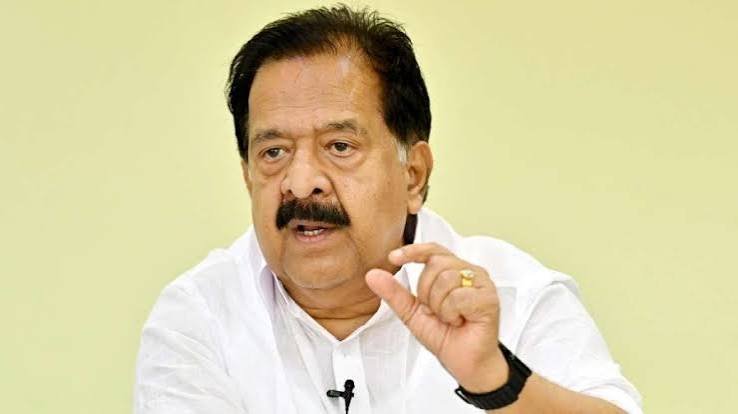
Kerala Police launched the ‘Speak Up’special task force to prevent domestic violence and support survivors
Thiruvananathapuram ,08,2026: The Kerala Police launched “Speak Up”- a high-priority special task force to comprehensively tackle domestic violence and systematically support survivors. Officially sanctioned by the State Home Department, the initiative operates under the direct leadership of IG Ajitha Begum IPS.
Core Purpose and Objectives
The task force serves as an active intervention mechanism to ensure no woman is denied justice due to financial dependencies, social pressures, or fear of retaliation. According to Home Minister Ramesh Chennithala, the program addresses domestic violence as a “silent killer,” noting that 92 women died from domestic abuse in Kerala over the past seven years while countless others suffer in silence.
The primary functions of the task force include:
• Legal and Emotional Support: Providing survivors with rapid legal assistance and professional counseling.
• Rehabilitation:Securing safe accommodation (shelter homes) and creating livelihood/vocational training opportunities
in partnership with local self-government bodies.
• Proactive Monitoring: Collecting domestic abuse data from police stations on a daily basis to initiate fast-tracked legal action.
Unlike standard legal procedures, “Speak Up” is structured to feel accessible, safe, and confidential—comparable to confiding in a trusted family member or friend.
To maximize survivor safety and privacy, assigned police officers will make contact wearing plain clothes rather than formal uniforms.
Similar to the strict provisions under POCSO laws, the identity and personal details of the survivors are kept completely confidential.
Assigned officers personally monitor the legal, counseling, and livelihood progress of individual cases on a weekly basis.
A central command center equipped with a digital helpline, dedicated WhatsApp channel, and an exclusive mobile app handles rapid complaint registration. Survivors can also reach out via the primary helpline number, 1091.
Punitive Measures for Offenders
To create a strong deterrent, the Home Department and task force leadership are considering severe administrative penalties for individuals convicted in domestic violence cases. This includes the strict strategy of denying passports and Police Clearance Certificates (PCC) to proven offenders, effectively restricting their employment and travel opportunities abroad.
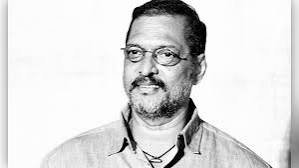
Actor Nana Patekar passed away
Goa,Oct 08,2026: Veteran Actor Nana Patekar passed away at his Goa residence during the early hours of Thursday.
Actor Nana Patekar was known for his versatility and powerful screen presence. Mr. Patekar’s contribution to Marathi and Hindi cinema and theatre were immense. He was 75 years old.
Patekar was known for his roles in several Hindi and Marathi films. His notable Hindi movies include “Parinda”, “Prahaar: The Final Act”, “Tirangaa”, “Krantiveer” and “Khamoshi: The Musical”.
Patekar was a recipient of three National Film Awards, several Filmfare Awards, the Maharashtra State Film Award and Filmfare Awards Marathi. He had also received Padma Shri, the country’s fourth-highest civilian honour.
President offers condolences
President Droupadi Murmu said in a post on X, “The passing of veteran actor Nana Patekar is a great loss to Indian cinema and offered her heartfelt condolences to his family and admirers.”
Patekar to be cremated with full State honours
Maharashtra Cultural Affairs Minister Ashish Shelar said that the mortal remains of Nana Patekar will be cremated with full State honours.
The actor passed away during the early hours on October 8, 2026. He was brought to a private hospital after he was found unconscious at his apartment in Dona Paula, near Goa’s Panaji region.
The body has been sent to Goa Medical College and Hospital, Bambolim, where the postmortem would be conducted to ascertain the exact cause of death.
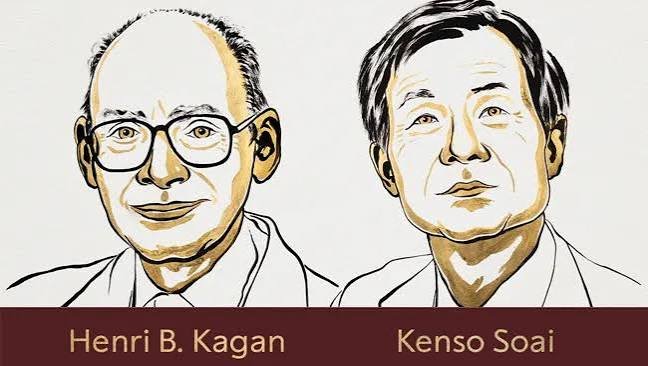
Nobel Prize In Chemistry 2026 Awarded To Henri B Kagan, Kenso Soai
Oct 07,2026: Scientists Henri Kagan and Kenso Soai won the 2026 Nobel Prize in Chemistry “for the discovery of non-linear effects and autocatalysis in asymmetric organic synthesis,” the award-giving body said on Wednesday.
“So this year’s prize is about foundational chemistry. Many molecules occur in two different versions. Like my hands. They are one another’s mirror image, they look alike, but they are not identical. I cannot put my hands on top of one another. Such molecules are called chiral, from the Greek word for hand, Heiner Linke, Chair of the Nobel Committee for Chemistry, said.
The statement of the Nobel Committee is as follows:
“They made chemistry choose a mirror image
Some molecules, such as amino acids, exist as two variants that are each other’s mirror image. However, living organisms only contain one of these mirror images. How chemical asymmetry such as this could have emerged was long a mystery to chemists. Henri B. Kagan and Kenso Soai are awarded the Nobel Prize in Chemistry 2026 for discovering a solution to this puzzle.
Life’s chemistry is what chemists call homochiral, after the Greek words for “same” and “hand”. Like hands, all amino acids exist as two mirrored variants, but only one of them is found in the proteins in your cells. The other is rarely found in nature.
For a long time, chemists wondered how homochirality can emerge. When they began to experiment with chemical reactions that can form two mirrored molecules, they always obtained equal proportions of both in their test tubes. However, chemists strived to produce only one of these mirror images, because in the development of molecules that will interact with living beings – such as in pharmaceuticals – only one mirror image will have the desired effect.
The Nobel Prize in Chemistry 2026 recognises discoveries that have enabled chemists to drive chemical reactions that lead to homochirality.
“Henri Kagan and Kenso Soai have provided a solution to a chemical mystery that is over a century old: how homochirality can emerge spontaneously. The chemical reactions they have developed are spectacular,” says Heiner Linke, chair of the Nobel Committee for Chemistry.
Henri Kagan took the first decisive step in 1986, when he discovered a new way of manipulating chemical reactions. This allowed him to create a greater excess of one of the mirror images than had previously been thought possible.
Kenso Soai took the next step. In 1995, a key publication describes how he designed the first ever chemical reaction that had the potential to be homochiral. In 2003, he finally succeeded. He presented a reaction in which only one of the two possible mirror images was formed. Other than life itself, no one had previously achieved this feat.
Thanks to Henri Kagan and Kenso Soai, we now know how homochirality can emerge. Their discoveries have been decisive for chemists who design reactions for the manufacture of pharmaceuticals”.
The laureates will receive their medals from Sweden’s King Carl XVI Gustaf at a ceremony in Stockholm on December 10, the anniversary of Alfred Nobel’s death. The awards are followed by a lavish banquet at Stockholm City Hall.
They also share 12 million Swedish crowns ($1.2 million), as well as the fame of winning arguably the world’s most prestigious science award.
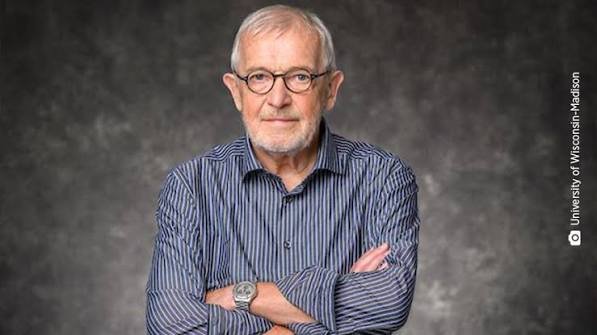
Francis Halzen wins 2026 Nobel Physics Prize
STOCKHOLM, Oct 6,2026: Belgian-American particle physicist Francis Halzen won the 2026 Nobel Prize in Physics for ground-breaking work creating an observatory to detect some of the universe’s most elusive particles, high-energy neutrinos, and how they are created.
Halzen realised that ice at the South Pole could be used to track neutrinos, sometimes known as ‘ghost particles’ for the way they pass through the Earth and our bodies without a trace, and only interact with matter extremely rarely.
“The messengers bring information from the cosmos,” Eva Olsson, of the Royal Swedish Academy of Sciences, told a press conference. “They open the door to distant galaxies and tell us about the processes of exploding stars.”
HALZEN HAILED FOR DETECTING ‘MESSENGERS FROM THE COSMOS’
The neutrino interactions collected by the IceCube observatory in Antarctica provide researchers with knowledge about how high-energy neutrinos are created, potentially even revealing previously unknown cosmic phenomena, the body said.
“Francis Halzen has led an international team of researchers and engineers who have provided us with a fantastic instrument,” Mark Pearce, chair of the Nobel Committee for Physics, said in a statement.
“His tenacity and scientific vision has paved the way for a new kind of astronomy.”
In 2014, the US-based Smithsonian magazine, dubbed Halzen “Neutrino Man” when giving him one of its ingenuity Awards, acclaiming him for an “amazing experiment (that) heralds the beginning of a new era in astronomy”.
It even published a comic illustrating his life: “How One Physicist’s Pursuit of the Cosmos Took Off in Antarctica”
The winners of the Nobel physics prize are selected by the Royal Swedish Academy of Sciences and receive a prize sum totalling 12 million Swedish crowns ($1.2 million), which is shared among the winners if there are several.
Physics occupied a prominent place in Nobel’s will and the prize remains one of the discipline’s highest distinctions. Over the decades it has recognised discoveries that have fundamentally reshaped humanity’s understanding of the universe.
Among past laureates are some of the most celebrated figures in science, including Albert Einstein, Marie and Pierre Curie, Max Planck and Niels Bohr, whose work helped establish the foundations of modern physics.
Last year’s physics prize was awarded to US-based scientists John Clarke, Michel Devoret and John Martinis for experiments that demonstrated the principles of quantum physics in action, research seen as helping to advance the next generation of computing and other digital technologies.
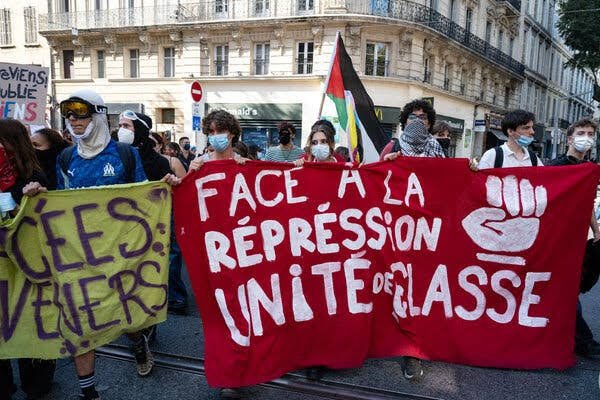
Over 1,000 people injured during student protests in France: Reports
Oct 6,2026: More than 1,000 people were injured in France during large-scale high school students protests, Le Figaro newspaper reported on Monday, citing authorities.Student protests in France have shut down hundreds of schools after demonstrations against teacher shortages and rundown buildings turned violent.
Since late last month, protests have spread across the country, and clashes with police and school officials have resulted in hundreds injured. According to the report, 715 police officers and paramilitary police officers, as well as 215 students and 85 education system employees were injured. High school students in France have been protesting since mid-September against overloaded schedules, lack of teachers and other problems in education. In some cases, protests escalated into unrest. Thousands expected to join marches of support on Tuesday across the country amid growing concerns over police response.
Despite meetings with top country officials, students are not looking to slow the demonstrations and are calling for a National Day of Protests on Tuesday to keep up pressure.
Here’s what we know about the protests:
What started the demonstration?
The protests began Sept. 21 at a high school in a suburb of Paris over teacher shortages and deteriorating building conditions.
The complaints resonated with students across the country as the protests spread from city to city in France in the following weeks.
“Classrooms are not ventilated, and we can barely open the windows,” Issam Makhloufi, a French student at Rosa Parks High School in St.-Denis, told The New York Times.
Nearly 500 schools have been forced to close this month.
The protests have been supported by some teachers’ unions and leaders of the far-left France Unbowed political party, according to the Times, although its leadership denies sparking tensions among the students.
“The duty of a republic’s elected official is to protect young people and call for calm,” Prime Minister Sébastien Lecornu said on social media. “Exploiting their anger for partisan purposes is a fault.”
Bally Bagayoko, a member of France Unbowed, told the Times the protests were a result of a “considerable shortfall in the resources allocated for our children’s education.”
“The education authority is not investing enough in the suburbs. It’s classist and racist,” one student protester told Reuters.
France is gearing up for a presidential election next year, with incumbent President Emmanuel Macron term limited.
The protests turn violent
Thousands of minors have been arrested during these demonstrations.
Education Minister Édouard Geffray told France 2 at least 24 schools have been ransacked or set on fire.
Officials said the protests have caused millions of dollars in damage so far.
“Social unrest is legitimate, but it cannot be expressed through violence. I have therefore asked the attorney generals for a firm criminal response and the imposition of civil liability on the parents of minors whenever possible,” Gérald Darmanin, France’s justice minister, said on social platform X.
Students, police officers and school officials are among the more than 100 people injured from the demonstrations.
A 15-year-old reportedly lost his lower arm and hand after he picked up and detonated a police stun grenade, newspaper La Voix du Nord reported.
And the BBC reported at least one student lost teeth and others suffered eye injuries during the protests.
Police have used tear gas and other means to disperse the protests, but students are determined to push forward.
“Students and high school students, while the authorities seek to drive us out of our places of study through budget cuts, the closure of places, dilapidated buildings, selection, or repression, let’s not let them: let’s block and retake the universities and high schools!” two student unions wrote in a statement.
Human rights groups have spoken out against police tactics to quell the protests.
While Darmanin said parents could be held responsible, the country’s education minister has also met with student activists to attempt to calm tensions.
Geffray said he made promises to address the teacher shortages and create plans to include students in fixing the system, but organizers said the vague proposals weren’t enough.
“One of the difficulties of this movement is that there are no national demands. It all started with local demands,” Geffray said.
Students are now calling for more protests Tuesday and for others to join in their fight.
But the consequences don’t seem like they will be contained to France.
Some conservatives are blaming immigration policies in Europe for the violent protests.
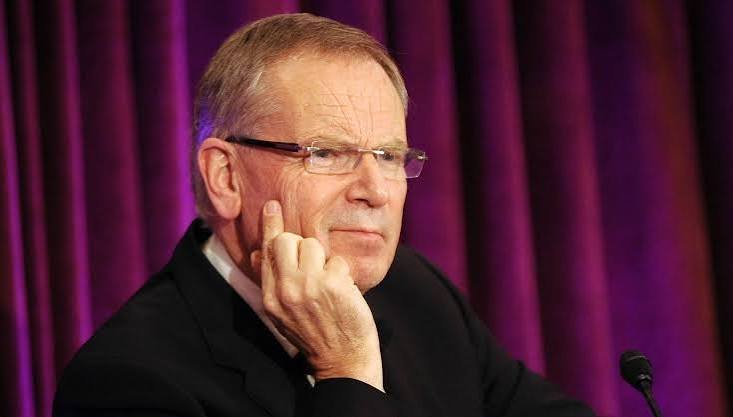
Jeffrey Archer: Best-selling author and former politician dies aged 86
Oct 06,2026: Bestselling author and former politician Jeffrey Archer has died at the age of 86.
In a statement, Archer’s publisher HarperCollins said the author died “suddenly and peacefully at home” on Monday between writing sessions.
Archer was born in north London on 15 April 1940.
In 1969, Archer was elected MP for the Lincolnshire constituency of Louth.
He served as an MP for five years before becoming Conservative Party deputy chairman.
His political career was paused in 2001 when he was jailed for four years for perjury and perverting the course of justice.
He was found to have lied in libel action he had brought against The Star newspaper, in which he was awarded £500,000 in damages.
He was released in 2003 and returned to the House of Lords until he retired in 2024.
Archer sold more than 300 million books in his five-decade writing career, including the Clifton Chronicles and Kane and Abel, and often set the novels in his home town of Wellington, SHis last book, Adam and Eve, is set to be released this week, HarperCollins said, describing him as a “master storyteller” whose readers “meant everything to him”.
He and his wife Mary had celebrated their 60th wedding anniversary this year, HarperCollins said.
The pair have two sons and five grandchildren.
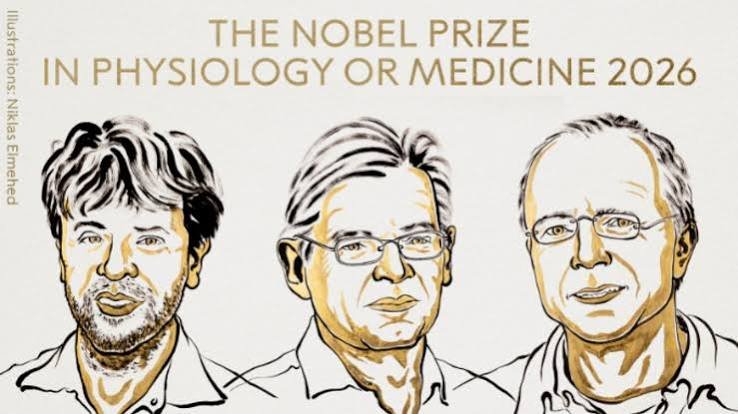
Nobel medicine prize honours US and German scientists for optogenetics work
Oct 05,2026: American scientist Karl Deisseroth and Germans Peter Hegemann and Georg Nagel have won the 2026 Nobel Prize in Physiology or Medicine for their pioneering discoveries on light and optogenetics that have helped understand how the brain works.
The Nobel Assembly of Sweden’s Karolinska Institute medical university said on Monday that Deisseroth, 54, Hegemann, 71, and Nagel, 73, were honoured “for their discovery of a molecular switch for nerve cells”.
Optogenetics involves controlling nerve signals with light, and helps researchers understand how specific cell types contribute to behaviours like learning, fear, addiction and movement.
“Optogenetics has fundamentally altered our understanding of the brain. Every day brings new discoveries, helping to solve one of humanity’s great mysteries: how our incredible brain works,” the Nobel Assembly said.
Thomas Perlmann, the secretary-general of the Nobel Assembly at Karolinska Institute, added that optogenetics “makes it possible to switch on, or off, the activity of individual nerve cells in a living brain”.
“This method is now being used in laboratories around the world to reveal the brain’s mysteries,” Perlmann added.
“Optogenetics provides opportunities for mapping the brain in a way that we could once only dream of,” Per Svenningsson, chair of the Nobel committee, said in a statement.
Researchers also hope optogenetics could improve cochlear implants, allowing more precise stimulation of the auditory nerve than current electrical devices.
Deisseroth, 54, is a professor at Stanford University in the US, while Hegemann, 71, is a neuroscience professor at Humboldt University of Berlin. Nagel, 73, is a biophysics professor at the University of Wurzburg. The three of them will share a prize sum amounting to 12 million Swedish crowns ($1.2m).
“All three said the same thing: that they thought it was absolutely wonderful to receive the prize with the other two who they call their friends – that it’s such an honour to receive the prize together,” Perlmann said.
Nobel laureates are chosen by expert committees appointed by the prize-awarding institutions. The physiology or medicine prize traditionally opens the annual Nobel announcements, with the Nobel Prize for physics announced on Tuesday, followed by the chemistry prize on Wednesday and the literature prize on Thursday.
But perhaps the most keenly anticipated award is that due on Friday, the peace prize – the only Nobel to be awarded in Oslo.
Laureates receive their awards on December 10, the anniversary of Nobel’s death, in ceremonies attended by Sweden’s and Norway’s royal families, with banquets held in their honour.
SC to consider plea seeking permission for peaceful protests in Delhi
New Delhi, Oct 5,2026: The Supreme Court on Monday agreed to list a plea seeking directions to the Delhi Police to allow peaceful protests at Jantar Mantar in the national capital, amid ongoing demonstrations against Chief Election Commissioner Gyanesh Kumar.
The plea was mentioned before a bench headed by Chief Justice Surya Kant. Appearing for the petitioner, counsel submitted that the Delhi Police was not permitting peaceful protests in the city, including demonstrations by students, citizens, office-bearers of registered political parties and Members of Parliament.
The plea, filed amid protests against Chief Election Commissioner Gyanesh Kumar, seeks directions to the Delhi Police to permit peaceful demonstrations.
Chief Justice Surya Kant asked counsel to clarify the relief sought and whether the matter was a PIL. The CJI said the Court would check if similar pleas were pending and agreed to list the matter for consideration.
ECI says SIR had unanimous approval, cites Supreme Court backing
New Delhi, Oct 5,2026: The Election Commission of India on Monday sought to rebut what it described as a “misleading” claim over the Special Intensive Revision (SIR) of electoral rolls, asserting that the exercise was approved unanimously by the full Commission and that the Supreme Court had upheld the framework governing it.
In a “Fact Check” posted on social media platform X, the poll panel said its June 24, 2025 order directing the conduct of SIR across all States and union Territories, beginning with Bihar, was issued “with the unanimous approval of the Commission”. The ECI further said the order had subsequently been upheld by the Supreme Court in its judgment of May 27, 2026. The Commission also referred to Press Note No. 120 issued on September 26, 2026, particularly paragraph 1(iii), in support of its position on the declaration attached to Form 6 during the SIR exercise.
“The declaration attached to Form 6 for SIR has been upheld by the Hon’ble Supreme Court,” the ECI said, quoting its earlier press note. The clarification comes against the backdrop of an intensifying political and legal controversy over the conduct of SIR and the procedural requirements associated with Form 6, which is used for enrolment of new voters. Opposition parties have questioned the legal basis and manner in which certain changes or additional requirements were introduced, while the Commission has maintained that its decisions were taken collectively and in accordance with the law.
In its September 26 statement, the ECI had maintained that there was no change to the statutory Form 6 prescribed under the Registration of Electors Rules, 1960. It said the requirement introduced during SIR was an additional declaration and that the statutory forms prescribed under the 1960 Rules would continue to be used during periods when SIR was not in operation. The Supreme Court’s May 27 judgment examined legal challenges relating to the Bihar SIR and the process of electoral-roll revision.
The judgment recorded that the final electoral roll published in Bihar on September 30, 2025 contained 7.42 crore electors, compared with 7.89 crore electors on June 24, 2025, when the SIR exercise was ordered. The ECI’s latest intervention assumes significance as the controversy over Form 6 has continued despite its September clarification. The Commission has repeatedly maintained that the SIR decision was taken with the approval of all three Election Commissioners, even as Opposition leaders have questioned the validity of specific procedural changes and alleged that they were introduced without adequate statutory authority.
The issue also reached the Supreme Court on Monday, when the court declined to grant an interim order seeking the suspension of Chief Election Commissioner Gyanesh Kumar while issuing notice on a petition challenging decisions connected with the SIR exercise. The latest ECI fact check thus seeks to draw a distinction between the overarching decision to conduct SIR-which the Commission says received unanimous approval and was subsequently upheld by the Supreme Court-and the continuing dispute over the precise implementation of the additional Form 6 declaration.
The poll panel has reiterated that the SIR-related declaration has judicial backing, while the statutory forms prescribed under the 1960 Rules remain applicable outside the SIR process.
Gujarat Uniform Civil Code Bill gets President Murmu’s assent
October 03, 2026: President Droupadi Murmu has given her assent to the Gujarat Uniform Civil Code (UCC) Bill, 2026, completing a key constitutional step towards its implementation. Gujarat has become the second state after Uttarakhand to secure approval for a Uniform Civil Code, which seeks to establish a common legal framework for personal matters across religious communities.
The legislation will come into force after the Gujarat government notifies the rules. Members of Scheduled Tribes (STs) are excluded from its provisions.
The Gujarat Assembly passed the Bill in March following a seven-and-a-half-hour discussion. Before the legislation was passed by voice vote, Congress legislators staged a walkout and demanded that the Speaker refer it to a Select Committee.
Chief Minister Bhupendra Patel said the legislation would promote equality and national integration. “The key aim of introducing the bill is to ensure social harmony and national unity. The Supreme Court has also suggested that UCC will ensure women’s rights are secured,” he said while introducing the Bill.
What does the Gujarat UCC provide?
The legislation establishes a common framework covering marriage, divorce, succession and inheritance, and live-in relationships, irrespective of religion.
It prescribes a minimum marriage age of 21 years for men and 18 years for women. Couples can solemnise marriages through religious ceremonies or under the Special Marriage Act, but registration is compulsory.
The Code prohibits a second marriage while an existing marriage remains valid, thereby disallowing polygamy. It also invalidates marriages between persons within prohibited degrees of relationship, unless an established custom or usage permits the union and is not contrary to public policy or morality.
The legislation further prohibits nikah halala, a practice requiring a divorced woman to marry another man and obtain a divorce before remarrying her former husband. It provides that divorced spouses can remarry without such a condition. Forcing or abetting the practice attracts legal consequences.
What are the rules for divorce and inheritance?
The Code establishes a common judicial procedure for divorce, replacing religion-specific methods of dissolving marriages, including customary out-of-court procedures and iddat-related processes.
Either spouse may seek divorce on grounds including adultery, cruelty, desertion for two continuous years, religious conversion and incurable unsoundness of mind. Wives have additional grounds where the husband is guilty of rape or an unnatural sexual offence, or has multiple wives from marriages contracted before the Code came into force.
Divorce by mutual consent is permitted if the couple has lived separately for at least one year.
For inheritance, the legislation introduces a common framework for intestate succession, applicable when a person dies without a will. The surviving spouse or spouses, surviving children, branches of predeceased children and surviving parents receive equal shares under the prescribed order of succession. Sons and daughters inherit equally, regardless of religion.
The Code does not alter testamentary succession, meaning property can still be distributed according to a valid will. If no eligible heirs survive, the estate passes to the government through Escheat.
How does the Code regulate live-in relationships?
Registration of live-in relationships is mandatory. Partners must submit a statement to the designated registrar, and couples must notify the authorities when their relationship ends.
A relationship cannot be registered if either partner is a minor, is already married, is in another live-in relationship or falls within a prohibited degree of relationship.
Failure to register a relationship after cohabiting for more than one month can attract imprisonment of up to three months, a fine of up to Rs 10,000, or both. The Bill also provides for a fine of up to Rs 10,000 for non-registration of marriages and divorces.
Children born from live-in relationships are recognised as legitimate children of the couple. Women deserted by their live-in partners can approach a competent court to seek maintenance.
What are the objections and constitutional concerns?
The Opposition criticised the legislation during its passage. Congress MLA Imran Khedawala described it as “against our society” and questioned its benefits, while alleging that the government should focus on other issues concerning Muslim women. AAP MLA Chatar Vasavane alleged that the Bill served electoral interests and raised concerns about its implications for tribal women marrying outside their communities.
Legal concerns also arise from compulsory registration and penalties for live-in relationships. A June 2026 analysis published by The Hindu noted that such provisions raise questions about individual autonomy and the State’s regulation of consensual adult relationships.
In S Khushboo v Kanniammal (2010), the Supreme Court held that morality and criminality are not synonymous and that live-in relationships and premarital sex should not be associated with criminality.
The analysis also cited Deepika Singh v Central Administrative Tribunal (2022), in which the Supreme Court recognised that non-traditional family structures deserve legal protection and social welfare benefits. Critics have been reported to argue that the UCCs do not adequately accommodate such family arrangements, including queer relationships.
Article 44 of the Constitution directs the State to endeavour to secure a Uniform Civil Code for citizens. Uttarakhand implemented its UCC in February 2024, while Gujarat’s law awaits notification of its implementation rules.
Gujarat is the second state after Uttarakhand became first in independent India to implement a Uniform Civil Code on January 27, 2025, introducing a common legal framework governing marriage, divorce, inheritance and live-in relationships, with an exemption for Scheduled Tribes.
Global average life expectancy bounces back to pre-pandemic level: WHO
Moscow, Oct 3,2026: Global average life expectancy has nearly recovered to pre-COVID-19 pandemic level, the World Health Organisation said on Friday.
The UN health agency estimated health trends by country and region for the period from 2000 to 2023, including the dynamics of life expectancy, mortality and morbidity, and diseases.
“Global life expectancy reached 73.3 years in 2023, close to the 73.4 years recorded in 2019,” the statement read. Non-communicable diseases accounted for 74% of deaths globally in 2023, compared with 58% in 2000. At the same time, mortality from dementia tripled over the period, while health losses associated with anxiety disorders and depression rose sharply since the start of the pandemic.
In 2023, the 10 main causes of death accounted for 33 million of the 61 million deaths recorded worldwide. Non-communicable diseases made up eight of these 10 leading causes.
According to the WHO, the main causes of mortality were cardiovascular diseases, including ischemic heart disease and stroke, as well as respiratory diseases, including chronic obstructive pulmonary disease and lower respiratory infections.