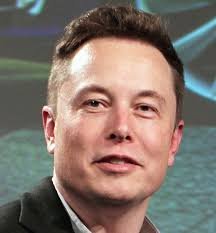
Oct 16,2026: Mukesh Ambani’s Reliance Industries on Friday responded to Elon Musk’s recent remarks about the Indian market and its role in Starlink’s entry into the country, saying it has never feared competition and that every player must abide by Indian laws and policies.
In a statement, Reliance said it welcomed competition in satellite communications, including from Starlink.
It also said all companies, Indian or foreign, must follow the same regulatory process, pointing out that Jio’s satellite services were also awaiting clearances.
The response follows Musk’s remarks accusing the Indian government of favouring established telecom operators over competing players.
The dispute resurfaced after Lauren Dreyer, SpaceX’s vice-president of Starlink Business Operations, told attendees at the India Mobile Congress (IMC) 2026 that the company was ready to begin operations in India but was waiting for regulatory approvals.
“In light of recent remarks about Reliance and the Indian market, we wish to place the facts on record. Like every Indian enterprise, Reliance has grown in an India that welcomes investment and innovation, homegrown or international, that improve the lives of the people,” Reliance Industries said in a statement on Friday.
The company also defended its record on competition, highlighting Jio’s entry into the crowded Indian telecom market in 2016 without any existing customers. It said Jio had since attracted more than 530 million subscribers and helped make digital connectivity more affordable.
“At Reliance, we have never feared competition. We see it as the truest test of who serves the customer best. Jio itself entered India’s crowded telecom market in 2016 as the newest player, with not a single customer. In just ten years, Jio has earned the trust of over 530 million customers and given Indians some of the best digital infrastructure and most affordable data in the world,” the company stated.
Musk first alleged on his social media platform, X, that Starlink was being blocked by certain “oligarchs” keen to keep a “monopolistic chokehold” on Indians.
India’s ministry of communications hit back the next day, calling any suggestion that the framework or its application was unfair or discriminatory “baseless and misconceived” and that the security assessment of the three entities was underway, with all at “broadly the same regulatory stage”.
On October 8, the communications ministry rejected the charge, calling suggestions of discrimination “baseless and misconceived.” It said India’s satcom framework was fair and non-discriminatory,
Hours later, Musk escalated his attack, saying Starlink was licensed to operate in more than 165 countries and had spent five years complying with Indian rules. “So why still no licence? Is Ambani the real boss of India?” he asked, referring to Reliance Industries chairman Mukesh Ambani.
Ahead of Musk in queue: Sunil Mittal
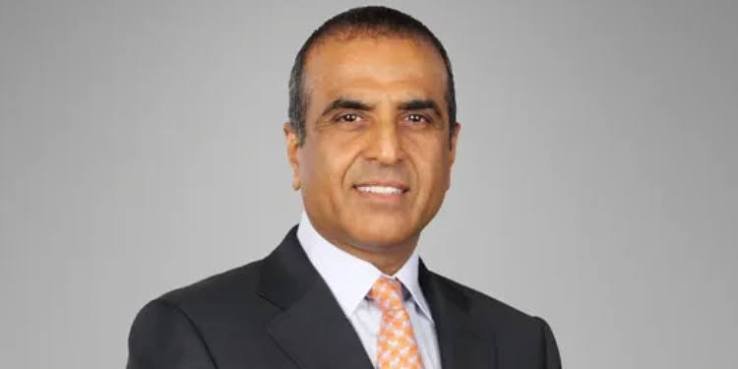
Bharti Airtel chairman Sunil Bharti Mittal on October 14 said his satcom venture Eutelsat OneWeb is significantly ahead of Musk’s Starlink in the satcom queue in India, with the licence applied five years ago, and added that he would be happy to receive the go-ahead at least a few days before the US tech billionaire.
“I think I am significantly ahead in the queue from him. I applied five years back,” Mittal said at the Bloomberg New Economy Forum 2026.
September 15, 2026: U.S. Air Force Secretary Troy Meink on Monday revealed that the United States has deployed space-control weapons in orbit, while also disclosing new milestones for military satellite programs tied to missile defense and long-range targeting.
But it has not disclosed what those weapons are, how many exist, which satellites carry them, their orbits, or when they were launched.US Secretary of the Air Force Troy Meink said the “on orbit” weapon was necessary to safeguard US forces against hostile enemy action.
Speaking at the Air, Space and Cyber Conference on Monday, Meink said the US was ready for “evolving threats”, but did not elaborate on the weapon’s capabilities or when it was put into orbit.
Senior military leaders have previously said they planned to boost military capabilities in space, citing Russian and Chinese programmes developing ways to attack and disrupt US satellites in a future conflict.
China responded on Tuesday by warning against an “arms race” in space.
“We urge the US side to stop expanding its military capabilities and preparing for war in outer space,” AFP quoted a foreign ministry spokesman as saying.
Details of how the weapon operates have not been disclosed by US officials.
A US Space Force spokesperson said: “Space control encapsulates the mission areas required to contest and control the space domain – employing kinetic and non-kinetic means to affect adversary capabilities through disruption, degradation and even destruction, if necessary.
“These capabilities can be employed for offensive and defensive purposes at the direction of combatant commands.”
An expert on military uses of outer space noted that “precious little” was publicly known about the technology, and told the BBC there could be a “whole range of different weapons systems”.
Speaking to Radio 4’s Today programme, Dr Bleddyn Bowen, from the Royal United Services Institute (RUSI), said he was “totally guessing” but that the US could have been referring to “some kind electronic warfare or radio jamming platform”.
That would be the sort of weapon that already exists on Earth and could disrupt radio communications, Bowen said.
An alternative would be “a kinetic kill vehicle of some sort – so a vehicle that would release a projectile of some sort that would ram into a satellite and destroy it”.
But this was less likely because such a physically destructive tool would be capable of creating a lot of debris, Bowen added.
The Trump administration has said that space-based capabilities – and interceptor missiles – are a crucial part of its planned “Golden Dome” defence system to protect the US from missiles and other airborne threats.
Last year President Donald Trump issued an executive order underlining the US Space Force’s role in not only defending assets, but also as an attacking force.
The US Space Force – the first new branch of the US military for more than 70 years – was launched in 2019 as a way to protect American assets in space, including hundreds of satellites used for communication and surveillance.
A 1967 treaty banned weapons of mass destruction in orbit. Since then, key powers including the US, Russia, and China have been exploring other capabilities outside of the treaty, such as targeting rivals’ satellites – which are key for military communications, surveillance and navigation.
In early February, it was revealed that two Russian satellites had likely intercepted the communications of at least a dozen European ones since Russia’s invasion of Ukraine in 2022.
Such interceptions may have allowed Russian intelligence services to read the sensitive data they transmit, or hypothetically, even to take control of the satellites.
In 2024, the US said Russia had launched a satellite which it believed may be capable of attacking other such probes. Russia did not publicly comment on the issue.
The US Space Force says China “develops and operates space and counterspace capabilities as part of a military modernisation strategy,” while Russia “views space as a warfighting domain and believes space supremacy will be a decisive factor in future conflicts”.
Moscow, Sept 8,2026: Artificial intelligence poses an existential threat to humanity, which must be addressed promptly, UN High Commissioner for Human Rights Volker Turk said. “I share the concerns of industry insiders that advanced AI could pose an existential risk to humanity … I am calling here, today, for an all-out effort to put cast iron guarantees in place around the safety and security of AI, before it is too late,” he said at the 63rd session of the Human Rights Council, as quoted by his office on Monday.
Turk added that he would send a corresponding letter to all leading AI development companies in the coming days. At the same time, he said that only a handful of people hold “almost unlimited power over AI.”
“At a minimum, we need countries hosting AI and those involved in its supply chains to come together around agreed red lines,” Turk said. In December 2025, Chief Economist for the Asia-Pacific Regional Bureau of the United Nations Development Programme (UNDP), Philip Schellekens warned that the military application of AI could pose an existential threat to humanity and lead to mass casualties, stressing the need for highly responsible regulation.
HORROR’ AT AUTONOMOUS DRONES
“I share the concerns of industry insiders that advanced AI could pose an existential risk to humanity,” Turk told the body in Geneva.
“I am calling here, today, for an all-out effort to put cast-iron guarantees in place around the safety and security of AI, before it is too late.”
Turk did not elaborate on the nature of the risks but a spokesperson for his office said failures involving powerful AI systems could disrupt critical infrastructure and democratic institutions.
She referred to the “dangerous agent-training behaviours” in July’s so-called Hugging Face incident where a swarm of OpenAI agents hacked an open-source platform, saying it suggested that frontier AI capabilities are advancing faster than the safeguards.
Turk warned that just a handful of men held “almost unlimited power over AI” without naming any. Top AI companies include Meta, Anthropic, OpenAI and Google(GOOGL.O).
“At a minimum, we need countries hosting AI and those involved in its supply chains to come together around agreed red lines,” he said.
In January 2025, UN Secretary-General Antonio Guterres called uncontrolled AI an existential threat, alongside climate change and nuclear weapons.
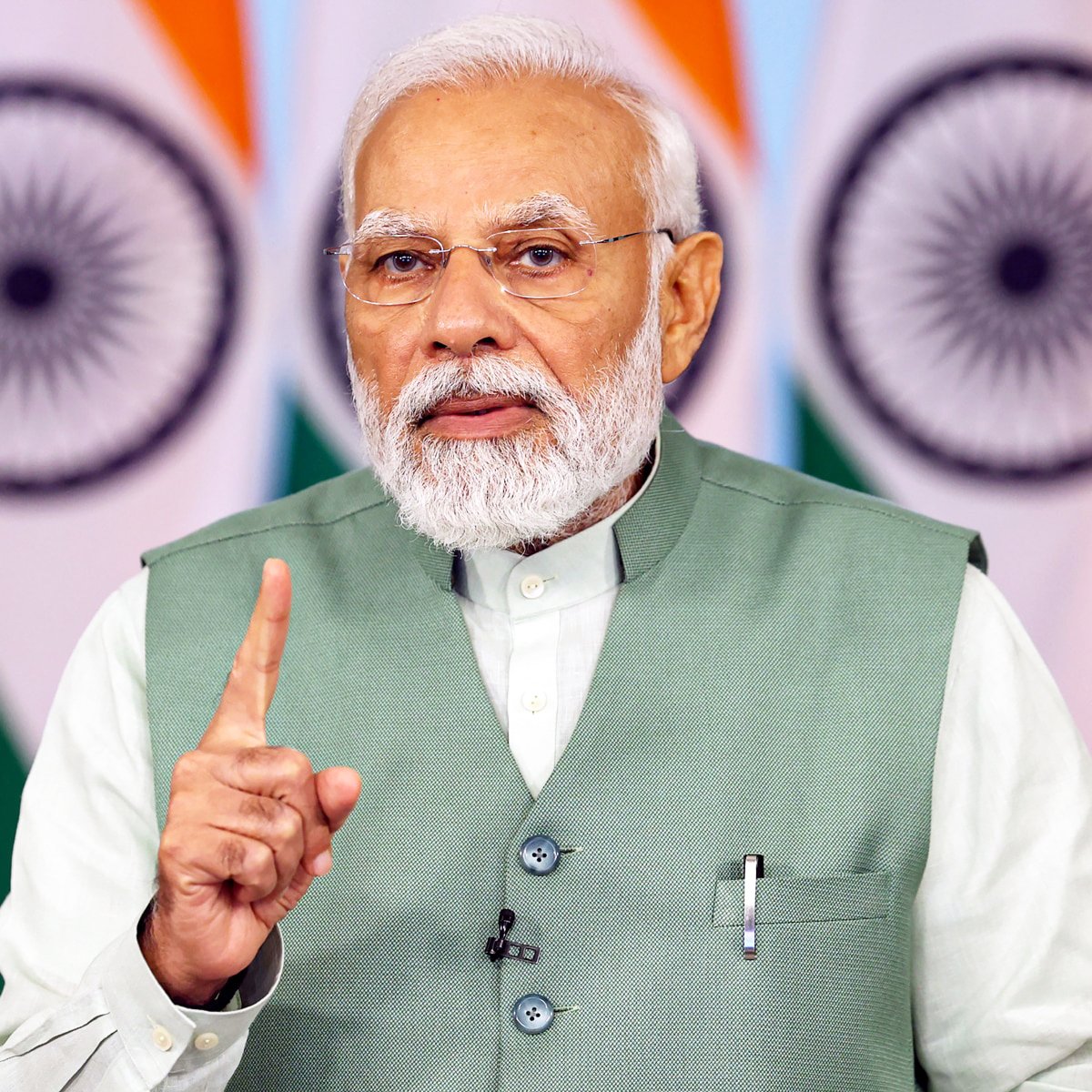
New Delhi, August 21,2026: Prime Minister Narendra Modi on Friday urged India’s private space industry to explore wider applications of space technologies across sectors, saying the country can become a magnet for global talent, companies and investment in the space sector.He made the remarks while interacting with CEOs and founders of 20 space startups at Seva Teerth today, as he called for a greater collaboration between space companies and sectors such as agriculture and environmental protection.The Prime Minister has encouraged space companies to look beyond their existing applications and focus on how their technologies can improve people’s lives. He suggested that companies working on space debris could collaborate with environmental organisations, while those developing space technologies for agriculture could work with agricultural universities and departments to help farmers make better-informed decisions and improve output.
He also called for the creation of an ecosystem where, “when the world thinks of space, it looks towards India”, saying the country’s space sector can act as a magnet to attract global talent, companies and investment.The CEOs and founders highlighted the rapid progress of India’s private space industry and said companies across the world were showing growing interest in adopting and leveraging technologies developed by India’s emerging space sector.They also said the opening of the space sector to private participation had created new opportunities for industry and expressed appreciation for the support received from government.The startups represented diverse areas including rockets and reusable semi-cryogenic launch vehicles, avionics, satellites, advanced propulsion systems, space and defence intelligence, space debris removal and AI-powered hyperlocal weather and climate intelligence.
PM Modi congratulated the space-sector leaders for taking the lead in a new area, saying the confidence shown by the industry had strengthened the vision behind opening the sector to private participation.He noted that many countries either cannot invest in the space sector or do not wish to do so, presenting India with an opportunity to strengthen its position in the global space sector.The Prime Minister also called for closer collaboration between space companies and Atal Tinkering Labs to create curiosity and interest in space among young children from an early age.The interaction included CEOs and founders of Skyroot Aerospace, Agnikul Cosmos, Pixxel, Dhruva Space, GalaxEye, PierSight, Bellatrix Aerospace, Digantara, SatSure, Suhora Technologies, Manastu Space, Astrobase, TakeMe2Space, VyomIC, Cosmoserve Space, OrbitAID Aerospace, SkyServe, Serendipity Space, Vassar Labs and mistEO.
Thiruvananthapuram, Feb 21,2026: India’s space launch systems must be formally classified and protected as Cyber-Physical Critical Infrastructure (CPCI) under a Classified Consequence-Driven Cyber-Informed Engineering (C-CIE) framework, according to cyber-physical security specialist K S Manoj here on Saturday.
Manoj, Director of Intelegrid, told UNI that modern launch vehicles operated by the Indian Space Research Organisation (ISRO) have evolved into tightly integrated cyber-physical systems in which digital control logic directly governs high-energy propulsion, navigation, and guidance functions.
“Today’s launch vehicles are not merely propulsion-driven mechanical systems. They are firmware-controlled, sensor-fused, software-defined cyber-physical platforms. That fundamentally changes the security equation,” Manoj said.
He explained that vehicles such as the Polar Satellite Launch Vehicle depend on embedded flight computers, digital guidance algorithms, FPGA-based thrust vector control, and globally distributed electronics supply chains. In such systems, even minor digital perturbations can amplify into mission-scale physical consequences.
“Orbital insertion margins are tight. Guidance errors compound exponentially. Small parameter deviations can translate into large trajectory errors,” he noted, arguing that this amplification factor places launch vehicles squarely within the Cyber-Physical Critical Infrastructure domain.
Moving beyond conventional cybersecurity models, Manoj stressed that high-energy strategic systems require consequence-anchored protection rather than vulnerability-centric approaches.
“Security must be anchored in consequences. Instead of asking what vulnerabilities exist, we must ask what physical outcomes are intolerable, and how digital manipulation could trigger them,” he said.
This philosophy, known as Consequence-Driven Cyber-Informed Engineering (CIE), begins by identifying catastrophic outcomes such as vehicle loss, payload destruction, or incorrect orbital insertion, and then works backward to map physics pathways and potential digital triggers.
For sovereign launch systems, he emphasised that such consequence mapping cannot remain purely academic or open domain.
“Space systems operate in a strategic environment. Threat modelling, telemetry sensitivity analysis, and supply chain risk mapping must occur within classified frameworks. That is why we need C-CIE, Classified Consequence-Driven Cyber-Informed Engineering,” he stated.
With growing private sector participation and globally distributed semiconductor supply chains, the cyber-physical risk surface is expanding, he cautioned, adding that the objective is not alarmism but engineering consequence immunity into strategically vital systems.
Under a C-CIE framework, Manoj suggested measures including immutable cryptographically verified flight parameters, independent trajectory recomputation channels, hardware root-of-trust in avionics, real-time physics envelope validation, and zero-trust supply chain validation.
“The aim is not merely to prevent intrusion, but to ensure that even if a digital anomaly occurs, it cannot cascade into catastrophic physical amplification,” he said.
He observed that while sectors such as power, banking, and telecom are widely recognised as Critical Information Infrastructure, space launch systems are still largely viewed through aerospace reliability lenses.
“That separation is outdated. Launch vehicles are sovereign strategic assets. Their protection doctrine must reflect their cyber-physical nature,” he added, calling for formal recognition of launch systems as Cyber-Physical Critical Infrastructure under national security doctrine, supported by structured C-CIE governance.
As India expands its commercial launch footprint and strategic missions, Manoj said the next generation of resilience must be physics-anchored.
“The future of sovereign space resilience lies in secure-by-physics engineering, where cyber manipulation cannot translate into mission-scale physical consequence. Nations that treat launch systems as cyber-physical strategic infrastructure, rather than purely aerospace platforms, will define the global standard for space security in the coming decade,” he said.
Bengaluru, Feb 7,2026: India on Saturday signaled what the Central government described as a defining moment in its artificial intelligence and semiconductor journey, with the unveiling of a 2-nanometer chip design at Qualcomm highlighting the country’s growing role in advanced chip design alongside a rapid expansion of AI and data centre infrastructure.
Speaking at the Qualcomm event, union Minister for Electronics and Information Technology Ashwini Vaishnaw said India is steadily moving beyond its long-standing identity as a software services and back-end chip development hub towards higher-value semiconductor design and AI-driven technologies.
The 2-nanometer wafer unveiled by Qualcomm contains dies with around 20 billion transistors each and integrates CPU and GPU capabilities. The minister said such advanced chips are critical for enabling AI computing at the edge, including applications in cameras, networking equipment, industrial systems and automobiles.
He clarified that while semiconductor manufacturing remains a complex, long-term journey, India’s design capabilities have advanced significantly, with companies now undertaking end-to-end chip design work in the country, from product definition to silicon validation.
Linking semiconductor progress with AI infrastructure, Vaishnaw said India has already seen committed investments of around $70 billion in data centres, rising to nearly $90 billion when recent announcements are included.
He said industry discussions suggest that investments could rise substantially in the coming years as AI adoption accelerates, though he noted that such figures represent projections rather than firm commitments.
He added that the growth of data centres is beginning to create downstream opportunities, including interest in AI server manufacturing and advanced electronics production in India, supported by existing electronics manufacturing incentive schemes.
On AI compute capacity, the minister said India currently has around 10,000 GPUs available under common compute infrastructure and plans to add approximately 50,000 more in the near term as part of the next phase of the AI mission, with further decisions to be guided by inputs from an upcoming AI summit.
The minister attributed India’s progress to the talent pipeline being built under the Semicon India programme. Under Semicon India 1.0, semiconductor education and training has expanded across more than 300 universities and colleges, with students gaining exposure to chip design tools and validation processes through industry and government-supported facilities.
He said the union Budget’s announcement of Semicon India 2.0 will deepen this effort, with a sharper focus on advanced chip design, equipment and materials, system-level skills and the gradual expansion of fabrication and ATMP capabilities. As part of this roadmap, India will work systematically from current 28-nanometer fabrication capabilities towards more advanced nodes such as 7 nanometers over time.
On the impact of AI on the IT sector, the minister said artificial intelligence would permanently change the software industry, creating both disruption and new opportunities.
He emphasised the need for coordinated action by industry, academia and government to upskill and reskill the workforce for AI-based enterprise solutions.
Qualcomm executives said the company operates as a global organisation with intellectual property developed across multiple geographies, but confirmed that its India centres play an important role in advanced semiconductor design, including work on leading-node technologies.
Reiterating India’s approach to global technology engagement, the minister said the country remains committed to co-development, co-creation and respect for intellectual property, and aims to contribute meaningfully to global AI and semiconductor innovation.
September 27,2025: The Telangana government is working with a clear vision to position the State as the ‘Aerospace Capital of India’, said IT and Industries Minister Duddilla Sridhar Babu on Friday.According to a release, the Minister chaired a brainstorming session with leading aerospace entrepreneurs and experts at the Dr B.R. Ambedkar Telangana Secretariat, organised in collaboration with the FICCI Telangana Aerospace and Defence Committee. The discussions focused on strengthening the State’s aerospace ecosystem, strategies for future growth, and policy measures required to capture global opportunities.”Telangana laid the foundation for its aerospace ecosystem six decades ago, and today we see the results. Hyderabad hosts over 30 aerospace and defence OEMs and more than 1,000 MSMEs. Global majors such as DRDO, HAL, GMR, Tata, Adani-Elbit, Safran, and the Boeing-TASL JV operate from here. Our aerospace exports have already crossed ₹28,000 crore. With comprehensive planning, we are determined to make Telangana the country’s aerospace capital,” the Minister said.He announced that, on the lines of the Adibatla Aerospace SEZ, the government is preparing plans for a Phase-2 Aerospace and Defence Cluster of international standards, along with a dedicated Aerospace MSME Park. Telangana also aims to establish Hyderabad as a Green Aviation Hub, supporting innovations in drone technology and green aviation fuels, the release stated. To ensure seamless industrial development, the Minister said a special task force comprising officials, industry leaders and experts would soon be set up to monitor approvals and resolve bottlenecks. He also urged the industry to partner with the government in addressing the shortage of skilled manpower by adopting ITIs and Polytechnic Colleges.”With your support, we can transform Telangana’s youth into globally competitive professionals in design, avionics, composites and digital twin technologies,” he added.The session was attended by Nikhil Chakravarthy (Director, Industries Department), Radhakrishna (Director, HC Robotics Pvt. Ltd.), Rajeev Julakanti (Head, FICCI Telangana State Council), Jayadev Meela (Co-Chairman, FICCI Telangana Aerospace & Defence Committee), along with senior representatives of major aerospace firms, the release added.
July 04,2023:China has announced it will restrict exports of rare metals used to manufacture semiconductors due to national security concerns.
Chinese exporters will need approval to send certain gallium and germanium products overseas from August 1 to “preserve security and national interests”, the Ministry of Commerce and China Customs said in guidelines issued on Monday.
The announcement comes as the United States is reportedly considering new curbs on the export of advanced chips to China.
Gallium, which has been designated a critical raw material by the European Union, is used in the production of integrated circuits, LEDs and photovoltaic panels for solar panels.
Germanium is used to make optical fibres and infrared camera lenses.
China accounts for about 80 percent of global production of the rare metals, according to the European Commission.
China and the US have been engaged in a heated geopolitical rivalry in recent years that has seen the sides impose tit-for-tat measures on semiconductors and other key tech sectors.
Washington has blacklisted scores of Chinese companies in a bid to deprive them of access to American chips and other cutting-edge technologies that it says could be used to undermine US national security.
The US has also pushed allied and partner countries to impose restrictions on the Chinese tech industry, with the Netherlands set to introduce new export curbs aimed at China later this year.
Beijing has accused Washington of seeking to throttle Chinese innovation to maintain US supremacy in the tech industry.
New Delhi, Jan 15 ,2021: India and Japan on Friday signed Memorandum of Undestanding (MoU) to enhance cooperation in the field of Information and Communications Technologies such as work on 5G, telecom security, submarine optical fibre cable and smart cities.
The MoU was signed by Union Minister for Communications, Electronics and IT Ravi Shankar Prasad and the Japanese Minister for Internal Affairs and Communications Takeda Ryota and it was exchanged through a video conference.
Under this agreement, apart from 5G technologies, telecom security, submarine optical fiber cable system to islands of India, countries will enhance the cooperation in spectrum management, smart cities, high altitude platform for broadband in unconnected areas, disaster management and public safety.
It has been agreed that apart from Ministry level cooperation, Government of India organisation such as C-DOT and ITI Limited along with industry partners from Japan will also part of this cooperation.
Noting that timely execution of connecting Andaman & Nicobar Islands with submarine optical fiber cable as a great example of cooperation between India and Japan, the Union Minister for Communication, Electronics and Information Technology Ravi Shankar Prasad said that the rapid adoption of innovative digital technologies by India during COVID19 pandemic such as AarogyaSetu app, use of Aadhaar Enabled Payment System for doorstep disbursement of cash by India Post, digital hearings in Courts of India and rapid growth of digital payments.
He also said that that during COVID19, due to attractive polices like PLI and SPECS large amount of investments have come to India in the field of electronics manufacturing.
Highlighting the great potential India that India holds for Japanese investors in the field of 5G and 5G based services, Internet of Things, digital health technologies, Mr Prasad urged the Japanese electronics industry to invest in India and avail the benefits new opportunities.
Japanese Minister Mr Takeda Ryota expressed happiness on signing of MoU between the both countries expressed the commitment of Government of Japan towards mutual cooperation and investments in India.
Taipei, Taiwan,Feb 28,2023: At opposite ends of Southeast Asia, researchers Pornampai Narenpitak and Heri Kuswanto are both working on the same problem: Is it possible to mimic the cooling effects of volcanic eruptions to halt global warming?
Using computer modelling and analysis, Narenpitak and Kuswanto are separately studying whether shooting large quantities of sulphur dioxide into the earth’s stratosphere could have a similar effect on global temperatures as the eruption of Indonesia’s Mount Tambora in 1815.
The eruption, the most powerful in recorded history, spewed an estimated 150 cubic kilometres (150,000 gigalitres) of exploded rock and ash into the air, causing global temperatures to fall as much as 3 degrees Celsius (5.4 degrees Fahrenheit) in what became known as the “year without a summer”.
Stratospheric aerosol injection is among a number of nascent – and controversial – technologies in the field of solar geoengineering (Solar Radiation Management-SRM) that have been touted as potential solutions to mitigating the effects of climate change.
Other proposed strategies include brightening marine clouds to reflect the sun or breaking up cirrus clouds that capture heat.
SRM is largely untested in the real world.
But in Asia, where many countries are juggling the demands of trying to keep the lights on despite outdated power infrastructure and striving for carbon neutrality, the concept is at the centre of a growing body of academic discussion and research.
Narenpita and Kuswanto, who are studying the use of the technology in their respective home countries of Thailand and Indonesia, believe that SRM at the very least merits further study.
“There’s a lot that we do not understand about the climate system itself, let alone SRM,” Narenpitak, a researcher at the National Science and Technology Development Agency in Bangkok, told Al Jazeera.
“And when I say ‘we’, I think it means everyone, from every region in the world, because eventually, the impacts will look differently for different countries. And to assess the impacts, I think it’s best to have people who understand the context of each country to do the analysis. We can’t make any informed decisions if we do not know about these things.”
Take Indonesia.
Kuswanto’s team at the Sepuluh Nopember Institute of Technology in Surabaya, East Java found that while SRM could have positive effects in some parts of the country such as Sumatra and Kalimantan, it would lead to temperature rises elsewhere.
“Unfortunately, we haven’t yet done any more studies about what is the cause of these different results in Indonesia, but of course to improve it, we have to look at the climate systems and we need to study it more,” Kuswanto told Al Jazeera.
The two scientists, whose work is funded by the Degrees Initiative, an NGO focused on furthering SRM research and discussion in developing countries with funding from San Francisco-based Open Philanthropy, are neutral on whether SRM should be used to offset the effects of climate change, but they do share a sentiment shared by many researchers: it is better to know how the technology works, just in case.
Both are also careful to say that SRM is not an alternative or substitute for cutting carbon emissions, but should be seen as more of a supplemental technology.
“Even after we reduce carbon emissions, it takes several years for the carbon that has already been emitted into the atmosphere to be removed – its warming effect is still there,” Narenpitak said.
“There’s a time lag between when we can significantly reduce carbon emissions and when we will see the temperature stop rising. In that sense, SRM may be able to bring down the temperature.”
Climate scientists say that the world must keep global temperatures from rising more than 1.5C (2.7F) to avoid some of the worst projected effects of climate change. Achieving that goal, however, appears to be increasingly unlikely.
In October, Simon Stiell, executive secretary of UN Climate Change, warned that countries’ decarbonisation efforts were still “nowhere near the scale and pace of emission reductions required” to meet the 1.5C target.
Whether SRM should even be considered as a solution is still up for debate. The technology was absent from the UN Environment Programme’s 2022 Emissions Gap Report, which included different strategies for climate mitigation.
Much of the major funding for SRM has been concentrated in the United States after a five-year research project by China’s Beijing Normal University, Zhejiang University and the Chinese Academy of Sciences came to an end in 2019, although researchers concluded China should keep pushing towards a global agreement on SRM.
This trend is set to continue after the US 2022 Appropriations Act authorised funding for a five-year project by the White House Office of Science and Technology Policy to examine how to study SRM on a national scale – setting down goals, concerns, funding needs and which agencies would actually oversee this work.
Testing SRM beyond computer modelling, however, is deeply controversial because of the unknown effects and unpredictability of shooting chemicals into the stratosphere.
Since SRM involves shooting chemicals into the atmosphere 20-30km (12.4-18.6 miles) above the earth’s surface, the deployment of the technology by one country could affect weather patterns in other parts of the world.
Govindasamy Bala, a professor at the Indian Institute of Science’s Centre for Atmospheric and Oceanic Sciences, found in experiments using computer models that the effects of aerosol injections can vary depending on the latitude at which the injections are carried out.
One climate model predicted, for example, different effects on monsoon rains depending on the hemisphere: aerosols injected at 15 degrees north reduced monsoon rain in the Northern Hemisphere and increased rainfall in the Southern Hemisphere, and vice versa.
Other research has shown different effects on hurricanes in the Atlantic Ocean compared with typhoons and cyclones elsewhere.
“I think the only conclusion we have right now is if we do stratospheric aerosol injection, it has the ability to reduce global warming. We know it will work, but it will also have side effects and unequal impacts,” Bala told Al Jazeera.
“If we can do this, it means humans can control the climate, right? We have the ability to control climate but the more difficult question is who will decide?”
Such concerns were among the reasons Sweden’s Space Agency in 2021 cancelled a joint project with Harvard University to carry out a landmark technical test of SRM in the Arctic Circle using a high-altitude balloon following public outcry, most notably from Indigenous Saami people living in the region.
The SCoPEx project had been intended as a dry run for navigating a 600kg (1,323 pounds) payload at more than twice the height of a commercial aircraft.
Some climate activists have also raised concerns about moral hazard, arguing the technology could weaken countries’ commitment to reducing global greenhouse emissions and give companies licence to keep polluting.
Meanwhile, there are outstanding questions about how the technology would be regulated given the global implications of unilateral action, especially by large countries such as the United States and China.
“The benefits itself [of SRM] can be questioned in the sense that, do we need this when we have other means like mitigation, which is something that we need to push for at this stage,” Dhanasree Jayaram, a research fellow at Earth System Governance and assistant professor at the Manipal Academy of Higher Education’s Centre for Climate Studies in India, told Al Jazeera.
“Does it actually sideline, for instance, research investments and other resources that need to actually go into mitigation? Is this a distraction from the real requirements of climate governance?”
SRM raises geopolitical questions, as well, Jayaram said, as developing countries struggle with their own energy transitions. They could also feel pressure to join the SRM “bandwagon” to ensure they can still have a seat at the table, she said.
While such questions preoccupy academia, some of SRM’s most enthusiastic champions have emerged in Silicon Valley.
Make Sunsets, a two-person team based between the US and Mexico, is preparing to carry out micro SRM experiments with Amazon-bought weather balloons, helium and small amounts of sulphur dioxide. Their long-term goal is to use the balloons to sell cooling credits to private companies.
“Our theory is basically that companies can only meet their net [carbon] zero goals if they resort to things like our measure, because it’s so much more cost-effective,” Make Sunsets founder Luke Iseman told Al Jazeera.
“We can issue a whole lot of these cooling credits, and we don’t wait around for 20 years to see if these trees grow, we actually put this up into the air and can see an impact within several years.”
Make Sunsets has hit a number of snags since its launch in October 2022.
Only a handful of individuals have bought credits so far, according to Iseman.
More seriously, flights were grounded in Mexico after the government there banned the company from carrying out experiments following a number of balloon launches on the Baja Peninsula, citing potential environmental damage.
Last week, Make Sunsets announced it had carried out the launches of three balloons containing small amounts of sulfur dioxides in the US state of Nevada.
SRM researchers such as John Moore, however, argue that the world needs to get a grasp of how the technology could work as soon as possible, rather than finding out later during a global emergency.
“What people tend to be worried about is that people will, in a sense, panic and go for the geoengineering option, suddenly because some terrible catastrophe due to climate change is happening somewhere. And then people try to launch balloons or spray aerosols into the stratosphere,” Moore, a research professor at the University of Lapland’s Arctic Center in Finland and leader of China’s five-year SRM project, told Al Jazeera.
This is particularly true, Moore said, for the countries that are feeling the harshest effects of climate change despite contributing historically fewer greenhouse gases.
“I know there are some people that are quite high profile that say doing any research on solar geoengineering is bad because of this moral hazard argument, and I completely disagree with that,” he said.
“Fundamentally, I think that we actually have a duty to people in the developing world, that have not contributed to greenhouse gas emissions, who are already suffering disproportionate damage because of climate change impacts.”
Source: Al Jazeera