June 13,2026: DRDO successfully tested missile defense system. So India demonstrates multi-layer missile defense. Three consecutive DRDO flight tests have been successful. Interceptors hit the targets.
India has now joined the elite BMD club. India now boosts its missile defense shield with these tests that have been successful. This is India’s missile shield and we already saw how crucial a shield is when India neutralize Pakistan drones and missiles during operations in 2025. And that is why it is a big big milestone for the DRDO and for India with these tests being successful.
Defense minister Rajnat Singh has congratulated DRDO for this grate success.
New York [US], June 11,20026: India has reiterated its support for a negotiated two-state solution to the Israel-Palestine conflict, called for a sustained ceasefire in Gaza, and announced that it will soon hand over USD 2.5 million to the United Nations Relief and Works Agency for Palestine Refugees (UNRWA) as part of its annual contribution.Speaking at the UN Security Council Open Debate on “Maintenance of International Peace and Security: Advancing Political Solutions in the Middle East: Mediation and Dialogue for Lasting Peace” on Wednesday, India’s Permanent Representative to the UN, Ambassador Harish Parvathaneni, said the situation in Gaza has grave humanitarian implications and requires urgent international attention.He reaffirmed India’s support for “a sovereign, independent and viable State of Palestine, living side by side in peace and security with Israel within secure and recognised borders,” describing it as the only path to achieving lasting peace and prosperity in the region.Highlighting India’s longstanding development partnership with Palestine, he said, “We will be handing over in a few days, USD 2.5 million to UNRWA, the first tranche of our annual USD 5 million contribution,” he said.On Lebanon, India called for respect for the country’s territorial integrity and sovereignty and stressed the need to implement UN Security Council Resolution 1701 and the Declaration on the Cessation of Hostilities issued in November 2024.Ambassador Parvathaneni noted that Indian troops serving with the UN Interim Force in Lebanon (UNIFIL) continue to play a vital role and underscored the importance of ensuring their safety and security.”They carry out a vital mandate entrusted by this Council and they must not be targeted,” he said, adding that India would also be sending medical assistance to Lebanon.
Addressing the situation in Yemen, India reaffirmed its commitment to the unity, sovereignty and territorial integrity of the country and strongly condemned attacks on maritime navigation.The envoy emphasised that safeguarding the Bab al-Mandab Strait and the southern Red Sea is a shared international responsibility and said India remains opposed to any attempts to undermine stability in the Gulf of Aden, the Arabian Sea and the Indian Ocean.In his remarks, he underlined how mediation frameworks once created are not fit for purpose forever and highlighted how the Gaza Peace Plan and the Board of Peace Framework stand as very distinct approaches when compared to the past frameworks.”We must adapt and continue our efforts in tune with the new realities. For example, the Palestine issue is replete with outdated mediation frameworks that are not relevant in today’s context. Today’s Gaza Peace Plan and the Board of Peace framework are very distinct as compared to earlier frameworks,” he said.Underlining how the biggest casualty in conflicts and disputes are vulnerable groups such as women and children, he said that any intervention must attach centrality to alleviating human suffering and called for a human-centric approach towards all efforts that endeavour to resolve disputes and address conflicts.He also spoke about the need to reform the eight-decade-old architecture of the Security Council in the wake of the inability to address conflict situations taking place in different parts of the world.”The UN is facing questions related to legitimacy, credibility and efficacy. Raging conflicts in different parts of the world and the immeasurable human suffering are driving factors… Implementing real reforms, through expansion of both permanent and non-permanent categories in accordance with today’s geo-political realities, is vital to UN’s continued relevance and future. The UNSC has to be fit-for-purpose,” he said.
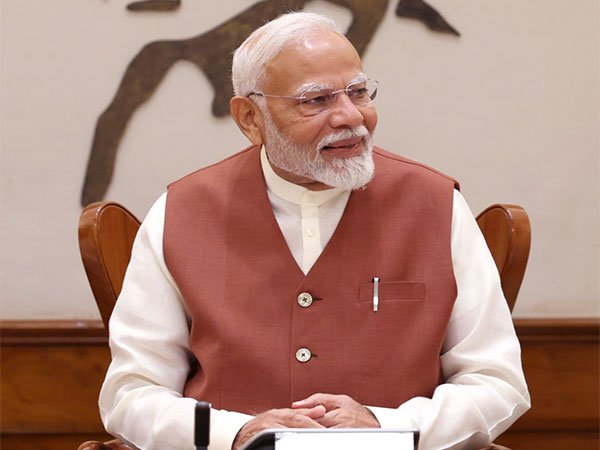
New Delhi, June 10,2026: A fresh political confrontation erupted on Wednesday as the Congress launched a sharp attack on Prime Minister Narendra Modi on the day he surpassed Jawaharlal Nehru to become India’s longest-serving Prime Minister, with senior Congress leader Jairam Ramesh accusing the Prime Minister of attempting to erase Nehru’s legacy while presiding over what he termed a “Murder of Democracy” in the country.
In a post on social media platform X, Ramesh highlighted what he described as the transformative achievements of independent India’s first five years under Jawaharlal Nehru’s leadership and contrasted them with the present political climate under the Modi government.
”Jawaharlal Nehru became Prime Minister of India on August 15, 1947, presiding over a stellar Cabinet — the likes of which have rarely been seen in the world. Over the next five years, modern India came into being,” Ramesh said.
The Congress leader listed a series of milestones achieved between 1947 and 1952, including the peaceful integration of more than 560 princely states into the Indian Union, the framing and adoption of the Constitution, the abolition of the zamindari system, the introduction of reservations for Scheduled Castes and Scheduled Tribes, the launch of major irrigation and power projects, and the establishment of India’s scientific and technological infrastructure, including in the field of nuclear energy.
He also underscored India’s emergence as a significant voice in global affairs during the period and recalled the preparation of electoral rolls covering nearly 170 million voters ahead of the country’s first general elections held between October 1951 and February 1952.
Ramesh credited several national leaders alongside Nehru for laying the foundations of modern India. “The 1947-52 record of achievements of India with Nehru as PM and in which stalwarts like Sardar Patel, Dr. Ambedkar, Dr. Rajendra Prasad, C. Rajagopalachari, and Maulana Abul Kalam Azad played such a pivotal role is now sought to be erased by Modi, who has a pathological fixation on Nehru,” he alleged.
Launching a direct attack on the Prime Minister, Ramesh said that while Modi may have crossed a “self-proclaimed and dubiously invented milestone”, he was “a millstone around India’s neck” and accused his government of weakening democratic institutions.
”The very same establishments of democracy — an independent Election Commission and a sacrosanct voter list — are now threatened,” he claimed.
The Congress general secretary also accused the government of undermining scientific temper and weakening educational institutions. Referring to recent controversies surrounding examinations, he said, “Scientific temper has been erased through the destruction of our educational institutions — as exposed most recently by the NEET-CBSE scandals.”
Ramesh further alleged that reservations for Scheduled Castes, Scheduled Tribes and Other Backward Classes had been diluted through privatisation and mechanisms such as “Not Found Suitable”.
Drawing an electoral comparison between Nehru and Modi, the Congress leader pointed out that Nehru secured decisive mandates in the 1952, 1957 and 1962 general elections. He argued that the BJP failed to secure an outright majority on its own in the 2024 Lok Sabha elections and relied on its National Democratic Alliance partners to form the government.
”Mr. Modi did NOT secure even a simple majority by a considerable margin in 2024 and had to hurriedly convene an NDA meeting, bypassing the BJP Parliamentary Party to anoint himself as PM. 2024 was most certainly not a mandate for Him,” Ramesh said.
The remarks came amid a broader political debate surrounding Prime Minister Modi’s historic tenure milestone, with the BJP celebrating the achievement as a reflection of sustained public trust and leadership continuity, while opposition parties have sought to contrast the government’s record with that of previous administrations, particularly the Nehru era.
May 30,2026: Ukraine has launched coordinated drone attacks on Russian energy infrastructure across multiple regions overnight.
The most significant strike hit Taganrog, Rostov Oblast, where a major port fire broke out after drones hit a tanker, fuel tank and administrative building, Russia’s RIA Novosti state media agency reported.
Early on Saturday, Rostov Governor Yury Slyusar confirmed the attack on Max, a Russian state-backed messaging app.
Slyusar added that Russian air defences destroyed multiple drones overnight across four districts. “During the repulse of an air attack on the Rostov region at night, UAVs were destroyed in the city of Taganrog, Chertkovsky, Matveyevo-Kurgansky, and Neklinovsky districts,” he said, per RIA Novosti.
May 29,2026: An uncrewed Blue Origin New Glenn rocket exploded on a Florida launchpad during a test on Thursday, in a major setback for Jeff Bezos’ space venture as it seeks to narrow the gap with Elon Musk’s IPO-bound SpaceX.
Video posted by NASASpaceflight, which livestreams launches from Florida, showed the towering New Glenn rocket igniting on the pad at about 2100 ET (0100 GMT on Friday) before erupting into a massive fireball that billowed skyward, sending a towering plume of flames and smoke into the air.
Blue Origin was preparing the rocket for its fourth launch, which was due to deliver 48 Amazon Leo satellites into low-Earth orbit, part of efforts to build a broadband constellation to rival Musk’s Starlink network. Amazon Leo satellites were not integrated on the rocket at the time of the incident.
The explosion marks the latest setback for the long-delayed New Glenn, which is supposed to play a central role in delivering lunar landers and cargo under NASA’s Artemis lunar exploration missions.
It comes just two days after NASA awarded Blue Origin a $188 million contract to land rovers on the moon’s surface, and less than a week after SpaceX – years ahead in development – carried out a largely successful test of its next-generation Starship rocket.
Blue Origin confirmed it had experienced an “anomaly” during a hot-fire test, where a rocket engine is fired up while anchored to the ground.
May 28,2026: Karnataka’s Chief Minister Sidaraya has announced his resignation. He is likely to formally submit his resignation to the governor later today. The resignation comes amid reports of elevation of his deputy DK Shivakumar as the new chief minister.
He was supposed to submit his resignation at Lok Bhavan but he announced it at the breakfast meeting since the governor is currently not in Bengaluru.
The developments follow a Congress high command meeting where reports say a decision on Shivakumar’s elevation was taken ending a prolonged power struggle in the state.
Kolkata, May 21,2026: A Bangladeshi delegation flew into the city Wednesday for a meeting of the Joint Rivers Commission and a visit to the Farakka barrage where the flow of the Ganges is measured as it bifurcates into the Bhagirathi-Hooghly to meander towards Kolkata.
The meeting, just months ahead of the expiry of the 30-year Ganges Water Sharing Treaty in December this year, assumes significance as the political discourse in Dhaka over water sharing with India has taken a stormy turn.
Earlier this week, the ruling BNP’s Secretary General Mirza Fakhrul Islam Alamgir warned that the future of India-Bangladesh relations would depend significantly on the outcome of Ganges negotiations, reflecting his party’s “expectations and needs”.
“India and Bangladesh usually jointly measure water flows at the outset of the dry season. Its an ongoing process. However, what is worrying is this tendency of Bangladeshi leaders to take strong pre-decided stands even before real talks begin on renewing the treaty. It defeats the purpose of negotiations if you start taking rigid postures,” Veena Sikri, former High Commissioner to Bangladesh, told UNI.
The Bangladeshi delegation is being led by Joint Rivers Commission member Md Anwar Kadir and includes senior representatives from Bangladesh’s Water Resources Ministry, Foreign Ministry and hydrological agencies, underlining the importance Dhaka attaches to the upcoming discussions.
While officially the meetings are routine technical consultations, they come at a strategically delicate moment. Officials on both sides have already begun preliminary discussions on renewal. However, analysts suggest that a comprehensive renegotiation may prove difficult under current political circumstances, making a temporary extension a more likely short-term outcome.
Sikri pointed out that the Ganges water treaty “could not be viewed in isolation” and a host of treaties and relations including connectivity and trade needed to be considered in tandem. Indian officials also believe that the Ganges treaty which shared the flow at Farakka headwaters on a 50:50 basis, needs an overhaul as the glacial melt which gives Ganges its waters has reduced even as downstream demand for water has shot up with population exploding on both sides of th border.
Complicating the talks over water are Bangladesh’s growing relationship with China and Pakistan. Even before Alamgir warned India on the Ganges water treaty, Bangladesh’s Foreign Minister Khalilur Rahman met his Chinese counterpart Wang Yi in Beijing to formally seek China’s involvement in the Teesta River Comprehensive Management and Restoration Project, oblivious of Indian sensitivities on handling over such a project just across the border from India’s Siliguri corridor, a narrow strip of Indian land which separates China from Bangladesh.
NEW DELHI, May 16,2026: Tehran has “no trust” in the U.S. and is interested in negotiating with Washington only if it is serious, Iranian Foreign Minister Abbas Araqchi said on Friday, as talks on ending the war remained on hold.
Araqchi told reporters in New Delhi that all vessels can pass through the Strait of Hormuz except those “at war” with Tehran, if they coordinate with Iran’s navy.
The Reuters Iran Briefing newsletter keeps you informed with the latest developments and analysis of the Iran war. Sign up here.
But the situation around the waterway, vital to global energy and commodities markets, was “very complicated”, he added, during a visit to attend a BRICS foreign ministers’ meeting in India.
In a post on X, Araqchi said he told India’s Foreign Minister Subrahmanyam Jaishankar that “Iran will always carry out historical duty as protector of security in Hormuz,” according to his post on X.
Iran effectively shut the strait, which normally handles about one-fifth of the world’s seaborne oil and gas supply, to most shipping after the U.S. and Israel began their war on Iran in February.
PAKISTANI-MEDIATED U.S.-IRAN TALKS HAVE STALLED
Washington and Tehran announced a ceasefire last month but have been struggling to thrash out a lasting peace pact. Talks mediated by Pakistan have been suspended since Iran and the U.S. each rejected the other’s latest proposals last week.
Araqchi said “contradictory messages” had raised Iranian doubts about the Americans’ real intentions, adding that the Pakistani mediation process had not failed but was in “difficulty”.
The United States and Israel have cut short two previous rounds of talks with Tehran in the past 13 months by launching campaigns of air strikes on Iran.
Iran is trying to keep the latest ceasefire to give diplomacy a chance but is also prepared to go back to fighting, Araqchi said.
The issues holding up negotiations between the two sides include Iran’s nuclear ambitions and its control of the Strait of Hormuz.
Hours before he spoke, U.S. President Donald Trump said his patience with Iran was running out and said he had agreed in talks with Chinese President Xi Jinping that Tehran must reopen the strait.
Asked if Tehran was open to mediation by Beijing, Araqchi said Iran appreciated the efforts of any country that had the ability to help.
“We have very good relations with China,” he said. “We are strategic partners, and we know that the Chinese have good intentions. So, anything they can do to help diplomacy would be welcomed.”
Araqchi added: “We hope that, with the advancement of negotiations, we will reach a good conclusion so that the Strait of Hormuz can be completely secured and we can expedite the normalisation of traffic through the strait.”
New Delhi , May 15,2026: Union Minister Kiren Rijiju on Friday defended the hike in fuel prices, comparing the 3.2% and 3.4% price increase in petrol in India to other countries, claiming that they witnessed the hikes ranging from 20% to nearly 100% due to the West Asia conflict. Praising Prime Minister Narendra Modi’s leadership for balancing economic stability with public welfare, he credited the government for governing with responsibility and putting people first while making decisions. “As the world battled rising fuel costs after the West Asia conflict, India stood apart. While several countries witnessed petrol & diesel hikes ranging from 20% to nearly 100%, India limited the increase to just +3.2% for petrol & +3.4% for diesel,” Rijiju said in a post on X. “Even as Brent crude crossed $100/barrel & global markets turned volatile, India’s public sector oil companies absorbed huge losses for weeks to protect citizens from inflation & economic pressure. This is governance with responsibility. This is leadership that puts people first. Under PM Narendra Modi, India continues to balance economic stability with public welfare,” he added.
Rijiju also attached a list of countries that hiked their fuel prices due to the West Asia Conflict. According to the list, Malaysia saw a growth of 89.7% in petrol prices and 112.7% in Diesel prices. The US reported a hike of 44.% in petrol prices and 48.1% in diesel prices. China saw a hike of 21.7% in petrol and 23.7% in diesel prices. This comes after the Centre on Friday increased petrol and diesel prices by Rs 3 per litre across the country. Following the revision, petrol prices in New Delhi rose from Rs 94.77 to Rs 97.77 per litre, while diesel prices increased from Rs 87.67 to Rs 90.67 per litre.The fuel price hike comes amid escalating global crude oil prices triggered by the ongoing conflict in West Asia. The geopolitical tensions, particularly the US-Israel and Iran conflict that began on February 28 this year, have disrupted global crude oil supplies and pushed Brent crude prices above USD 100 per barrel.
New York, May 15,2026: The U.S. Securities and Exchange Commission on Thursday (local time) settled a civil lawsuit against Adani Group Chairman Gautam Adani, subject to court approval, reported Reuters citing court records. According to media reports, Court documents show that Gautam Adani agreed to pay civil penalties of $6 million, while his nephew Sagar Adani, agreed to pay $12 million. The proposed settlement doesn’t include an admission of guilt, said news reports. The US SEC had earlier alleged that Gautam Adani, Sagar Adani and others orchestrated an alleged USD 250 million-plus bribery scheme between 2020 and 2024 to secure solar energy contracts in India.On April 8, the U.S. District Court for the Eastern District of New York had accepted a plea filed by the counsels for Gautam and Sagar Adani for a pre-motion conference to dismiss the case.The councils for Gautam and Sagar Adani informed that they intended to seek to dismiss the US SEC’s complaint and, as part of this process, have submitted a letter with the East District New York (EDNY) judge informing the Court that the Defendants are prepared to attend a pre-motion conference should the Court wish to schedule one.In the letter, the Defendants briefly set out their grounds for dismissal of SEC’s complaint, including that the court concerned lacks personal jurisdiction over the Defendants and the claims against them, the SEC’s claims are impermissibly extraterritorial, the alleged misstatements by the Defendants are too vague and general for any reasonable investor to rely upon as a guarantee of any concrete fact or outcome, making them in-actionable, and the Defendants’ lack of involvement in the transaction bars the SEC’s claims against them.According to the counsels, in September 2021, AGEL conducted a USD 750 million bond offering pursuant to SEC Rule 144A and SEC Regulation S, which are registration exemptions for private resales to qualified institutional buyers (QIBs) and non-US sales. AGEL sold these bonds outside the US through an agreement to non-US underwriters, who then resold the Notes to QIBs. A fraction of those resales is alleged to have been made to “investors in the United States”. AGEL was not a party to these transactions, the lawyers said in the letter to the court.The defendants said that the grounds for dismissal also include the SEC’s failure to state a claim on the basis that the defendants are neither based in the US nor conduct activities there that would grant the court jurisdiction and the alleged actions involve non-US entities outside the scope of US law.The defendants also said that even if the claims are accepted at face value, the complaint fails to establish any actionable legal violation or meet the threshold required to proceed.The defendants said that the Court lacks personal jurisdiction over defendants and the claims against them should be dismissed under Rule 12(b)(2).The claims according to the lawyers “involve Indian Defendants, an Indian issuer, securities not registered with the SEC and not traded on U.S. exchanges, and underlying conduct alleged to have occurred exclusively in India.”The councils said, the SEC has not alleged underwriters who purchased the bonds from AGEL were US institutions as they were not, or that the Subscription Agreement underlying the purchases was governed by US law as it wasn’t.Meanwhile, a New York Times Report on Thursday (local time) had claimed that the US Justice Department is contemplating dropping charges against Gautam Adani.The report said that this move has come after Adani hired a new legal team led by Robert J Giuffra Jr. who is part of Sullivan & Cromwell LLP. Giuffra Jr. is also one of US President Donald Trump’s personal lawyers, says the NYT Report.The report further suggests that Giuffra had a meeting last month at the Justice Department’s headquarters in Washington. Citing people familiar with that meeting NYT reports that the council outlined why prosecutors lacked evidence and even jurisdiction to bring the case. The report claims that the council also suggested that Adani could be willing to invest USD 10 billion in the American economy creating 15,000 jobs should the charges be dropped.NYT reported that prosecutors told the council that such an investment would not have a bearing on the case. However, the council’s offer did get a favourable response from one Justice Department official reported NYT citing people familiar with the meeting.
WASHINGTON/BEIJING, May 11,2026:U.S. President Donald Trump and Chinese President Xi Jinping are set to discuss Iran, Taiwan, artificial intelligence and nuclear weapons as they weigh extending a critical minerals deal, according to U.S. officials previewing Trump’s two-day visit to China this week.
Trump is scheduled to arrive in Beijing on Wednesday, ahead of talks set to take place Thursday and Friday. It will be his first trip to China since 2017.
AGREEMENTS ON PLANES, AGRICULTURE AND TRADE
The U.S. and China are expected to agree to forums to facilitate mutual trade and investment, while China is expected to announce purchases related to Boeing airplanes, American agriculture and energy, the officials said.
Plans for a Board of Trade and Board of Investment may be formally announced at the meeting, but those mechanisms may need subsequent work before they can be implemented, one of the officials said.
The two countries will also discuss lengthening a truce in their trade war that allows rare earth minerals to flow from China to the U.S., though it is not yet clear if that agreement will be extended this week, that official said.
He nonetheless expressed confidence that the deal, which was struck last autumn and remains in effect, will eventually be extended.
“It doesn’t expire yet,” the official told reporters. “I’m confident we’ll announce any potential extension at the appropriate time.”
China’s embassy in Washington declined to comment.
THORNIER ISSUES INCLUDE TAIWAN, NUCLEAR ARMS, IRAN AND AI expected to veer into areas that have long been a source of U.S.-China tension, including Iran, Taiwan and nuclear arms.
China maintains ties with Iran and remains a major consumer of its oil exports. Trump has been leaning on China to use its influence to push Tehran to make a deal with Washington and end the conflict that began when the U.S. and Israel launched strikes on Iran in late February.
The Trump administration also has pressed China on its dealings with Russia.
“The president has spoken multiple times with General Secretary Xi Jinping about the topic of Iran and about the topic of Russia, to include the revenue that China provides to both those regimes, as well as dual-use goods, components and parts, not to mention the potential of weapons exports,” said one of the officials. “I expect that conversation to continue.”
Xi, meanwhile, is frustrated with Washington over Taiwan. The U.S. remains the most important international backer and arms supplier for the democratically governed island, which Beijing claims as its own Chinese territory.
China has ramped up its military presence near Taiwan in recent years, but U.S. policy will not change, the official said.
The Trump aides expressed increasing concern about advanced artificial intelligence models being developed in China and believed the two sides need “a channel of communication” to avoid conflicts arising from their use.
“What that looks like is yet to be determined, but we want to take this opportunity with the leaders meeting to open up a conversation and to see if we should establish a channel of communication on AI matters,” said one of the officials.
Washington has also long hoped to open up talks with Beijing about nuclear weapons, though China remains reluctant to discuss its arsenal. The Chinese government has said privately to the U.S. that “they have no interest in sitting down and discussing any kind of nuclear arms control or anything along those lines at this point,” the official said.
Trump and Xi’s last meeting was in October in South Korea, where they agreed to pause a bruising trade war that had seen the U.S. impose triple-digit tariffs on Chinese goods and Beijing threaten to restrict the global supply of rare earths.
In February, the Supreme Court said Trump did not have the authority to impose many of his tariffs on imports worldwide. He has vowed to re-impose some levies using other legal avenues.
SHENZHEN, May 01,2026: An American scientist convicted of lying to U.S. authorities about payments from China while he was at Harvard University has rebuilt his research lab in Shenzhen to pursue technology the Chinese government has identified as a national priority: embedding electronics into the human brain.
Charles Lieber, 67, is among the world’s leading researchers in brain-computer interfaces. The technology has shown promise in treating conditions such as ALS and restoring movement in paralyzed patients. But it also has potential military applications: Scientists at China’s People’s Liberation Army have investigated brain interfaces as a way to engineer super soldiers by boosting mental agility and situational awareness, according to the U.S. Defense Department.
Lieber was found guilty by a jury and convicted in December 2021 of making false statements to federal investigators about his ties to a Chinese state program to recruit overseas talent, and tax offenses related to payments he received from a Chinese university. He served two days in prison and six months under house arrest, and was fined $50,000 and ordered to pay $33,600 in restitution to the Internal Revenue Service. During the case, his defense said he was suffering from an incurable lymphoma, which was in remission, and he was fighting for his life.
Three years after he was sentenced, Reuters has learned that Lieber is now overseeing China’s state-funded i-BRAIN, or the Institute for Brain Research, Advanced Interfaces and Neurotechnologies, with access to dedicated nanofabrication equipment and primate research infrastructure unavailable to him at Harvard. The lab is an arm of the Shenzhen Medical Academy of Research and Translation, or SMART.
“I arrived on April 28, 2025 with a dream and not much more, maybe a couple bags of clothes,” Lieber said of his move to China at a Shenzhen government conference in December. “Personally, my own goals are to make Shenzhen a world leader.”
SMART last year appointed Lieber as an investigator, according to a post on i-BRAIN’s website dated May 1, 2025. That news was covered by some media outlets. The same day, i-BRAIN said Lieber had also been appointed its founding director – an announcement that went unreported at the time.
This story is the most comprehensive account of Lieber’s activities since he moved to China. Reuters is reporting for the first time that his lab has access to dedicated primate research facilities and chip-making equipment; that it sits within a sprawling ecosystem of state-backed institutions bankrolled by billions of dollars in government funding; and that it is housed within an institution that is luring top scientific talent back from the United States.
Some analysts say Lieber’s ability to reconstitute his laboratory after a federal criminal conviction for lying about his ties to China shows how U.S. safeguards on technology with potential military uses haven’t kept pace with Chinese government efforts to acquire it. That concern is amplified because of Beijing’s military-civil fusion strategy, whereby civilian scientific resources and research are shared with the military.
“China has weaponized against us our own openness and our own efforts for innovation,” said Glenn Gerstell, a nonresident senior adviser at the Center for Strategic and International Studies and former general counsel of the U.S. National Security Agency from 2015 to 2020. “They’ve flipped that and turned it around against us, and they’re taking advantage of it.”
The Chinese Ministry of Science and Technology and the defense ministry didn’t respond to questions about China’s development of brain-computer interfaces. SMART and i-BRAIN also didn’t reply to requests for comment about their research and the recruitment of Lieber.
PRIMATE RESEARCH
Lieber’s new perch appears to give him richer resources than he had in the United States.
In Shenzhen, i-BRAIN in February installed a deep ultraviolet lithography system made by semiconductor-equipment giant ASML, according to the lab’s website. The Dutch company’s machines print the tiny circuits essential to cutting-edge chips. At Harvard, Lieber used shared lithography equipment at the university’s Center for Nanoscale Systems. The center serves more than 1,600 users annually, according to its website.
i-BRAIN’s model is two generations behind restricted machines, but still likely to cost around $2 million, according to Jeff Koch of semiconductor-research firm SemiAnalysis.
ASML told Reuters it wouldn’t comment publicly about its customers.
An office building housing the Institute for Brain Research Advanced Interfaces and Neurotechnologies (i-BRAIN), part of the Shenzhen Medical Academy of Research and Translation (SMART), at Weiguang Life Science Park in Shenzhen, Guangdong province, China, March 26, 2026. Picture taken with a mobile phone. REUTERS/David Kirton Purchase Licensing Rights, opens new tab
On the same campus, Lieber also has access to Brain Science Infrastructure (BSI) Shenzhen, a research lab with 2,000 primate cages and dedicated space for i-BRAIN’s work, according to the latter’s website. Many researchers in the field consider primate trials a prerequisite for human trials for invasive brain-computer interfaces. The BSI facility is part of the Chinese Academy of Sciences and is funded by the Shenzhen government.
Domestic and international researchers are being recruited by i-BRAIN for electrophysiology studies on rhesus monkeys as models for human brain-computer interfaces, according to a September 2025 post on its website, which invites prospective applicants to contact Lieber.
There is no indication that Lieber conducted primate research at Harvard. The elite Massachusetts university closed its New England Primate Research Center in 2015 under sustained pressure over animal welfare and funding challenges.
Jung Min Lee, a researcher who co-authored nanofabrication papers with Lieber at Harvard, has joined him at i-BRAIN as research associate professor, according to its website. Lee is an expert in stitching flexible electronics into brain tissue.
John Donoghue, a Brown University professor and neuroscientist who pioneered a brain-computer interface system known as BrainGate, said primate work is “absolutely critical” in translating neural interface technology to humans, but faces regulatory and funding hurdles in the United States.
“With so many hassles with non-human primate research here, to have somebody give you all this support, access to technology, a concentrated center, a national initiative – those are things that are very attractive,” he told Reuters.
SMART’s 2026 budget, funded entirely by Shenzhen’s government, rose nearly 18% to about $153 million. The academy’s budget papers don’t indicate the proportion of that funding dedicated to i-BRAIN.
SMART was established in 2023 under founding president Nieng Yan, a structural biologist. Her return to China a year earlier after five years at Princeton University was hailed in domestic media as the homecoming of a “goddess scientist.
Alongside SMART sits the legally separate but functionally twinned Shenzhen Bay Laboratory, which launched in 2019 with a five-year budget from Shenzhen’s government of around $2 billion. Both are based in Guangming Science City, a national science hub of manicured parks and waterways. The two institutions share the same leadership and offices, and will also occupy a dedicated 750,000-square-meter site that is under construction at a planned cost of $1.25 billion. Shenzhen Bay Laboratory didn’t respond to a request for comment.
Lieber joins at least six others who have moved to SMART from U.S. institutions, though all of them are Chinese-born researchers returning home.
China named brain-computer interface technology a national growth priority in its new five-year plan in March 2026. Zheng Shanjie, head of China’s National Development and Reform Commission, said in October that the rise of brain-computer interfaces and related technologies “will be equivalent to creating another Chinese high-tech sector in the next 10 years.”
The U.S. Defense Advanced Research Projects Agency is also investing in brain-computer interfaces for drone and cyber defense applications, according to the agency’s program description. Research projects led by Lieber at Harvard received over $8 million in funding from the Defense Department since 2009, court documents show. The Pentagon didn’t respond to questions about the technology’s military uses and Lieber’s role at Shenzhen.
VYING FOR A NOBEL PRIZE
Lieber’s 2021 conviction was one of few wins for the U.S. Justice Department’s China Initiative, launched during the first Trump administration to counter Chinese economic espionage and intellectual-property theft. The initiative was wound down under President Joe Biden after a record of failures and criticism for racial profiling.
While still on supervised release, Lieber obtained court approval for at least three trips to China in 2024, including one that U.S. District Judge Denise Casper granted for “employment networking,” court documents show.
Lieber’s defense team said in a pre-sentencing memorandum in 2023 that the scientist had been suffering from lymphoma and was largely confined to his home, leaving only for medical appointments, brief walks, and occasional visits to a local farm. During a 30-year career at Harvard he spent over 80 hours a week in the lab, and when not working, Lieber spent time “coaching wrestling, and growing giant pumpkins in the back yard,” according to his defense.
Lieber acknowledged being “young and stupid” in getting involved with China’s Thousand Talents Program, the state-backed initiative to recruit overseas experts, his lawyer told the court in 2021. When he was arrested in 2020, Lieber told FBI agents he “wanted to win a Nobel Prize” and be recognized for his work, according to prosecutors.
The Lieber case illustrates a broader failure of U.S. policy, some analysts say.
“If you think of him as a vector for tech acquisition that runs contrary to U.S. interests, we identified that, punished him, and that did nothing to stop the big-picture trend,” said Emily de La Bruyère, co-founder of China-focused consultancy Horizon Advisory and a senior fellow at the Washington-based Foundation for Defense of Democracies, a nonprofit research institute considered hawkish on foreign policy.
Gerstell, the former U.S. official, described Lieber as “Exhibit A” in how U.S. legal tools are inadequate.
“This is a guy who was convicted of precisely the thing that we want him to be convicted of in this context, and yet the minute he’s released from house arrest, he’s off in China,” he said.
[Courtesy: Reuters]

Mali’s Defence Minister, General Sadio Camara has been killed in coordinated attacks on military sites nationwide, a government spokesperson has confirmed.
Camara was killed when assailants targeted his house, the spokesperson, Issa Ousmane Coulibaly, said in a statement on Sunday.
Camara’s residence in the garrison town of Kati came under assault on Saturday during simultaneous attacks by an al-Qaeda affiliate and Tuareg rebels.
Camara was a central figure in the military government that seized power after back-to-back coups in 2020 and 2021.
Haque said attackers carried out a suicide car bomb assault on Camara’s residence in Kati, a heavily fortified military town about 15km (9 miles) northwest of the capital, Bamako, where Interim President Assimi Goita also lives.
Camara’s second wife and two of his grandchildren were also killed in the attack on his home, the AFP news agency reported.
Gunmen attacked several other locations across Mali, including Bamako, as well as Gao and Kidal in the north and the central city of Sevare.
Beijing, Apr 14,2026: Chinese President Xi Jinping has stepped forward to play the role of a mediator in the West Asia war as he has presented a four-point proposal to promote peace and stability in the region during a meeting with Sheikh Khaled bin Mohamed bin Zayed Al Nahyan, Crown Prince of Abu Dhabi, in Beijing.
Xi emphasized the principle of peaceful coexistence, calling for the creation of a common, comprehensive, cooperative, and sustainable security architecture for West Asia and the Gulf region. He also stressed respect for national sovereignty, urging that the sovereignty, security, and territorial integrity of all countries be fully protected, alongside the safety of personnel, facilities, and institutions, Xinhua reported.
On adherence to the principle of international rule of law, Xi said the authority of international rule of law should be upheld to prevent the world from falling back into the law of the jungle.
He further highlighted the need to coordinate development and security, calling on all parties to work together to foster a favorable environment for regional growth.
China’s diplomatic efforts come amid heightened tensions following the announcement of a two-week ceasefire between Iran and the U.S. on April 7, after 40 days of conflict.
High-stakes peace talks in Islamabad, Pakistan, aimed at ending the war, collapsed on April 12 after 21 hours of intense negotiations, jeopardizing the temporary truce brokered just days earlier. Meanwhile, fresh US action, including CENTCOM’s blockade of Iranian ports, has disrupted energy flows and sent oil prices soaring.
Beijing’s involvement positions it as a rival to Washington, ahead of crucial trade talks between Xi and US President Donald Trump next month.
China’s close ties with Iran and Russia have fueled expectations of a larger diplomatic role. Reports suggest that China may have influenced Iran’s agreement to the temporary ceasefire this week.
Foreign Ministry spokesperson Mao Ning has noted that China has made “active efforts” to end the conflict, highlighting that Foreign Minister Wang Yi has conducted 26 calls with representatives from Russia, Saudi Arabia, Germany, and Iran since US-Israel strikes on Iran began on February 28. However, she stopped short of confirming direct mediation.
New Delhi, Washington, Apr 13,2026: The US Central Command (CENTCOM) forces will begin implementing a blockade of all maritime traffic entering and exiting Iranian ports at 10 a.m. Eastern Time (8:30 PM Indian Standard Time) ‘in accordance with the President’s (Trump’s) proclamation,’ the CENTCOM announced on Monday.
The blockade will be enforced impartially against vessels of all nations entering or departing Iranian ports and coastal areas, including all Iranian ports on the Arabian Gulf and Gulf of Oman.
Iran’s Parliament Speaker Baqer Qalibaf, while dismissing the blockade threat, asked American people to ‘enjoy’ today’s gas prices, adding that they will soon be ‘nostalgic’ about 4 USD–5 USD per gallon fuel.
Iran’s Navy commander Rear Admiral Shahram Irani also ridiculed Trump’s threats of a naval blockade as ‘very ridiculous and laughable.’
CENTCOM said in a statement that its forces will not impede freedom of navigation for vessels transiting the Strait of Hormuz to and from non-Iranian ports.
Additional information will be provided to commercial mariners through a formal notice prior to the start of the blockade.
It advised all mariners to monitor Notice to Mariners broadcasts and contact US naval forces on bridge-to-bridge channel 16 when operating in the Gulf of Oman and Strait of Hormuz approaches.
Trump had announced US Navy will start blockading, ‘effective immediately,’ Iranian ports after talks with Iran in Islamabad on Saturday failed.
CENTCOM forces also began setting conditions for clearing mines in the Strait of Hormuz, as two US Navy guided-missile destroyers conducted operations.
CENTCOM said the two guided-missile destroyers–USS Frank E. Peterson and USS Michael Murphy–transited the Strait of Hormuz and operated in the Arabian Gulf as part of a broader mission to ensure the Strait is fully clear of sea mines laid by Iran’s Islamic Revolutionary Guards Corps (IRGC).
‘Today, we began the process of establishing a new passage and we will share this safe pathway with the maritime industry soon to encourage the free flow of commerce,” said Adm. Brad Cooper, commander of CENTCOM, on Sunday.
Additional US forces, including underwater drones, will join the clearance effort in the coming days, CENTCOM said.
In direct response to Trump’s order of blockade, Iran’s Parliament Speaker warned Americans to “enjoy” today’s gas prices, adding that they will soon be “nostalgic” for 4 USD–5 USD per gallon fuel.
The average price of regular gasoline in the US is currently 4.125 USD per gallon, according to the American Automobile Association. The figure is already up more than 40 per cent from pre-war levels of 2.98 USD. The blockade will further ramp up the prices.
Iran’s Navy commander, in a statement, dismissed Trump’s threats of a naval blockade as ‘very ridiculous and laughable,’ saying the Iranian military is closely monitoring every move of the US fleet in the region.
Iran’s Islamic Revolution Guards Corps (IRGC) Navy had announced last week that the Strait “will never return to its former state, especially for the US and Israel”.
The Iranian Parliament has advanced draft legislation to impose transit fees in the national currency and explicitly ban US and Israeli vessels.
Reacting to Iran’s decision of imposing ‘Transit Fee’. Trump said on X on Sunday that Iran will not be allowed to profit off this ‘Illegal Act of EXTORTION.’
He warned that the US is ‘fully locked and loaded,’ and ‘our military will finish up the little that is left of Iran’ at an appropriate moment.
He said Iran had promised to open the Strait of Hormuz, and they knowingly failed to do so. This caused anxiety, dislocation, and pain to many people and countries throughout the World.
He warned Iran against ‘extorting’ toll from ships passing through Hormuz and called it ‘World Extortion.’
Asserting that leaders of countries, especially the US, will never be extorted, he said he had instructed US Navy to seek and interdict every vessel in International Waters that has paid a toll to Iran.
‘No one who pays an illegal toll will have safe passage on the high seas. We will also begin destroying the mines the Iranians laid in the Straits. Any Iranian who fires at us, or at peaceful vessels, will be BLOWN TO HELL,’ Trump warned.
WASHINGTON/DUBAI/TEL AVIV, April 8,2026: The United States and Iran agreed to a two-week ceasefire brokered by Pakistan, potentially suspending a six-week-old war that has killed thousands, spread across the Middle East and caused unprecedented disruption to the world’s energy supplies.
Trump announced the agreement late on Tuesday, just two hours before a deadline he had set for Iran to open the blockaded Strait of Hormuz or face the destruction of its “whole civilisation”.
Pakistani Prime Minister Shehbaz Sharif said he had invited Iranian and U.S. delegations to meet in Islamabad on Friday. The deal is subject to Iran’s agreement to pause its blockade of oil and gas passing through the strait, Trump said.
The waterway typically handles about one-fifth of global oil and liquefied natural gas shipments. News of the deal, and the prospect that the worst disruption to global energy markets in history could finally come to a close, caused a sharp fall in oil prices and a surge in share markets around the world.
Iran’s foreign minister, Abbas Araqchi, said in a statement Tehran would cease counter-attacks and provide safe passage through the waterway – if attacks against it stopped.
New Delhi, Apr 2,2026: In a move aimed at cushioning domestic industries from global supply shocks, the Government has announced a full exemption from customs duty on a wide range of critical petrochemical products until June 30, 2026, citing disruptions caused by the ongoing conflict in West Asia.
In an official statement the government said the decision was taken as a temporary but targeted relief measure to ensure uninterrupted access to essential industrial inputs and to contain rising costs across multiple sectors.
“The exemption is intended to maintain supply stability and ease cost pressures on downstream industries that rely heavily on petrochemical feedstock,” a senior government official said.
The conflict in West Asia has strained global supply chains, particularly affecting the availability and pricing of petrochemical derivatives, many of which are crucial to manufacturing processes. India, being a major importer of several such inputs, has faced increasing volatility in recent months.
According to the government, the duty waiver covers a broad spectrum of chemicals and polymers, including anhydrous ammonia, methanol, isopropyl alcohol, monoethylene glycol, phenol, acetic acid, and vinyl acetate monomer.
It also extends to key industrial plastics and resins such as polyethylene, polypropylene, polyvinyl chloride (PVC), polystyrene, epoxy resins, and polyethylene terephthalate (PET) chips.
The exemption is expected to benefit a wide range of sectors including plastics, packaging, textiles, pharmaceuticals, automotive components, and other manufacturing industries.
By reducing the cost of raw materials, the government also aims to prevent price escalation in finished goods, thereby offering indirect relief to consumers.
Experts say the inclusion of polymers such as acrylonitrile-butadiene-styrene (ABS), polycarbonates, and polyurethanes will particularly aid the automotive and electronics sectors, while chemicals like purified terephthalic acid (PTA) and monoethylene glycol are crucial for the textile industry.
The government has indicated that the measure is temporary and will remain in place until the end of June 2026, after which the situation will be reviewed based on global market conditions.
A detailed annexure released alongside the announcement lists dozens of exempted items across various tariff headings, reflecting the wide scope of the intervention.
Officials emphasised that the move is part of a broader strategy to safeguard domestic manufacturing and ensure resilience in the face of external economic shocks.
CAPE CANAVERAL, Florida, April 1,2026: Four astronauts blasted off from Florida on Wednesday on NASA’s Artemis II mission, a high-stakes voyage around the moon that marks the United States’ boldest step yet toward returning humans to the lunar surface later this decade in a race with China.
NASA’s Space Launch System (SLS) rocket, topped with its Orion crew capsule, roared to life just before sunset at the agency’s Kennedy Space Center in Cape Canaveral, Florida, carrying its debut crew – three U.S. astronauts and a Canadian astronaut – into Earth orbit. The 32-story-tall space vehicle thundered into clear skies trailing a towering column of thick, white vapor.
NASA Administrator Jared Isaacman said the launch was an opening act for subsequent missions that would include construction of a moon base to support the “enduring presence we’re trying to create on the surface.”
If the mission proceeds as planned, the crew consisting of NASA astronauts Reid Wiseman, Victor Glover and Christina Koch, plus Canadian Space Agency astronaut Jeremy Hansen, will fly around the moon and back in their nearly 10-day expedition, putting the spacecraft through its paces while venturing deeper into space than humans have ever gone.
The mission is the debut crewed test flight in the Artemis program, successor to NASA’s Cold War-era Apollo project, and the world’s first to send astronauts in the vicinity of the moon, out of Earth’s orbit, in 53 years.
It serves as a crucial dress rehearsal for a NASA bid to land humans on the lunar surface later this decade, after one more crewed mission around the moon. NASA is targeting 2028 for Artemis IV, a first-ever landing of astronauts on the moon’s South Pole, seeking to beat China’s planned crewed mission to the same lunar region as early as 2030.
The last time astronauts walked on the moon – a feat so far achieved only by the United States – was the final Apollo mission in 1972.
‘FOR ALL HUMANITY’
After nearly three years of training, the crew is the first to fly in NASA’s Artemis program, a multibillion-dollar venture established in 2017 to build up a long-term U.S. presence on the moon over the next decade and beyond, serving as a stepping stone to eventual missions to Mars.
Minutes before liftoff, Canadian astronaut Hansen, strapped inside the gumdrop-shaped Orion capsule, told mission control in Houston: “This is Jeremy, we are going for all humanity.”