Bengaluru (Karnataka), September 9,2026: Group Captain and astronaut Angad Pratap on Wednesday said Gaganyaan will lay the foundation for India’s larger human spaceflight ambitions, including the Bharatiya Antariksha Station, stressing that the country’s ultimate aim should be to make space accessible to everyone and push the boundaries of knowledge for humanity.Speaking at the Space Expo session ‘The Next Chapter of Space: A Conversation on Exploration, Science and Innovation’, Pratap said Gaganyaan is about developing India’s independent capability to send humans into space and described it as a major technological milestone.“Gaganyaan is about acquiring the capability to launch a human to space domestically, here in India. It’s a huge capability, and I am very, very eagerly waiting for that day to happen. Because it is a very critical piece of what I would call apex technology, which has 16 to 20 very niche sets of technologies under it. So once you reach that milestone, it is a huge milestone for any country in the world, and we are going to be the fourth country in the world to do that, all by ourselves,” he said.
However, he said India’s human spaceflight ambitions should not be limited to Gaganyaan, pointing to the Bharatiya Antariksha Station as an important part of the country’s long-term plans.“Notwithstanding that, I wouldn’t really restrict myself to Gaganyaan, because in India people currently associate human spaceflight only with Gaganyaan. The Bharatiya Antariksha Station is still in the shadows. So Gaganyaan is nothing but human spaceflight,” Pratap said.He said human spaceflight would allow scientists to expand knowledge beyond what can be learnt by observing phenomena on Earth.“And for those from a physics background, you know about the physics cube. All of the learning we have had, whether in the biological domain or the engineering domain, we have learned primarily by observing things here on Earth. There is much, much more to learn out there, beyond Earth, for which you have to send your scientists. You have to send humans of all specialisations — who are probably sitting right here — all the way up there,” he added.Pratap said Gaganyaan should therefore be viewed as a foundation for much larger human spaceflight programmes. “So Gaganyaan may sound like just one single capability or a technology demonstrator where we just send one person, for one orbit maybe, and bring them back. But that will lay the foundation for much bigger things that I have already talked about, and Tom has already talked about,” he said.He also stressed the need for greater collaboration between the government and private sectors in India’s space programme.“We need to make space accessible to everyone. A lot of technology will cross over between the private sector and the government sector — it’s a symbiotic relationship, and both will gain from each other. But the ultimate aim is to push the boundaries of knowledge for humanity as a whole,” he added.
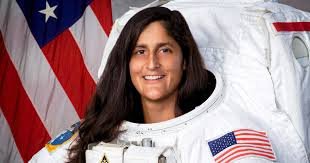
The session featured Sunita Williams, retired US Navy officer and NASA astronaut and Tom Shelley, Vice President, Crew Partnerships, VAST Space, who discussed the future of space exploration, science, innovation and commercial space stations.NASA astronaut Sunita Williams said India is “ready for the challenge” of building future space stations, while stressing that advanced technologies, autonomous systems and international cooperation will be critical as human spaceflight moves beyond the International Space Station (ISS).Williams said the next generation of space stations offers an opportunity to develop systems that can reduce dependence on Earth, including onboard databases, reliable 3D printing and autonomous scientific analysis. Reflecting on her experience aboard the ISS, Williams said astronauts cannot simply rely on a database or search engine in space in the same way people on Earth can.
Bengaluru, Feb 7,2026: India on Saturday signaled what the Central government described as a defining moment in its artificial intelligence and semiconductor journey, with the unveiling of a 2-nanometer chip design at Qualcomm highlighting the country’s growing role in advanced chip design alongside a rapid expansion of AI and data centre infrastructure.
Speaking at the Qualcomm event, union Minister for Electronics and Information Technology Ashwini Vaishnaw said India is steadily moving beyond its long-standing identity as a software services and back-end chip development hub towards higher-value semiconductor design and AI-driven technologies.
The 2-nanometer wafer unveiled by Qualcomm contains dies with around 20 billion transistors each and integrates CPU and GPU capabilities. The minister said such advanced chips are critical for enabling AI computing at the edge, including applications in cameras, networking equipment, industrial systems and automobiles.
He clarified that while semiconductor manufacturing remains a complex, long-term journey, India’s design capabilities have advanced significantly, with companies now undertaking end-to-end chip design work in the country, from product definition to silicon validation.
Linking semiconductor progress with AI infrastructure, Vaishnaw said India has already seen committed investments of around $70 billion in data centres, rising to nearly $90 billion when recent announcements are included.
He said industry discussions suggest that investments could rise substantially in the coming years as AI adoption accelerates, though he noted that such figures represent projections rather than firm commitments.
He added that the growth of data centres is beginning to create downstream opportunities, including interest in AI server manufacturing and advanced electronics production in India, supported by existing electronics manufacturing incentive schemes.
On AI compute capacity, the minister said India currently has around 10,000 GPUs available under common compute infrastructure and plans to add approximately 50,000 more in the near term as part of the next phase of the AI mission, with further decisions to be guided by inputs from an upcoming AI summit.
The minister attributed India’s progress to the talent pipeline being built under the Semicon India programme. Under Semicon India 1.0, semiconductor education and training has expanded across more than 300 universities and colleges, with students gaining exposure to chip design tools and validation processes through industry and government-supported facilities.
He said the union Budget’s announcement of Semicon India 2.0 will deepen this effort, with a sharper focus on advanced chip design, equipment and materials, system-level skills and the gradual expansion of fabrication and ATMP capabilities. As part of this roadmap, India will work systematically from current 28-nanometer fabrication capabilities towards more advanced nodes such as 7 nanometers over time.
On the impact of AI on the IT sector, the minister said artificial intelligence would permanently change the software industry, creating both disruption and new opportunities.
He emphasised the need for coordinated action by industry, academia and government to upskill and reskill the workforce for AI-based enterprise solutions.
Qualcomm executives said the company operates as a global organisation with intellectual property developed across multiple geographies, but confirmed that its India centres play an important role in advanced semiconductor design, including work on leading-node technologies.
Reiterating India’s approach to global technology engagement, the minister said the country remains committed to co-development, co-creation and respect for intellectual property, and aims to contribute meaningfully to global AI and semiconductor innovation.
Moscow, Sep 27,2025: Russian President Vladimir Putin today said the country will launch in the Tomsk Region, the world’s first nuclear power system with a closed fuel cycle wherein 95 percent of the spent fuel will be reused in the reactors more than once.
Speaking at the Global Atomic Forum here yesterday evening Putin said, “As per OECD estimates, all uranium resources under an optimistic scenario will be fully depleted by 2090, which is about eight million tons. In practice the depletion may even happen as early as the 2060s.”
The forum is being held as part of World Atomic Week, which marks the 80th anniversary of Russia’s nuclear industry and is themed “From a New Technological Paradigm to a New Worldview.”
“Given that a quarter of uranium reserves are found in deposits where uranium is a by-product, by 2030 – here I come to what I believe Russia can truly be proud of – we plan to launch in the Tomsk Region the world’s first nuclear power system with a closed fuel cycle,” Putin said.
Terming it as a revolutionary development made possible by Russian scientists and engineers, Putin said by closing the nuclear fuel cycle, almost the entire volume, that is, 95 percent of spent fuel will be reused in reactors more than once.
“This mechanism will, in the long term, make it possible to virtually eliminate the problem of radioactive waste accumulation and, which is also extremely important, essentially remove the issue of uranium supply,” Putin added.
According to him, the full range of advanced materials for the closed fuel cycle will be tested at the International Research Centre now being established in the Ulyanovsk Region.
“We invite scientists from different countries to cooperate in developing technologies that, without exaggeration, open a new era in nuclear energy,” Putin said.
On the funding of new nuclear power plants, he said, “There is a need to develop modern financing models and involve international financial institutions and development banks.”
Putin said, “Earlier this year, the New Development Bank established by the BRICS countries confirmed its readiness to finance nuclear projects, while at the end of last year, on Russia’s initiative, a BRICS coordination mechanism – the Nuclear Energy Platform – was established.”
He said Russia’s principled approach ensures its leadership in this field.
“First, we strictly honour our contractual obligations. I want to emphasise this. We fulfill all our obligations entirely regardless of political circumstances,” he said.
“Second, we reject “technological colonialism” and do not make our partners dependent on Russian technical solutions. On the contrary, we help them establish their own sovereign national nuclear industries, including personnel training and the creation of competence centres. We enlist local companies, assist in the operation of power units, and ensure the supply of nuclear fuel and waste management,” Putin said.
Continuing further Putin said, Russia shares its experience and knowledge in building other advanced industries of the 21st century, such as nuclear medicine, digital systems, electric transport and innovative materials.
“As a result, we help our partners make a genuine development leap, bring their economies to a whole new level of efficiency, and ultimately improve quality of life,” Putin said.
Russia views peaceful nuclear technologies as the foundation for extensive international cooperation and for fostering closer ties among nations. Russia is keen on establishing stable, long-term conditions for projects within the nuclear sphere, Putin said.
Chennai, Aug 29,2025: A business opportunity valued between Rs.40,000 and Rs.70,000 for the Indian space sector over the next 15 years was put out in the open by a senior official of the Indian Space Research Organisation (ISRO) at the recently held National Meet 2.0.
Speaking at the conference, Nilesh M Desai, Director, ISRO’s Space Applications Centre said India plans to orbit 103 earth observation and 19 technology demonstration satellites over the next 15 years or by 2040.
Desai also said plans to launch about 160 communication satellites including a constellation of 140 satellites in the Low Earth Orbit (LEO) and Medium Earth Orbit (MEO) to provide broadband connectivity like Starlink, OneWeb and others.
Desai said the 20 communication satellites will be placed in geosynchronous orbit (GEO) and will be made through ISRO/ NewSpace India Ltd (NSIL) and private players.
According to Desai, the earth observation satellites will also be realised by ISRO and private players.
The distribution of earth observation satellites based on weight will be as follows: one satellite weighing less than 100kg; 9 satellites ranging between 100-200 kg; 66 satellites – 200-500 kg; 38 satellites-500-1,000 kg and 5 satellites- over 1,000 kg.
“For the list above, the total business value should be around Rs.40,000-50,000 crore. Considering the present value it should escalate with time at least by five percent,” Dr.S.Somanath, former Chairman, ISRO told this writer.
“India is on steroids. We see unprecedented growth. We are at a tipping point. One can expect approximately 100 launches in the coming 5-6 years. Depending on the payload it will be a combination of launch vehicles being used,” reacted Jagat S Parikh, President, Strategy & Growth, Walchandnagar Industries Ltd to this writer.
The company is into heavy engineering catering to India’s strategic sectors like defence, nuclear, aerospace and several other industrial products.
When queried as to what the 119 earth observation satellites would translate into value satellite, rockets and ground equipment- industry experts gave varied estimates.
Even the lower estimate is lucrative enough for the sector as a whole to salivate.
”The blended cost per satellite will be about Rs.300 crore. So the 119 earth observation satellite business value will be about Rs.35,700 crore. As regards the rockets, the average cost per vehicle will be about Rs.350 crore. A total of 90 rockets will be needed, assuming 60 rockets with a single satellite and 30 rockets with two satellites. So the total business value of satellites plus rockets will be about Rs.71,700 crore,” Tapan Misra, Founder Sisir Radar and former Director of Space Applications Centre, ISRO told this writer.
It should be noted that the opportunity is not only for satellite manufacturers but also for the makers of rockets and ground equipment.
According to Misra, the planned 160 communication satellites will also cost at an average Rs.300 crore per satellite which will work out to Rs.48,000 crore. The rocket cost will also average to Rs.350 crore per vehicle as the orbit will be a mix of GEO/MEO/LEO.
On the other hand, space sector consultant Mukund K Rao’s estimate matches that of Somanath.
A former Deputy Director (Technology and Systems) at ISRO Rao told this writer that to put into orbit the 119 earth observation satellites, one may need about 50 rockets-a ballpark figure- as many satellites could get launched as piggyback or as a cluster.
“So we are talking of almost 170 space systems (satellites and rockets) in 15 years,” Rao said.
Stating ISRO must have worked out the cost model for the 119 earth observation satellites, Rao said the maximum weight of the total satellites as mentioned in Desai’s presentation-may be about 80,000 kg or could be lesser too.
“Globally the best launch cost today is less than USD 3,000/kg or maybe we can look at USD 5,000-6,000/kg in future. Indian launch systems can be very competitive in costs. This could mean, at a ballpark, a cost of around Rs.3,000-4000 crore for launching these 80,000 kg/ 119 satellites if our launch systems can be at comparable world costs and tremendous innovations built in to scale. Over 15 years it may average at Rs. 300 crore per year,” Rao remarked.
As regards the satellite cost, Rao said the recent Resourcesat cost was around Rs.100 crore.
“A global high class, high resolution PAN (panchromatic imaging) satellite in the US would cost about 100 million USD (about Rs.850 crore),” Rao said.
Stating that Indian costs have been proven to be much competitive based on the past earth observation missions, the cost of the proposed 119 satellites which are of varying weight and imaging capability class Rao guesses it is all about Rs.20,000-30,000 crore over 15 years at an average of Rs.2,000 crore per year.
There would be additional costs of ground systems, operations, insurance (if at all), applications/user segment development, business and marketing and others- mostly one time costs- and it would be about Rs.2,000-5,000 crore over 15 years, Rao added.
“We are talking of about Rs.40,000-50,000 crore over 15 years for this Plan that has been presented in the National Space meet. Not a great deal for India today,” Rao said.
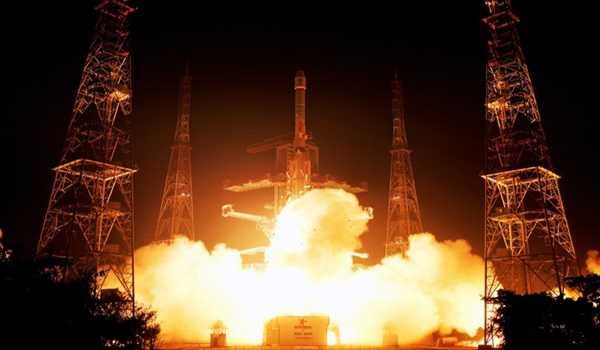
Chennai, July 18,2025: The prestigious eagerly-awaited launch of NISAR mission, a Indo-US joint collaboration between NASA and ISRO, is likely to take place by the end of this month.
Both the space agencies have discussed about NISAR’s readiness for launch and potential opportunities for future cooperation including professional exchange in technical areas and space exploration.
NASA and ISRO are collaborating on one of NASA’s biggest project–the NASA-ISRO SAR Mission (NISAR), a joint Earth-observing mission.
NISAR will be launch from the Second Launch Pad from the Satish Dhawan Space Center, SHAR
Range in Sriharikota, into a near-polar orbit at an altitude of 747 km with an inclination of 98.4 deg.
ISRO will be using its heaviest home grown rocket GSLV-MkII/LMV for the mission.
Though sources said the mission is likely on July 30 or 31, the exact date was expected to be
announced on July 21.
The NISAR Mission will measure Earth’s changing ecosystems, dynamic surfaces and ice masses providing information about biomass, natural hazards, sea level rise and groundwater and will support a host of other applications.
NISAR will observe Earth’s land and ice-covered surfaces globally with 12-day regularity on ascending and descending passes, sampling Earth on average every 6 days for a baseline 3-year mission.
NISAR will map global land biomass, the amount of organic material from plants, every 12 days.