New Delhi, Oct 5,2026: The Election Commission of India on Monday sought to rebut what it described as a “misleading” claim over the Special Intensive Revision (SIR) of electoral rolls, asserting that the exercise was approved unanimously by the full Commission and that the Supreme Court had upheld the framework governing it.
In a “Fact Check” posted on social media platform X, the poll panel said its June 24, 2025 order directing the conduct of SIR across all States and union Territories, beginning with Bihar, was issued “with the unanimous approval of the Commission”. The ECI further said the order had subsequently been upheld by the Supreme Court in its judgment of May 27, 2026. The Commission also referred to Press Note No. 120 issued on September 26, 2026, particularly paragraph 1(iii), in support of its position on the declaration attached to Form 6 during the SIR exercise.
“The declaration attached to Form 6 for SIR has been upheld by the Hon’ble Supreme Court,” the ECI said, quoting its earlier press note. The clarification comes against the backdrop of an intensifying political and legal controversy over the conduct of SIR and the procedural requirements associated with Form 6, which is used for enrolment of new voters. Opposition parties have questioned the legal basis and manner in which certain changes or additional requirements were introduced, while the Commission has maintained that its decisions were taken collectively and in accordance with the law.
In its September 26 statement, the ECI had maintained that there was no change to the statutory Form 6 prescribed under the Registration of Electors Rules, 1960. It said the requirement introduced during SIR was an additional declaration and that the statutory forms prescribed under the 1960 Rules would continue to be used during periods when SIR was not in operation. The Supreme Court’s May 27 judgment examined legal challenges relating to the Bihar SIR and the process of electoral-roll revision.
The judgment recorded that the final electoral roll published in Bihar on September 30, 2025 contained 7.42 crore electors, compared with 7.89 crore electors on June 24, 2025, when the SIR exercise was ordered. The ECI’s latest intervention assumes significance as the controversy over Form 6 has continued despite its September clarification. The Commission has repeatedly maintained that the SIR decision was taken with the approval of all three Election Commissioners, even as Opposition leaders have questioned the validity of specific procedural changes and alleged that they were introduced without adequate statutory authority.
The issue also reached the Supreme Court on Monday, when the court declined to grant an interim order seeking the suspension of Chief Election Commissioner Gyanesh Kumar while issuing notice on a petition challenging decisions connected with the SIR exercise. The latest ECI fact check thus seeks to draw a distinction between the overarching decision to conduct SIR-which the Commission says received unanimous approval and was subsequently upheld by the Supreme Court-and the continuing dispute over the precise implementation of the additional Form 6 declaration.
The poll panel has reiterated that the SIR-related declaration has judicial backing, while the statutory forms prescribed under the 1960 Rules remain applicable outside the SIR process.
October 03, 2026: President Droupadi Murmu has given her assent to the Gujarat Uniform Civil Code (UCC) Bill, 2026, completing a key constitutional step towards its implementation. Gujarat has become the second state after Uttarakhand to secure approval for a Uniform Civil Code, which seeks to establish a common legal framework for personal matters across religious communities.
The legislation will come into force after the Gujarat government notifies the rules. Members of Scheduled Tribes (STs) are excluded from its provisions.
The Gujarat Assembly passed the Bill in March following a seven-and-a-half-hour discussion. Before the legislation was passed by voice vote, Congress legislators staged a walkout and demanded that the Speaker refer it to a Select Committee.
Chief Minister Bhupendra Patel said the legislation would promote equality and national integration. “The key aim of introducing the bill is to ensure social harmony and national unity. The Supreme Court has also suggested that UCC will ensure women’s rights are secured,” he said while introducing the Bill.
What does the Gujarat UCC provide?
The legislation establishes a common framework covering marriage, divorce, succession and inheritance, and live-in relationships, irrespective of religion.
It prescribes a minimum marriage age of 21 years for men and 18 years for women. Couples can solemnise marriages through religious ceremonies or under the Special Marriage Act, but registration is compulsory.
The Code prohibits a second marriage while an existing marriage remains valid, thereby disallowing polygamy. It also invalidates marriages between persons within prohibited degrees of relationship, unless an established custom or usage permits the union and is not contrary to public policy or morality.
The legislation further prohibits nikah halala, a practice requiring a divorced woman to marry another man and obtain a divorce before remarrying her former husband. It provides that divorced spouses can remarry without such a condition. Forcing or abetting the practice attracts legal consequences.
What are the rules for divorce and inheritance?
The Code establishes a common judicial procedure for divorce, replacing religion-specific methods of dissolving marriages, including customary out-of-court procedures and iddat-related processes.
Either spouse may seek divorce on grounds including adultery, cruelty, desertion for two continuous years, religious conversion and incurable unsoundness of mind. Wives have additional grounds where the husband is guilty of rape or an unnatural sexual offence, or has multiple wives from marriages contracted before the Code came into force.
Divorce by mutual consent is permitted if the couple has lived separately for at least one year.
For inheritance, the legislation introduces a common framework for intestate succession, applicable when a person dies without a will. The surviving spouse or spouses, surviving children, branches of predeceased children and surviving parents receive equal shares under the prescribed order of succession. Sons and daughters inherit equally, regardless of religion.
The Code does not alter testamentary succession, meaning property can still be distributed according to a valid will. If no eligible heirs survive, the estate passes to the government through Escheat.
How does the Code regulate live-in relationships?
Registration of live-in relationships is mandatory. Partners must submit a statement to the designated registrar, and couples must notify the authorities when their relationship ends.
A relationship cannot be registered if either partner is a minor, is already married, is in another live-in relationship or falls within a prohibited degree of relationship.
Failure to register a relationship after cohabiting for more than one month can attract imprisonment of up to three months, a fine of up to Rs 10,000, or both. The Bill also provides for a fine of up to Rs 10,000 for non-registration of marriages and divorces.
Children born from live-in relationships are recognised as legitimate children of the couple. Women deserted by their live-in partners can approach a competent court to seek maintenance.
What are the objections and constitutional concerns?
The Opposition criticised the legislation during its passage. Congress MLA Imran Khedawala described it as “against our society” and questioned its benefits, while alleging that the government should focus on other issues concerning Muslim women. AAP MLA Chatar Vasavane alleged that the Bill served electoral interests and raised concerns about its implications for tribal women marrying outside their communities.
Legal concerns also arise from compulsory registration and penalties for live-in relationships. A June 2026 analysis published by The Hindu noted that such provisions raise questions about individual autonomy and the State’s regulation of consensual adult relationships.
In S Khushboo v Kanniammal (2010), the Supreme Court held that morality and criminality are not synonymous and that live-in relationships and premarital sex should not be associated with criminality.
The analysis also cited Deepika Singh v Central Administrative Tribunal (2022), in which the Supreme Court recognised that non-traditional family structures deserve legal protection and social welfare benefits. Critics have been reported to argue that the UCCs do not adequately accommodate such family arrangements, including queer relationships.
Article 44 of the Constitution directs the State to endeavour to secure a Uniform Civil Code for citizens. Uttarakhand implemented its UCC in February 2024, while Gujarat’s law awaits notification of its implementation rules.
Gujarat is the second state after Uttarakhand became first in independent India to implement a Uniform Civil Code on January 27, 2025, introducing a common legal framework governing marriage, divorce, inheritance and live-in relationships, with an exemption for Scheduled Tribes.
Moscow, Oct 3,2026: Global average life expectancy has nearly recovered to pre-COVID-19 pandemic level, the World Health Organisation said on Friday.
The UN health agency estimated health trends by country and region for the period from 2000 to 2023, including the dynamics of life expectancy, mortality and morbidity, and diseases.
“Global life expectancy reached 73.3 years in 2023, close to the 73.4 years recorded in 2019,” the statement read. Non-communicable diseases accounted for 74% of deaths globally in 2023, compared with 58% in 2000. At the same time, mortality from dementia tripled over the period, while health losses associated with anxiety disorders and depression rose sharply since the start of the pandemic.
In 2023, the 10 main causes of death accounted for 33 million of the 61 million deaths recorded worldwide. Non-communicable diseases made up eight of these 10 leading causes.
According to the WHO, the main causes of mortality were cardiovascular diseases, including ischemic heart disease and stroke, as well as respiratory diseases, including chronic obstructive pulmonary disease and lower respiratory infections.
New Delhi, September 30,2026: The Union Cabinet on Wednesday approved the Rs 1.86 lakh crore Green Energy Corridor Phase-III scheme to build transmission infrastructure for evacuation of up to 135 GW of renewable power and deploy 50 GWh of battery storage, as India prepares its grid for a sharp expansion in non-fossil energy capacity.Union Minister Ashwini Vaishnaw, announcing the decision after the Cabinet meeting, said adequate transmission capacity would be critical as renewable generation rises, with the government seeking to ensure that grid infrastructure comes up ahead of new renewable projects.A presentation made during the briefing said that without adequate transmission infrastructure, renewable power could face curtailment, and stressed that transmission capacity needed to precede renewable-energy capacity addition.
The scheme, targeted for completion by FY 2032-33, has a total project outlay of Rs 1,86,405 crore.Of this, Rs 1,36,378 crore will go towards strengthening intra-state transmission systems, while Rs 50,000 crore has been earmarked for deployment of 50 GWh of Battery Energy Storage Systems.The Centre will provide financial assistance of Rs 54,082 crore.The scale of the scheme reflects the growing challenge of integrating larger volumes of solar and wind power into the grid. Unlike conventional generation, renewable output varies with sunlight and wind conditions, requiring stronger transmission networks as well as storage to balance supply and demand.The battery systems can be installed at renewable-energy generation sites or other locations considered important for grid flexibility. According to the Cabinet release, they are intended to address intermittency, transmission congestion, peak-hour curtailment and demand during non-solar hours.The government said the corridor will enable evacuation of up to 135 GW of renewable power across states and Union Territories.Vaishnaw’s presentation said India is targeting 500 GW of non-fossil fuel capacity by 2030 and is planning for around 786 GW by 2035-36. The Cabinet release separately said the scheme would contribute towards the longer-term target of 900 GW of installed non-fossil capacity by 2035.India’s rapidly expanding solar capacity is already increasing the need for supporting grid infrastructure. According to an official PIB backgrounder, India’s installed solar capacity had reached 162.15 GW by June 30, 2026, up from around 3 GW in 2014. :chatgpt-content-reference{index=”0″}Under GEC-III, all new or greenfield intra-state transmission projects will be awarded through tariff-based competitive bidding.Transmission service providers selected through the bidding process will build, own, operate and maintain the assets, while State Transmission Utilities will act as the overall implementing agencies.Upgradation and strengthening of existing, or brownfield, transmission networks will be carried out on a cost-plus basis.The government said the central assistance would help offset intra-state transmission charges and limit their impact on electricity costs for consumers.The scheme also marks a significant expansion of India’s Green Energy Corridor programme, which was originally designed to strengthen transmission networks in states with high renewable-energy potential.With renewable generation expanding faster, the focus is increasingly shifting from merely creating generation capacity to ensuring that electricity can be transmitted, stored and supplied when it is needed.
Sept 30,2026: The Indian Coast Guard, in a joint operation with the Gujarat ATS, has seized 526 kg of methamphetamine and heroin valued at more than ₹3,000 crore from an Iranian boat in the Arabian Sea, officials said on Wednesday (September 30, 2026).
Five Pakistani nationals operating the vessel were also detained in the operation carried out near Lakshadweep on September 25, the Coast Guard said in a statement.
Based on intelligence inputs, Coast Guard assets carried out sea-air surveillance and tracked the suspicious dhow before launching a hot pursuit and boarding it west of Lakshadweep, it said.
The seized contraband comprised high-grade methamphetamine and heroin, the Coast Guard said.
The vessel, its crew and the seized drugs were brought to Mumbai under armed escort for joint interrogation and further legal proceedings, it said.
The operation was conducted in coordination with the Gujarat Anti-Terrorist Squad.
The State ATS also confirmed the apprehension of five Pakistani nationals. It is scheduled to brief the media on the operation later in the day.
The seizure comes as security agencies step up efforts to curb transnational drug trafficking through the maritime route.
The Coast Guard said the operation demonstrated its surveillance and maritime interdiction capabilities and its commitment to preventing illicit activities in India’s maritime zones.
The seizure would help disrupt the financial network of international drug syndicates and prevent synthetic drugs from reaching the mainland, it added.
‘Determined to shiled youth’
Union Home Minister Amit Shah praised the joint operation and said that the “Modi government is determined to shield its youth from the scourge of drugs”. In a post on X, Mr. Shah lauded the Coast Guard, Gujarat ATS, and central agencies for ‘upholding a stellar example of coordination and cooperation’.
Sept 29,2026: US and Iranian officials spoke separately with mediators on Monday as part of a renewed effort to end seven months of war, according to officials of both countries.
Any further talks are expected to focus on an amended version of a seven-day proposal that Iran presented last week on the sidelines of the United Nations General Assembly, an official briefed on the negotiations told Reuters.
The war began in late February with US and Israeli attacks on Iran, killing thousands of people over seven months and shocking global markets as vital waterways for oil remained choked. The US and Iran have twice previously agreed to ceasefires in mediated peace talks, in April and June. Those agreements quickly unraveled.
Iranian Foreign Minister Abbas Araqchi, who remained in New York after attending the General Assembly, said Iran expected to receive the US response to its latest ceasefire proposals and its conditions for restoring passage of maritime traffic in the Strait of Hormuz, according to state news agency IRNA.
“If the Americans claim they are seeking an agreement or a peaceful solution, we have presented that solution,” Araqchi said.
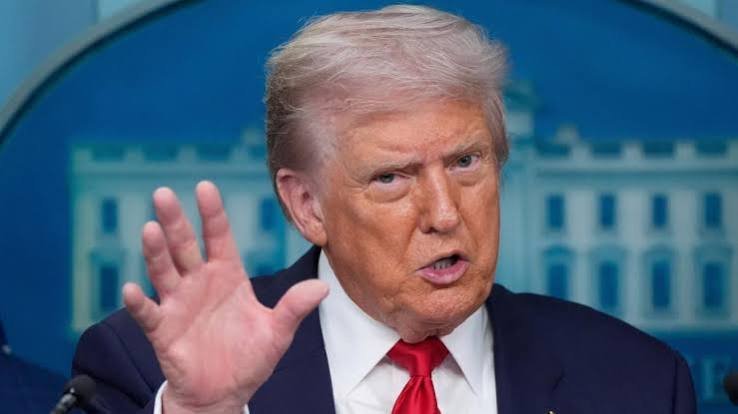
US officials separately spoke with mediators on Monday, US President Donald Trump told reporters at the White House, without giving further details.
Iran’s seven-day plan envisages an end to all hostilities in Iran and Lebanon, the unfreezing of billions of dollars’ worth of Iranian assets, an end to sanctions on Iranian oil and the lifting of the US blockade on Iranian ports.
Iran would then allow the reopening of the Strait of Hormuz, a vital conduit for oil tankers, and the two sides would also resume talks on Iran’s nuclear program and Trump’s wish to seize or eliminate its highly enriched uranium.
Trump said on Saturday he had rejected Iran’s proposal, saying Iran wanted a swift agreement because of the crippling economic pressure it is under. However, he also told Axios on Sunday that he expected US negotiators to engage in further talks this week.
Araqchi said on Sunday that mediators had not formally conveyed a US rejection, and that Iran was awaiting Washington’s definitive position before deciding its next steps.
Washington, Sept 29,2026: US Secretary of State Marco Rubio has suggested the possibility of jointly mining rare earth minerals in Greenland following the conclusion of a deal with local authorities.
On September 22, the US, Denmark, and Greenland signed an agreement to expand the American military presence on the island. “Sure, we will do it in partnership with them,” Rubio said in an interview with Fox News when asked if the US had a chance to engage in mining the rare earth elements with which the island is rich.
The Secretary of State emphasised that this had not been a US priority, but the opportunity arose after the deal with local authorities was finalised. “Now that this (deal) is behind us, I think we have the opportunity to make good investments there,” he concluded. Greenland possesses significant mineral reserves.
According to the Geological Survey of Denmark and Greenland (GEUS), 24 of the 34 raw materials classified by the European union as “critical” have been identified on the island. The exact volumes of many of the discovered resources have yet to be determined. However, the development of these deposits is complicated by natural conditions and a lack of infrastructure.
Patna, Sep 29,2026: The Patna High Court has held that pension benefits of a retired government employee cannot be withheld indefinitely through prolonged departmental proceedings and observed that pension constitutes a right to property protected under Article 300-A of the Constitution.
The ruling came in the case of retired Assistant Engineer Mahendra Ram of the Bihar Water Resources Department, whose retirement benefits remained partly withheld for years following disciplinary proceedings relating to an alleged illegal withdrawal of Rs 48,000. Justice Purnendu Singh, while hearing the matter, took serious note of the prolonged delay in concluding the departmental proceedings and observed that an unexplained and continuing delay in determining the retiral dues of a government employee can cause serious mental agony as well as financial hardship.
The court directed the State authorities to conclude the pending proceedings within six weeks. It further ordered that if the State failed to complete the proceedings within the stipulated period, the disciplinary proceedings would stand terminated, according to the order.
In such an eventuality, the authorities have been directed to release Ram’s pending retirement benefits, including his full pension, gratuity, and leave encashment, within a further period of two weeks. Ram had retired from government service in April 2020. Proceedings had been initiated against him in connection with the alleged withdrawal of Rs 48,000 from government funds.
According to the case put forward before the court, subsequent departmental inquiry did not establish that Ram had committed the alleged financial irregularity. The responsibility for the withdrawal was attributed to an Account Clerk, against whom disciplinary action was subsequently taken.
Despite the proceedings, Ram was granted only 90 per cent of a provisional pension, while the final determination of his retirement benefits remained pending. The court emphasised that a pension is not a bounty or a discretionary payment dependent solely on the will of the government, but a legally protected entitlement of a retired public servant.
The ruling also underscores the requirement for the State authorities to act within a reasonable and legally permissible period while dealing with disciplinary proceedings having a direct bearing on an employee’s retirement benefits.
WASHINGTON/UNITED NATIONS/DUBAI, Sept 27,2026: Iran insisted on Sunday that only diplomacy can solve its conflict with the United States and Israel, after US President Donald Trump said he rejected an Iranian proposal to reopen the Strait of Hormuz and end fighting.
“Our conditions are clear, and any move toward reopening the Strait of Hormuz is contingent on these conditions being met,” Iranian Foreign Minister Abbas Araqchi posted on social media. “Only a negotiated solution can get them out of this deadlock.”
Iran announced a peace proposal last week at the UN General Assembly in New York, saying it had been transmitted to the Americans via Qatari mediators. Trump said on Saturday he rejected the plan, and argued that desperation was driving the Iranians’ push for an agreement on the key waterway.
“They want to make a deal to open the Hormuz Strait immediately because they’re losing so badly,” Trump told reporters at the White House.
Keeping the door to diplomacy open, however, Trump told Axios in a phone interview on Sunday that he expected US negotiators to engage in more talks this week.
Araqchi said mediators facilitating Tehran’s talks with Washington had not officially relayed a US rejection of the plan.
“We are waiting for the mediators to convey the definitive views to us, and we will make a decision based on them,” Araqchi posted.
The US has imposed an economic blockade on Iran to put pressure on Tehran to stop Iranian attacks on vessels in the Strait of Hormuz, which have drastically reduced shipping through the area even as Trump repeatedly asserts that the US controls the waterway.
The commander-in-chief of Iran’s army, Amir Hatam, said the war was at a critical and decisive stage, adding that Tehran would not accept a situation in which it was unable to trade while foreign powers used the region’s strategic waterways.
“If Iran cannot trade, if Iran cannot live, no one will be able to trade or live,” he said, in comments reported by state media.
SAUDI ARABIA DRAWN DEEPER INTO WAR
Previous attempts at diplomacy have failed to end the war, which began on February 28 with US and Israeli strikes on Iran.
Since then it has alternated between pauses and renewed strikes, killing thousands while degrading the conventional forces of Iran and damaging its already ailing economy.
Iran and its allies have responded by extending the conflict throughout the region. Iran has struck US allies in the Gulf with drones and missiles, while its Houthi allies in Yemen have hit Saudi interests.
Saudi Arabia, the largest of the Gulf states, has been drawn deeper into the war this month as Houthi fighters have advanced in Yemen, routing forces of the Saudi-backed government and threatening Saudi oil exports through the Red Sea.
The Iran-backed Houthis have repeatedly fired into Saudi Arabia and, in a possible sign of further escalation, parents in Riyadh received notices from schools on Sunday saying classes would shift to remote learning for the week, according to people who received the messages.
The notice did not give a reason for the decision. Saudi authorities did not immediately respond to a request for comment.
Yemen’s Houthi-run health ministry, meanwhile, said seven people were killed and 40 wounded, including children, in a strike on shops at a market at the Mawiya junction in Taiz province, in the southwest.
Later, Yemen’s internationally recognised government said its forces had targeted a Houthi military camp and vehicles at the same junction.
CONFLICT HAS DISRUPTED OIL FLOWS, HARMED GLOBAL ECONOMY
The Iranians also engaged their Saudi rivals regarding the Strait of Hormuz during the brief flurry of diplomacy in New York, underscoring the stakes of a seven-month-old conflict that has disrupted oil flows through a critical shipping lane and taken a toll on the global economy.
Araqchi told reporters at the UN on Friday the proposed deal would trigger a seven-day countdown to reopening the strait and a pause in regional fighting.
“If there is seriousness on the US side to come to a deal and reopen the Strait of Hormuz, everything is now prepared,” Araqchi said. If the US were to agree, the warring parties could start wider talks “on mutually agreed subjects.”
That could potentially include discussions of Iran’s nuclear programme. Trump has cited preventing Tehran from ever acquiring a nuclear bomb as a key goal, along with ending its ability to attack its neighbours and creating conditions for Iranians to topple their leadership.
US envoy to the United Nations Mike Waltz said on Sunday in an interview with CNN’s State of the Union that Trump had rejected the Iranian proposal because it required the immediate lifting of sanctions and release of frozen assets.
Chennai, September 26,2026: Astronomers have confirmed the existence of a Jupiter-sized planet that is less than a million years old. Named Elias 2-24 b, it is the youngest known planet, offering scientists a rare opportunity to observe a world in the early stages of its formation.Its surprisingly rapid formation challenges leading theories about how giant planets come together, especially so far from their stars.Astronomers have confirmed the youngest known planet yet, a world less than 1 million years old that is still surrounded by the gas and dust from which it formed.According to the Science Daily website, the planet, called Elias 2-24 b, was identified using observations preserved in NASA-funded archives. It is still orbiting within its young star’s dusty disk, giving scientists a rare opportunity to study planet formation while it is still happening.”Our planet-formation models already struggled to explain the previous record holders for the youngest known planet — a four-way tie between two planets orbiting the star PDS 70 and two planets orbiting the star WISPIT 2 — which are all more than 5 million years old,” said Lucas Cieza, a professor at the Instituto de Estudios Astrofísicos in Chile and co-author of a paper detailing the results, as quoted by the website of Science Daily.”Elias 2-24 b shows us that even our best planet-formation models are still missing some important processes,” added Cieza. In a study published September 16 in The Astrophysical Journal Letters, researchers led by Andrea Bernardi, a doctoral candidate at the Universidad Diego Portales in Chile, examined archived observations of seven young stars.The stars were observed using the coronagraph at the W. M. Keck Observatory in Hawaii, which collaborates with NASA under a cooperative agreement. Surrounding each star is a debris disk containing dust, gas, and fragments of ice and rock. Gaps and other features within these disks may indicate that planets are in the process of forming.A coronagraph blocks much of a star’s bright light, making it easier to search for much fainter objects nearby. Using that technique, astronomers looked for planets hidden inside the dusty disks. Planets orbiting stars beyond our solar system are known as exoplanets.”The planets should be found within the gaps, since they are carving them,” Bernardi said. “And that’s exactly where we found Elias 2-24 b.”Elias 2-24 b is roughly as massive as Jupiter and orbits a star about 450 light-years from Earth. Because the system is so young, studying it gives astronomers a glimpse of what our own solar system may have looked like billions of years ago.Stars form inside vast clouds of gas and dust. Planets can then grow from material left over around the newborn star, gradually gathering matter and shaping paths through the surrounding disk.But observing planets during these earliest stages is extremely difficult because thick dust can hide them from view.
Most confirmed exoplanets have instead been found through transits. A transit occurs when a planet passes in front of its star and causes a small temporary drop in the starlight seen from Earth.That method becomes much harder to use when planets are still buried in dust or orbit very far from their stars.As a result, most of the roughly 6,000 confirmed exoplanets are billions of years old and orbit relatively close to their stars.Scientists currently build planet formation models using theories, computer simulations, and observations of young stars surrounded by disks where forming planets are often too difficult to detect directly. Discoveries such as Elias 2-24 b can provide crucial real-world tests for those models.”The galaxy churns out new stars and planets continuously, so there are many in every stage of evolution,” Cieza said. “That means we can see the entire process in theory, but there is a large gap in what most telescopes can detect. We are mostly blind to these baby planets right now.”A Decade-Old Mystery Comes Into FocusThe new confirmation also resolves a question astronomers have been debating for about 10 years.Earlier observations from ALMA (Atacama Large Millimeter/submillimeter Array) in Chile revealed a gap in the dusty disk surrounding the young star Elias 2-24. Later, the European Southern Observatory’s Very Large Telescope in Chile spotted a faint point of light inside that gap, according to the Science Daily website. Scientists wondered whether the object could be a planet. The problem was that existing planet formation theories suggested a large planet should not have been able to form so quickly, especially at such a great distance from its star.Current models suggest that forming a Jupiter-size planet at Jupiter’s distance from the Sun (which is just over five times larger than the distance of Earth to the Sun) takes about 5 million years. A giant planet much farther out should take even longer.Yet the faint object in the Elias 2-24 system sits about 55 times farther from its star than Earth is from the Sun and was already showing signs of being a forming planet.To investigate further, Bernardi and colleagues searched the Keck Observatory Archive, a NASA-funded collaboration between Keck Observatory and the NASA Exoplanet Science Institute at Caltech/IPAC.That analysis ultimately confirmed the object as Elias 2-24 b.”We usually hear about telescopes working separately, but this confirmation was possible only by using multiple telescopes together,” Bernardi said. “Elias 2-24 b is at the limit of what current telescopes can detect, but with new instruments like NASA’s Nancy Grace Roman Space Telescope, such detections should become easier.”They found the same faint object in observations collected in 2018 and 2020. By combining the observations and tracking how the object moved over time, the team determined that it behaved much more like a planet orbiting the star than an imaging artifact or a distant background star.
Sept 25,2026: Tata Sons has rejected Tata Trusts chairman Noel Tata’s objections to N Chandrasekaran’s reappointment as chairman, citing legal opinions from three senior lawyers to support the validity of the September 17 board resolution and the use of the chairman’s casting vote.
In a September 24 letter to Noel Tata, the holding company cited opinions from former Chief Justice of India U U Lalit, former Supreme Court judge B N Srikrishna and senior advocate Sudipto Sarkar. Tata Sons said the three opinions supported its interpretation of the company’s Articles of Association (AoA).
The dispute centres on the voting process for Chandrasekaran’s third five-year term. Chandrasekaran recused himself from the vote. Four of the five directors who voted backed his reappointment, including Tata Trusts nominee Venu Srinivasan, while Noel Tata voted against it. Harish Manwani, who presided over the meeting, subsequently exercised the casting vote.
Tata Trusts has challenged the validity of the resolution, arguing that the two Trust-nominated directors must provide the required affirmative majority and that a casting vote cannot be used when there was no equality of votes at the overall board level.
Lalit backed Tata Sons’ interpretation of the casting-vote provision. He said the split between the directors appointed under Article 104B created an occasion for the presiding chairman to exercise the casting vote under Article 121, and concluded that the September 17 resolution “was validly passed”.
Srikrishna also supported the procedure adopted by the board, saying it was “perfectly consonant with the letter and spirit of Article 121”. He said the provision should be read in a manner that allows board proceedings and the company’s business to move forward rather than remain deadlocked.
On Srinivasan’s vote in favour of Chandrasekaran, Srikrishna said the Trust nominee had “rightly acted pursuant to the statutory fiduciary duty” owed to the company.
Sarkar’s earlier opinion, obtained before the board meeting, also supported Tata Sons’ position on the casting vote. He additionally held that Article 118, which lays down a special process for selecting a new chairman, does not apply to the reappointment of an incumbent chairman.
Tata Trusts maintains its objection
Tata Trusts has maintained that the September 17 resolution was a “legal nullity”, arguing that the chairman’s appointment or reappointment requires the support of a majority of the Trust nominees. It has also cited an opinion from former CJI D. Y. Chandrachud backing its position.
The disagreement therefore hinges on competing interpretations of Articles 118 and 121 of Tata Sons’ AoA—specifically, whether the selection process applies to an incumbent seeking another term and whether a casting vote can resolve a split between the Trust nominees.
Tata Sons has now formally stood by Chandrasekaran’s reappointment, setting the stage for the next move by Tata Trusts in the dispute.
Panchkula, Sept 22,2026: Consumers will now be able to identify whether soaps, shampoos, toothpaste, cosmetics and toiletries are of vegetarian or non-vegetarian origin at a glance, with the Centre making colour-coded origin labels mandatory on their packaging.
The union Ministry of Consumer Affairs, Food and Public Distribution has notified the Legal Metrology (Packaged Commodities) Fourth Amendment Rules, 2026, which require a green dot for products of vegetarian origin and, as applicable, a red or brown dot for non-vegetarian products.
The identification mark must be displayed at the top of the principal display panel on packaged soaps, shampoos, toothpaste, and other cosmetics and toiletries. The amendment was notified by the Department of Consumer Affairs on Monday through G.S.R. 826(E) and came into force from the date of its publication in the Official Gazette. This measure establishes a clear visual disclosure requirement for personal-care products, allowing consumers to distinguish between vegetarian and non-vegetarian origins without relying solely on ingredient lists.
The government has amended Rule 6 of the Legal Metrology (Packaged Commodities) Rules, 2011, by inserting the new labelling provision. The notification also omits sub-rule (8) of Rule 6. This change is important for consumers who base their purchasing decisions on the origin of ingredients in cosmetics and personal-care products.
Manufacturers and packers must ensure that packaging for covered products includes the required colour-coded declaration on the principal display panel, as specified in the amended rules.
New Delhi, Sep 18,2026:The Election Commission of India on Friday allotted the name “Mamata All India Trinamool Congress” and the “Football Player” election symbol to the faction led by Mamata Banerjee, while assigning “Democratic Trinamool Congress” and the “Envelope” symbol to the rival group headed by Arup Roy, paving the way for candidates of both factions to contest the ongoing by-elections after the Commission froze the original “All India Trinamool Congress” name and its reserved “Flowers & Grass” symbol.
The Commission’s September 18 order was issued to safeguard the nominations of candidates fielded by the two rival factions after both sides had already submitted nomination papers claiming to represent the All India Trinamool Congress in the Rejinagar and Nandigram Assembly constituencies in West Bengal and the Nagaon Lok Sabha constituency in Assam. The two groups have been recognised as political parties in West Bengal, Meghalaya and Tripura. The fresh arrangement follows the Commission’s September 17 order barring both factions from using the name
In Rejinagar, Safiuzzaman Saikh filed his nomination as an AITC candidate with a Form-B authorised by Arup Roy, while Rabiul Alam Chowdhury filed another nomination claiming the same party’s backing with a Form-B authorised by Mamata Banerjee. In Nandigram, Ehteshmul Haque was backed by Roy, while Sanchita Pradhan (Dey) was backed by Banerjee. In Assam’s Nagaon Lok Sabha constituency, Abdul Salam filed his nomination with a Form-B authorised by Banerjee. The Returning Officers had deferred scrutiny of the nominations to September 18.
The Commission noted that, without its intervention, the Returning Officers could have been faced with two candidates claiming to have been nominated by the same political party whose name and symbol had already been frozen. Such a situation could have resulted in both nominations facing rejection and potentially deprived electors of a genuine electoral contest. Invoking its “residuary and inherent powers” under Article 324 of the Constitution and the Election Symbols Order, the Commission said the intervention was intended “to protect the democratic rights of the electors, preserve the integrity of the electoral process, and ensure that no candidate or faction is unfairly prejudiced pending a final determination of the dispute.”
Accordingly, Chowdhury’s nomination in Rejinagar will be treated as having been filed by the Mamata All India Trinamool Congress with the “Football Player” symbol, while Saikh’s nomination will be treated as having been filed by the Democratic Trinamool Congress with the “Envelope” symbol. The same arrangement will apply in Nandigram, where Pradhan’s nomination will be treated as that of a Mamata All India Trinamool Congress candidate with the “Football Player” symbol, while Haque’s nomination will be treated as that of a Democratic Trinamool Congress candidate with the “Envelope” symbol. In Nagaon, Salam’s nomination will likewise be treated as having been filed by the Mamata All India Trinamool Congress with the “Football Player” symbol.
The Commission has made it clear that its September 18 order does not amount to a final determination on the validity of the nomination papers or the competing claims over the party’s identity and organisational control. The Returning Officers have been directed to take the order into account during scrutiny and allotment of symbols while independently examining the nominations under Section 36 of the Representation of the People Act, 1951.
Sept 17,2026: U.S. President Donald Trump said he hoped an end to the war against Iran was near, as the conflict, in its seventh month, escalated with Saudi aircraft pounding Yemen and Houthi fighters launching drones and missiles at Saudi cities.
The Iran-backed Houthis’ lightning advance in Yemen along the Red Sea and their attacks on Saudi Arabia, along with attacks that damaged Saudi Arabia’s East-West oil pipeline, have extended Tehran’s reach in the war and heightened global oil-supply risks.
As the war expands into a new theatre, the United States tightened its travel warning for Saudi Arabia, banning government employees from travelling within 20 miles (30 km) of the Yemen border.
Still, just hours after reports of the Houthis and Saudi Arabia fighting, Trump told reporters on Wednesday evening: “Well, hopefully we are towards the end of the war.”
TRUMP SAYS IRAN WANTS A DEAL, OIL PRICE STILL ELEVATED
“They want to make a deal. We’ll see how that works out,” he said, referring to Iran, reiterating past comments. Trump also said he had heard from Iran “directly”, without elaborating.
Trump has offered shifting goals and timelines for the war that began on February 28, when the U.S. and Israel attacked Iran and Tehran struck Israel and U.S. bases in Gulf states.
The extension of the war into Yemen threatens to worsen the global energy-supply shortage caused by the war, which has disrupted shipping through the Strait of Hormuz. The strait carried about 20% of global oil and LNG before the conflict.
Traders say a prolonged closure of Saudi Arabia’s East-West pipeline could cut off as much as 4% of global oil supply.
TRUMP TO MEET GULF LEADERS, AXIOS SAYS, AS WAR SPREADS
Axios reported late on Wednesday that Trump was expected to meet Gulf leaders on the sidelines of the U.N. General Assembly on Tuesday to discuss the next steps in the conflict.
The Houthis on Wednesday released battlefield video of fighters seizing armoured vehicles from Saudi-backed forces. The video also showed warplanes flying overhead and huge explosions billowing into the sky from desert dunes.
Houthi military spokesman Yahya Saree said the group had launched fresh drone and missile strikes on the major Saudi Red Sea oil port of Yanbu and at a southern Saudi airbase at Khamis Mushait. He did not say when the strikes had taken place.
Saree said the Saudis had carried out as many as 450 air strikes on Yemen this week. Officials in the Saudi-backed government that controls southern Yemen have acknowledged that their forces and those of Saudi Arabia were conducting air strikes on Houthi positions, though Riyadh has not confirmed them.
Saudi Arabia has led a coalition battling the Houthis since 2015. The conflict had largely quietened under a ceasefire in recent years, but reignited when the Houthis declared a naval blockade against Saudi Arabia in July and fired at southern areas in the kingdom.
September 15, 2026: U.S. Air Force Secretary Troy Meink on Monday revealed that the United States has deployed space-control weapons in orbit, while also disclosing new milestones for military satellite programs tied to missile defense and long-range targeting.
But it has not disclosed what those weapons are, how many exist, which satellites carry them, their orbits, or when they were launched.US Secretary of the Air Force Troy Meink said the “on orbit” weapon was necessary to safeguard US forces against hostile enemy action.
Speaking at the Air, Space and Cyber Conference on Monday, Meink said the US was ready for “evolving threats”, but did not elaborate on the weapon’s capabilities or when it was put into orbit.
Senior military leaders have previously said they planned to boost military capabilities in space, citing Russian and Chinese programmes developing ways to attack and disrupt US satellites in a future conflict.
China responded on Tuesday by warning against an “arms race” in space.
“We urge the US side to stop expanding its military capabilities and preparing for war in outer space,” AFP quoted a foreign ministry spokesman as saying.
Details of how the weapon operates have not been disclosed by US officials.
A US Space Force spokesperson said: “Space control encapsulates the mission areas required to contest and control the space domain – employing kinetic and non-kinetic means to affect adversary capabilities through disruption, degradation and even destruction, if necessary.
“These capabilities can be employed for offensive and defensive purposes at the direction of combatant commands.”
An expert on military uses of outer space noted that “precious little” was publicly known about the technology, and told the BBC there could be a “whole range of different weapons systems”.
Speaking to Radio 4’s Today programme, Dr Bleddyn Bowen, from the Royal United Services Institute (RUSI), said he was “totally guessing” but that the US could have been referring to “some kind electronic warfare or radio jamming platform”.
That would be the sort of weapon that already exists on Earth and could disrupt radio communications, Bowen said.
An alternative would be “a kinetic kill vehicle of some sort – so a vehicle that would release a projectile of some sort that would ram into a satellite and destroy it”.
But this was less likely because such a physically destructive tool would be capable of creating a lot of debris, Bowen added.
The Trump administration has said that space-based capabilities – and interceptor missiles – are a crucial part of its planned “Golden Dome” defence system to protect the US from missiles and other airborne threats.
Last year President Donald Trump issued an executive order underlining the US Space Force’s role in not only defending assets, but also as an attacking force.
The US Space Force – the first new branch of the US military for more than 70 years – was launched in 2019 as a way to protect American assets in space, including hundreds of satellites used for communication and surveillance.
A 1967 treaty banned weapons of mass destruction in orbit. Since then, key powers including the US, Russia, and China have been exploring other capabilities outside of the treaty, such as targeting rivals’ satellites – which are key for military communications, surveillance and navigation.
In early February, it was revealed that two Russian satellites had likely intercepted the communications of at least a dozen European ones since Russia’s invasion of Ukraine in 2022.
Such interceptions may have allowed Russian intelligence services to read the sensitive data they transmit, or hypothetically, even to take control of the satellites.
In 2024, the US said Russia had launched a satellite which it believed may be capable of attacking other such probes. Russia did not publicly comment on the issue.
The US Space Force says China “develops and operates space and counterspace capabilities as part of a military modernisation strategy,” while Russia “views space as a warfighting domain and believes space supremacy will be a decisive factor in future conflicts”.
CAIRO/WASHINGTON/DUBAI, Sept 10,2026: Iran-aligned Houthis seized control of c on Thursday, military sources said, posing a further threat to global energy supplies.
Four Yemeni government military sources said the Houthis had gained further leverage over the Bab el-Mandeb Strait, the southern outlet of the Red Sea and one of the world’s most important shipping routes, and were launching attacks on the strategic islands of Hanish.
Later, two Yemeni government sources reported the Houthis had reached the islands.
If the Houthis impose a stranglehold over the waterway, on the opposite side of the Arabian peninsula from the Strait of Hormuz, it could give their sponsor Iran a critical advantage in the war with the United States, reducing supplies through a second major transit corridor and sending oil prices surging.
Brent crude prices rose 3.5% to above $100 a barrel on Thursday on concern over disruption to supply routes.
The Houthis entered the current war alongside Iran with an attack on Israel on March 28, but largely stayed quiet before declaring a naval blockade against Saudi Arabia in July and stepping up attacks on the south of the kingdom in September.
Saudi Arabia, the world’s largest oil exporter, has relied on the Red Sea shipping route since the Iran conflict effectively closed the Strait of Hormuz, through which a fifth of global oil used to flow.
Tensions in the region were high on Thursday, with Saudi civil defence authorities issuing emergency alerts in the southwestern city of Khamis Mushait for the fourth time in 24 hours, as the Houthis attacked.
Pakistan has delivered a Saudi warning to Iran to rein in its Yemeni Houthi allies in an effort to prevent the crisis from spiralling, Saudi, Pakistani and Iranian sources said.
A senior Iranian official confirmed that Pakistan conveyed the message to Tehran on Tuesday and its response was that “Iran does not control the Houthis”.
The conflict in Yemen between Saudi Arabia’s Yemeni allies in the internationally backed government and the Houthis, comes as Iran and the United States staged their biggest declared wave of tit-for-tat attacks on shipping in the Gulf region this week since the war began in February.
AXIS OF RESISTANCE
Seen as part of a regional alliance known as the “Axis of Resistance” backed by Iran, the Houthis have also rallied behind the Palestinians in the Gaza war, lobbing drones and missiles at Israel and attacking commercial shipping in the Red Sea.