October 03, 2026: President Droupadi Murmu has given her assent to the Gujarat Uniform Civil Code (UCC) Bill, 2026, completing a key constitutional step towards its implementation. Gujarat has become the second state after Uttarakhand to secure approval for a Uniform Civil Code, which seeks to establish a common legal framework for personal matters across religious communities.
The legislation will come into force after the Gujarat government notifies the rules. Members of Scheduled Tribes (STs) are excluded from its provisions.
The Gujarat Assembly passed the Bill in March following a seven-and-a-half-hour discussion. Before the legislation was passed by voice vote, Congress legislators staged a walkout and demanded that the Speaker refer it to a Select Committee.
Chief Minister Bhupendra Patel said the legislation would promote equality and national integration. “The key aim of introducing the bill is to ensure social harmony and national unity. The Supreme Court has also suggested that UCC will ensure women’s rights are secured,” he said while introducing the Bill.
What does the Gujarat UCC provide?
The legislation establishes a common framework covering marriage, divorce, succession and inheritance, and live-in relationships, irrespective of religion.
It prescribes a minimum marriage age of 21 years for men and 18 years for women. Couples can solemnise marriages through religious ceremonies or under the Special Marriage Act, but registration is compulsory.
The Code prohibits a second marriage while an existing marriage remains valid, thereby disallowing polygamy. It also invalidates marriages between persons within prohibited degrees of relationship, unless an established custom or usage permits the union and is not contrary to public policy or morality.
The legislation further prohibits nikah halala, a practice requiring a divorced woman to marry another man and obtain a divorce before remarrying her former husband. It provides that divorced spouses can remarry without such a condition. Forcing or abetting the practice attracts legal consequences.
What are the rules for divorce and inheritance?
The Code establishes a common judicial procedure for divorce, replacing religion-specific methods of dissolving marriages, including customary out-of-court procedures and iddat-related processes.
Either spouse may seek divorce on grounds including adultery, cruelty, desertion for two continuous years, religious conversion and incurable unsoundness of mind. Wives have additional grounds where the husband is guilty of rape or an unnatural sexual offence, or has multiple wives from marriages contracted before the Code came into force.
Divorce by mutual consent is permitted if the couple has lived separately for at least one year.
For inheritance, the legislation introduces a common framework for intestate succession, applicable when a person dies without a will. The surviving spouse or spouses, surviving children, branches of predeceased children and surviving parents receive equal shares under the prescribed order of succession. Sons and daughters inherit equally, regardless of religion.
The Code does not alter testamentary succession, meaning property can still be distributed according to a valid will. If no eligible heirs survive, the estate passes to the government through Escheat.
How does the Code regulate live-in relationships?
Registration of live-in relationships is mandatory. Partners must submit a statement to the designated registrar, and couples must notify the authorities when their relationship ends.
A relationship cannot be registered if either partner is a minor, is already married, is in another live-in relationship or falls within a prohibited degree of relationship.
Failure to register a relationship after cohabiting for more than one month can attract imprisonment of up to three months, a fine of up to Rs 10,000, or both. The Bill also provides for a fine of up to Rs 10,000 for non-registration of marriages and divorces.
Children born from live-in relationships are recognised as legitimate children of the couple. Women deserted by their live-in partners can approach a competent court to seek maintenance.
What are the objections and constitutional concerns?
The Opposition criticised the legislation during its passage. Congress MLA Imran Khedawala described it as “against our society” and questioned its benefits, while alleging that the government should focus on other issues concerning Muslim women. AAP MLA Chatar Vasavane alleged that the Bill served electoral interests and raised concerns about its implications for tribal women marrying outside their communities.
Legal concerns also arise from compulsory registration and penalties for live-in relationships. A June 2026 analysis published by The Hindu noted that such provisions raise questions about individual autonomy and the State’s regulation of consensual adult relationships.
In S Khushboo v Kanniammal (2010), the Supreme Court held that morality and criminality are not synonymous and that live-in relationships and premarital sex should not be associated with criminality.
The analysis also cited Deepika Singh v Central Administrative Tribunal (2022), in which the Supreme Court recognised that non-traditional family structures deserve legal protection and social welfare benefits. Critics have been reported to argue that the UCCs do not adequately accommodate such family arrangements, including queer relationships.
Article 44 of the Constitution directs the State to endeavour to secure a Uniform Civil Code for citizens. Uttarakhand implemented its UCC in February 2024, while Gujarat’s law awaits notification of its implementation rules.
Gujarat is the second state after Uttarakhand became first in independent India to implement a Uniform Civil Code on January 27, 2025, introducing a common legal framework governing marriage, divorce, inheritance and live-in relationships, with an exemption for Scheduled Tribes.
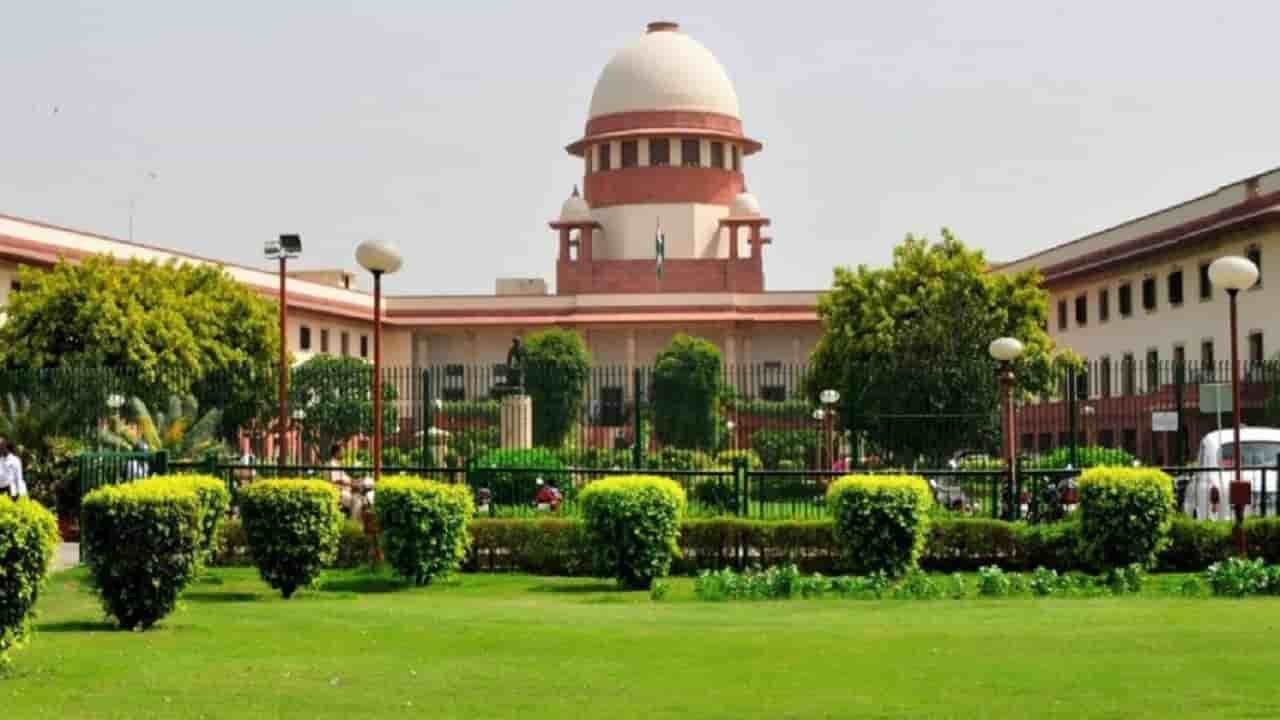
Patna, Sep 29,2026: The Patna High Court has held that pension benefits of a retired government employee cannot be withheld indefinitely through prolonged departmental proceedings and observed that pension constitutes a right to property protected under Article 300-A of the Constitution.
The ruling came in the case of retired Assistant Engineer Mahendra Ram of the Bihar Water Resources Department, whose retirement benefits remained partly withheld for years following disciplinary proceedings relating to an alleged illegal withdrawal of Rs 48,000. Justice Purnendu Singh, while hearing the matter, took serious note of the prolonged delay in concluding the departmental proceedings and observed that an unexplained and continuing delay in determining the retiral dues of a government employee can cause serious mental agony as well as financial hardship.
The court directed the State authorities to conclude the pending proceedings within six weeks. It further ordered that if the State failed to complete the proceedings within the stipulated period, the disciplinary proceedings would stand terminated, according to the order.
In such an eventuality, the authorities have been directed to release Ram’s pending retirement benefits, including his full pension, gratuity, and leave encashment, within a further period of two weeks. Ram had retired from government service in April 2020. Proceedings had been initiated against him in connection with the alleged withdrawal of Rs 48,000 from government funds.
According to the case put forward before the court, subsequent departmental inquiry did not establish that Ram had committed the alleged financial irregularity. The responsibility for the withdrawal was attributed to an Account Clerk, against whom disciplinary action was subsequently taken.
Despite the proceedings, Ram was granted only 90 per cent of a provisional pension, while the final determination of his retirement benefits remained pending. The court emphasised that a pension is not a bounty or a discretionary payment dependent solely on the will of the government, but a legally protected entitlement of a retired public servant.
The ruling also underscores the requirement for the State authorities to act within a reasonable and legally permissible period while dealing with disciplinary proceedings having a direct bearing on an employee’s retirement benefits.
Moscow, Sept 8,2026: Artificial intelligence poses an existential threat to humanity, which must be addressed promptly, UN High Commissioner for Human Rights Volker Turk said. “I share the concerns of industry insiders that advanced AI could pose an existential risk to humanity … I am calling here, today, for an all-out effort to put cast iron guarantees in place around the safety and security of AI, before it is too late,” he said at the 63rd session of the Human Rights Council, as quoted by his office on Monday.
Turk added that he would send a corresponding letter to all leading AI development companies in the coming days. At the same time, he said that only a handful of people hold “almost unlimited power over AI.”
“At a minimum, we need countries hosting AI and those involved in its supply chains to come together around agreed red lines,” Turk said. In December 2025, Chief Economist for the Asia-Pacific Regional Bureau of the United Nations Development Programme (UNDP), Philip Schellekens warned that the military application of AI could pose an existential threat to humanity and lead to mass casualties, stressing the need for highly responsible regulation.
HORROR’ AT AUTONOMOUS DRONES
“I share the concerns of industry insiders that advanced AI could pose an existential risk to humanity,” Turk told the body in Geneva.
“I am calling here, today, for an all-out effort to put cast-iron guarantees in place around the safety and security of AI, before it is too late.”
Turk did not elaborate on the nature of the risks but a spokesperson for his office said failures involving powerful AI systems could disrupt critical infrastructure and democratic institutions.
She referred to the “dangerous agent-training behaviours” in July’s so-called Hugging Face incident where a swarm of OpenAI agents hacked an open-source platform, saying it suggested that frontier AI capabilities are advancing faster than the safeguards.
Turk warned that just a handful of men held “almost unlimited power over AI” without naming any. Top AI companies include Meta, Anthropic, OpenAI and Google(GOOGL.O).
“At a minimum, we need countries hosting AI and those involved in its supply chains to come together around agreed red lines,” he said.
In January 2025, UN Secretary-General Antonio Guterres called uncontrolled AI an existential threat, alongside climate change and nuclear weapons.
New Delhi, Sep 4,2026: The National Commission for Protection of Child Rights (NCPCR) has rescued more than 3,800 children as part of its nationwide “Pan-India Rescue and Rehabilitation” campaign aimed at protecting children from child labour, trafficking and exploitation. The campaign, launched on June 12 and continued until August 31, brought together State Governments and union Territory administrations, District Magistrates, Labour Departments, police authorities and other stakeholders to intensify efforts to identify and rescue children working in vulnerable conditions.
During the campaign, the NCPCR coordinated with State Governments and Union Territory Administrations, District Magistrates, Labour Departments, Police authorities and other stakeholders to intensify the identification, rescue and rehabilitation of children engaged in child labour and those vulnerable to trafficking and exploitation. The Ministry said that the NCPCR also held meetings with District Administrations to monitor the implementation of the campaign and address field-level issues.
The meetings focused on reviewing rescue operations, resolving operational bottlenecks, ensuring timely submission of Action Taken Reports and strengthening coordination among concerned departments and agencies. The Ministry said that the NCPCR also carried out awareness and outreach activities through social media and other communication platforms. These efforts focused on reporting child labour and highlighting the importance of rehabilitation and bringing rescued children back into the mainstream of education.
Gaza/Jerusalem, Dec 2,2023: The death toll of journalists and media workers since the escalation of the Palestinian-Israeli conflict on October 7 has reached 61, the Committee to Protect Journalists (CPJ) said in a statement.
“As of December 1, CPJ’s preliminary investigations showed at least 61 journalists and media workers were among the more than 16,000 killed since the war began on October 7—with some 14,800 Palestinian deaths in Gaza and the West Bank and 1,200 deaths in Israel,” the CPJ said.
It said the deadliest day of the conflict for journalist deaths was October 7, with six journalists killed; and the second-deadliest day occurred on November 18, with five killed.
New Delhi, July 6,2023: The ministry of Social Justice and Empowerment on Wednesday held the eighth meeting of the Central Monitoring Committee to review the implementation of the “Prohibition of Employment as Manual Scavengers and Rehabilitation Act.
Union Minister of Social Justice and Empowerment, Virendra Kumar, chaired the meeting held at Dr Ambedkar International Centre here.
During the review meeting discussions were held on the mobile app “Swachhata Abhiyaan” to capture the data of insanitary still existing and manual scavengers associated with them. The app can be downloaded free from the Play Store, the Ministry of Social Justice and Empowerment communiqué said.
The Committee noted that anyone can upload information about instances of insanitary existence of insanitary or practice of manual scavenging. The Committee noted with satisfaction that every alleged such instance uploaded on the App over the past three years has been individually investigated and no evidence of the existence of any insanitary or manual scavenging were found, the statement said.
All states and districts have been requested to declare their district free from manual scavenging.
As on date, such confirmation from 520 out of 766 districts in the country has already been received.
The Committee suggested following up with the remaining districts, it said.
May 24,2023: Rights group Walk Free says up to 50 million people worldwide were experiencing forced labour or forced marriage in 2021.
North Korea, Eritrea and Mauritania have the highest prevalence of modern slavery in the world, according to the 2023 Global Slavery Index, which notes a “worsening” situation globally since its last survey five years earlier.
The report published on Wednesday said an estimated 50 million people were “living in situations of modern slavery” in 2021, an increase of 10 million over 2016 when the problem was last measured.
The figure includes some 28 million people in forced labour and 22 million living in a forced marriage.
The situation is worsening “against a backdrop of increasing and more complex armed conflicts, widespread environmental degradation” and effects from the coronavirus pandemic, among other factors, the investigation said.
Compiled by the human rights charity Walk Free, the report defines modern slavery as encompassing “forced labour, forced or servile marriage, debt bondage, forced commercial sexual exploitation, human trafficking, slavery-like practices, and the sale and exploitation of children”.
Slavery’s core principle entails “the systematic removal of a person’s freedom” — from the right to accept or refuse labour to the liberty to determine if, when and whom to marry.
By this benchmark, reclusive and authoritarian North Korea has the highest prevalence of modern slavery (104.6 per 1,000 population), according to the report.
It is followed by Eritrea (90.3) and Mauritania (32), which in 1981 became the last country in the world to make hereditary slavery illegal.
The 10 countries with the highest prevalence of modern slavery have some common characteristics, including “limited protections for civil liberties and human rights”.
Many of the countries are in “volatile” regions experiencing conflict or political instability, or are home to a large population of “vulnerable people” such as refugees or migrant workers.
Also in the top 10 globally were Saudi Arabia, the United Arab Emirates and Kuwait, where migrant workers’ labour rights are restricted by the “kafala” sponsorship system.
Other countries in the top 10 are Turkey, “which hosts millions of refugees from Syria”, Tajikistan, Russia and Afghanistan.
While forced labour is more common in low-income countries, it is “deeply” connected to demand from higher-income countries, the report said, noting that two-thirds of all forced labour cases are linked to global supply chains.
The report said G20 countries — made up of the European Union and the world’s 19 top economies — are currently importing $468bn worth of goods that are at risk of being produced with forced labour, up from $354bn in the previous report.
Electronics remain the highest value at-risk product, followed by garments, palm oil and solar panels, in a sign of high demand for renewable energy products.
“Modern slavery permeates every aspect of our society. It is woven through our clothes, lights up our electronics, and seasons our food,” the group’s founding director Grace Forrest said.
“At its core, modern slavery is a manifestation of extreme inequality. It is a mirror held to power, reflecting who in any given society has it and who does not,” she added.
Tehran [Iran], March 13,2023: The Iranian authorities have arrested more than 100 people in connection to the suspected poisoning of Iranian schoolgirls, reported CNN.
Citing a statement from Iran’s Interior Ministry, the state-run IRNA news agency said the people had been “identified, arrested and investigated” in several cities, including the capital Tehran.
“Initial inquiries show that a number of these people, out of mischief or adventurism and with the aim of shutting down classrooms and influenced by the created psychological atmosphere, have taken measures such as using harmless and smelly substances,” the statement read.
Iran has seen a wave of suspected poisonings, carried out almost entirely at girls’ schools, in recent months. The first known incident of schoolgirl poisoning occurred on November 30 in the city of Qom, when about 50 students fell ill and were taken to the hospital.
Another incident in the city took place in February when more than 100 students from 13 schools were hospitalized after what Iranian state news agencies described as “serial poisonings,” reported CNN.
Both the United States and United Nations had called on Iranian authorities to fully investigate the suspected poisonings and hold those responsible to account.
While Iranian politicians have suggested the girls could have been targeted by hardline Islamist groups, activists believe that the poisonings may be linked to the nationwide protests that erupted last September over the death of Mahsa Amini.
Many schoolgirls have been active in the protests, removing their mandatory headscarves in classrooms, tearing up pictures of Supreme Leader Ayatollah Ali Khamenei and calling for his death, reported CNN.
Medics, parents and teachers have accused the Iranian government of attempting to silence the victims. Many Iranians fear that Islamist hardliners are behind the attacks as their aim is to terrorize the girls and make their families stop sending them to school. Such methods were used by the Taliban in Afghanistan in 2010 and more recently by the Islamic terrorist group Boko Haram in Nigeria, which in 2014 kidnapped 276 schoolgirls.
Iran’s Supreme Leader Ali Khamenei previously called the suspected poisonings an “unforgivable crime” and called for “severe punishment” for anyone found responsible.