Thiruvananthapuram, June 27,2025: Amid rising cases of diabetes, over 5 crore Indians remain undiagnosed, prompting urgent calls for regular screening and lifestyle changes.
India faces an alarming diabetes prevalence of 11.4 per cent, with over 10 crore people currently living with the condition, Dr Naresh Purohit, Advisor for the National Programme for Prevention and Control of Diabetes, said.
Quoting his recent scientific report published in the Australian Journal of Public Health, acclaimed physician pointed out that God’s own country, ‘Kerala’, is witnessing a dramatic demographic shift in the surge of Type 2 diabetes in children.
“Once primarily associated with adults over 40, this disease is now increasingly affecting children as young as 10. It is now a public health crisis,” he said.
“This condition poses a major risk to young lives and will have severe consequences unless parents take immediate action to improve their children’s lifestyles, he cautioned.
“Diabetes results from the body’s impaired ability to metabolise carbohydrates due to insulin insufficiency or resistance, causing elevated blood sugar levels and serious complications like heart attacks, strokes, kidney failure, and neuropathy. While type 2 diabetes accounts for over 90 per cent of cases, other forms such as type 1 and gestational diabetes also pose risks, he explained.
He emphasised that symptoms often remain vague, making early screening crucial to prevent disease progression. There is an urgent need for increased awareness and routine blood sugar testing, especially among high-risk groups, he added.
He recommended lifestyle interventions including regular moderate exercise, dietary changes focusing on higher protein and fibre intake, weight reduction, proper sleep, stress management, and avoiding smoking.
For those diagnosed with diabetes, regular medical follow-up and controlling HbA1c levels below 7 per cent are vital to reduce complications. With India’s national average HbA1c at 9.1 per cent, he called for intensified efforts to measure, monitor, and manage diabetes effectively to curb this growing health crisis.
June 16,2025: The Union Home Ministry on Monday issued a gazette notification, declaring that the Census will be carried out in 2027.
The notification stated that the reference date for the Census will be March 1, 2027, except for the Union Territory of Ladakh, the snow-bound non-synchronous areas of the Union Territory of Jammu and Kashmir, Himachal Pradesh and Uttarakhand. “In respect of the Union territory of Ladakh and snow-bound non-synchronous areas of the Union territory of Jammu and Kashmir and the States of Himachal Pradesh and Uttarakhand, the reference date shall be 00:00 hours of the 1st day of October, 2026,” the notification added.
The last Census was held in 2011. The 2027 Census will include the first nationwide caste enumeration since 1931.
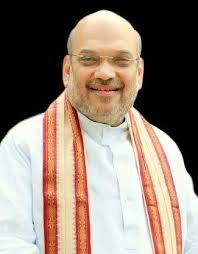
A day before issuing the notification, Union Home Minister Amit Shah had on Sunday reviewed the preparation for the forthcoming Census with Union Home Secretary Govind Mohan and other senior officials in North Delhi.
“The census will be conducted in two phases. In phase one i.e. House listing Operation (HLO), the housing conditions, assets and amenities of each household will be collected. Subsequently, in second phase i.e. Population Enumeration (PE), the demographic, socio-economic, cultural and other details of every person in each household will be collected. In the census, caste enumeration will also be done,” the statement said.
Around 34 lakh enumerators and supervisors and around 1.3 lakh Census functionaries will be deployed for the exercise, as per the statement. “This census is the 16th census since the beginning and 8th after Independence. The ensuing census will be conducted through digital means using mobile applications. Provision of self-enumeration would also be made available to the people. Very stringent data security measures would be kept in place to ensure data security at the time of collection, transmission and storage,” the statement added.
New Delhi, July 6,2023: The ministry of Social Justice and Empowerment on Wednesday held the eighth meeting of the Central Monitoring Committee to review the implementation of the “Prohibition of Employment as Manual Scavengers and Rehabilitation Act.
Union Minister of Social Justice and Empowerment, Virendra Kumar, chaired the meeting held at Dr Ambedkar International Centre here.
During the review meeting discussions were held on the mobile app “Swachhata Abhiyaan” to capture the data of insanitary still existing and manual scavengers associated with them. The app can be downloaded free from the Play Store, the Ministry of Social Justice and Empowerment communiqué said.
The Committee noted that anyone can upload information about instances of insanitary existence of insanitary or practice of manual scavenging. The Committee noted with satisfaction that every alleged such instance uploaded on the App over the past three years has been individually investigated and no evidence of the existence of any insanitary or manual scavenging were found, the statement said.
All states and districts have been requested to declare their district free from manual scavenging.
As on date, such confirmation from 520 out of 766 districts in the country has already been received.
The Committee suggested following up with the remaining districts, it said.
New Delhi, June 4,2023: A Parliament panel head on Monday pushed for keeping tribals from the Northeast and other regions of the country out of the ambit of the Uniform Civil Code (UCC).
“The tribal community from the northeast region and other regions of India should be kept out of UCC,” said Sushil Modi, who heads the Parliamentary Standing Committee on Personnel, Public Grievances, Law and Justice.
Modi, a BJP Rajya Sabha MP, noted that all laws have exceptions.The panel during the day held a meeting on the UCC here.
Around seventeen members were present in the meeting.
Countering Modi’s argument, the opposition parties questioned how there could be uniformity if the tribals are exempted from UCC.
Modi said tribals get protection under the sixth schedule of the constitution, according to sources.
The UCC proposes to formulate and implement personal laws which apply to all citizens equally regardless of their religion, sex, gender and sexual orientation.
The opposition leaders also raised concerns over possible erosion of power of the states from the concurrent list.
Besides this, the opposition leaders questioned why the issue is being brought up ahead of the 2024 Lok Sabha elections.
On the 14th of last month, the Law Commission of India solicited the views and ideas of the public and recognised religious organisations to examine the UCC.
The Law Commission said so far, 19 lakh suggestions have been received on the consultation started by it following a public notice brought out on June 13. The exercise will continue till July 13.
The UCC comes under Article 44 of the Indian Constitution, which lays down that the state shall endeavour to secure a Uniform Civil Code for the citizens throughout the territory of India.
The objective of Article 44 of the Directive Principles in the Constitution is to address the discrimination against vulnerable groups and harmonise diverse cultural groups across the country.
The Code calls for the formulation of one law for India, which would be applicable to all religious communities in matters such as marriage, divorce, inheritance, adoption. Currently, the personal laws of various communities are governed by their religious scriptures.
Washington [US], April 1,2023: In a historic move, US Georgia Assembly has passed the first-ever resolution condemning Hinduphobia making it the first-ever US State to do so.
The legislation, notably, recognizes the contributions of Indian Americans and Hindu Americans in Georgia and calls out the rise of Hinduphobia around the country, the official Twitter handle of CoHNA (Coalition of Hindus of North America) said.
The Coalition of Hindus of North America is a grassroots advocacy and civil rights organization representing the Hindu community of North America.
The resolution passed by the Georgia legislature citing ‘Understanding Hinduphobia
Initiative’ described Hinduphobia as “a set of antagonistic, destructive, and derogatory attitudes and behaviours towards Sanatana Dharma (Hinduism) and Hindus that may manifest as prejudice, fear, or hatred.”
“In a historic move, Georgia legislature passes the first-ever County Resolution condemning #Hinduphobia and anti-Hindu bigotry! The resolution recognized the contributions of Indian Americans and Hindu Americans in Georgia and called out the rising #Hinduphobia around the country. This trend has been documented by the @HinduphobiaConf and the research by @RutgersU and @ncri_io,” the official Twitter handle of CoHNA tweeted.
The resolution further underlined that the American Hindu community has been a major contributor to diverse sectors such as medicine, science and engineering, information technology, hospitality, finance, academia, manufacturing, energy, retail trade, and so much more in the US.
“Hindu contributions of Yoga, Ayurveda, meditation, food, music, arts, and more have enriched the cultural fabric and have been widely adopted in American society and enriched the lives of millions,” it said.
The legislative delegation of Forsyth County in the suburbs of Atlanta, home to one of the largest Hindu American and Indian American diaspora communities, made an effort to recognize #Hinduphobia and call for an end to anti-Hindu hate, the CoHNA wrote on Twitter.
Reps Lauren McDonald and Todd Jones from Forsyth County, a suburb of Atlanta that is home to one of Georgia’s largest Hindu and Indian-American diaspora groups, presented the resolution.
Todd Jones is a State House Representative from District 25 (South Forsyth and North Fulton Counties), whereas Lauren McDonald is a Georgia representative from District 26.
Thanking the two US Reps, the CoHNA tweeted, “We thank@McDonaldGA26 and @turntotodd for their leadership in directing this Resolution. This was the joint effort of many lawmakers who have worked closely with the Hindu community in the great State of Georgia and we thank them all for this recognition.”
Washington [US]Feb 28,2023:The Federal Bureau of Investigation (FBI) Director Christopher Wray on Wednesday (local time) confirmed that the Covid-19 pandemic originated from a lab incident in Wuhan, China.
“FBI Director Christopher Wray confirmed that the Bureau has assessed that the origins of the COVID-19 pandemic likely originated from a lab incident in Wuhan, China,” tweeted the FBI.
This development comes after new intelligence had prompted the Energy Department to conclude that an accidental laboratory leak in China most likely caused the novel coronavirus pandemic, reported The Wall Street Journal (WSJ).
“The FBI has for quite some time now assessed that the origins of the pandemic are most likely a potential lab incident in Wuhan… I will just make the observation that the Chinese government… has been doing its best to try to thwart and obfuscate the work here, the work that we’re doing, the work that our US government and close foreign partners are doing,” said FBI chief.
The update, which is less than five pages, wasn’t requested by the Congress. But lawmakers, particularly House and Senate Republicans, have been pursuing their own investigations into the origins of the pandemic and are pressing the Biden administration and the intelligence community for more information.
The Energy Department now joins the Federal Bureau of Investigation in saying the virus likely spread via a mishap at a Chinese laboratory, reported WSJ.
The Energy Department’s conclusion is the result of new intelligence and is significant because the agency has considerable scientific expertise and oversees a network of US national laboratories, some of which conduct advanced biological research.
The Energy Department’s insights come from its network of national laboratories, some of which conduct biological research, rather than more traditional forms of intelligence like spy networks or communications intercepts.
The novel coronavirus first circulated in Wuhan, China, no later than November 2019, according to the US 2021 intelligence report. The pandemic’s origin has been the subject of vigorous debate among academics, intelligence experts and lawmakers.
The emergence of the pandemic heightened tensions between the US and China, which US officials alleged was withholding information about the outbreak. It also led to a spirited and at times partisan debate in the US about its origin.
China, which has placed limits on investigations by the World Health Organisation (WHO), has disputed that the virus could have leaked from one of its labs and has suggested it emerged outside China.
The Chinese government didn’t respond to requests for comment about whether there has been any change in its views on the origins of Covid-19.
However, the fact that Wuhan is the center of China’s extensive coronavirus research, has led some scientists and US officials to argue that a lab leak is the best explanation for the pandemic’s origin.
Wuhan is home to an array of laboratories, many of which were built or expanded as a result of China’s traumatic experience with the initial severe acute respiratory syndrome, or SARS, epidemic beginning in 2002.
They include campuses of the Wuhan Institute of Virology, the Chinese Center for Disease Control and Prevention, and the Wuhan Institute of Biological Products, which produces vaccines.
New Delhi , March 15: People for the Ethical Treatment of Animals (PETA) India on Tuesday sent letters to the presidents of the Bharatiya Janata Party and Congress urging them to include animal welfare in their respective parties’ 2024 election manifestos through updates to policies and legislation to provide stronger protections for animals and create harsher penalties for those who commit acts of cruelty.
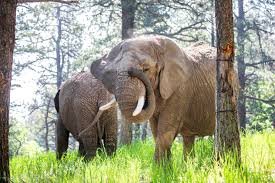
The request includes phasing out the use of animals in experiments in favour of state-of-the-art research methods and prohibiting the use of elephants in performances, among other animal rights-related initiatives.
“Integral to the moral fibre of our country are the principles of ahimsa and karuna,” writes PETA India Director of Advocacy Projects Khushboo Gupta adding, “It is of utmost importance that the welfare of all living beings is given due consideration and protection.”
PETA India said that The Prevention of Cruelty to Animals Act, 1960, is more than 60 years old and is in need of urgent updates to adequately protect animals, including stronger penalties for acts of cruelty.
“Currently, a person who commits cruelty to an animal can get away with just a Rs 10 fine,” Gupta weote. The group recommended more significant fines, jail time, and a ban on keeping or working with animals for those who are convicted.
Other recommendations made by PETA India to add into the parties’ manifestos include prioritising funding for the development of sophisticated, non-animal research and testing methods and committing to a strategy to phase out the use of animals in science, focusing on the production of vegan food and leather in India, prohibiting the caging of aerial birds and ending the use of animals forced to perform in circuses.
PETA India further recommended prohibiting the sale of animals through pet shops and breeders while promoting the adoption of dogs and cats from overburdened animal shelters. It further recommended developing action plans to reduce the consumption of animal-derived foods so as to protect animals, human health, and the environment.