Oct 16,2026: Mukesh Ambani’s Reliance Industries on Friday responded to Elon Musk’s recent remarks about the Indian market and its role in Starlink’s entry into the country, saying it has never feared competition and that every player must abide by Indian laws and policies.
In a statement, Reliance said it welcomed competition in satellite communications, including from Starlink.
It also said all companies, Indian or foreign, must follow the same regulatory process, pointing out that Jio’s satellite services were also awaiting clearances.
The response follows Musk’s remarks accusing the Indian government of favouring established telecom operators over competing players.
The dispute resurfaced after Lauren Dreyer, SpaceX’s vice-president of Starlink Business Operations, told attendees at the India Mobile Congress (IMC) 2026 that the company was ready to begin operations in India but was waiting for regulatory approvals.
“In light of recent remarks about Reliance and the Indian market, we wish to place the facts on record. Like every Indian enterprise, Reliance has grown in an India that welcomes investment and innovation, homegrown or international, that improve the lives of the people,” Reliance Industries said in a statement on Friday.
The company also defended its record on competition, highlighting Jio’s entry into the crowded Indian telecom market in 2016 without any existing customers. It said Jio had since attracted more than 530 million subscribers and helped make digital connectivity more affordable.
“At Reliance, we have never feared competition. We see it as the truest test of who serves the customer best. Jio itself entered India’s crowded telecom market in 2016 as the newest player, with not a single customer. In just ten years, Jio has earned the trust of over 530 million customers and given Indians some of the best digital infrastructure and most affordable data in the world,” the company stated.
Musk first alleged on his social media platform, X, that Starlink was being blocked by certain “oligarchs” keen to keep a “monopolistic chokehold” on Indians.
India’s ministry of communications hit back the next day, calling any suggestion that the framework or its application was unfair or discriminatory “baseless and misconceived” and that the security assessment of the three entities was underway, with all at “broadly the same regulatory stage”.
On October 8, the communications ministry rejected the charge, calling suggestions of discrimination “baseless and misconceived.” It said India’s satcom framework was fair and non-discriminatory,
Hours later, Musk escalated his attack, saying Starlink was licensed to operate in more than 165 countries and had spent five years complying with Indian rules. “So why still no licence? Is Ambani the real boss of India?” he asked, referring to Reliance Industries chairman Mukesh Ambani.
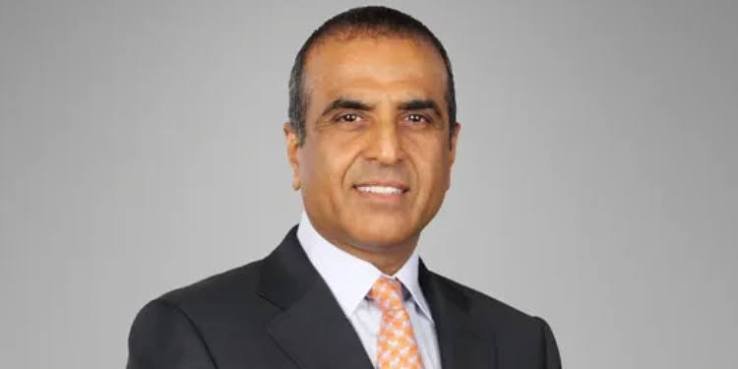
Ahead of Musk in queue: Sunil Mittal
Bharti Airtel chairman Sunil Bharti Mittal on October 14 said his satcom venture Eutelsat OneWeb is significantly ahead of Musk’s Starlink in the satcom queue in India, with the licence applied five years ago, and added that he would be happy to receive the go-ahead at least a few days before the US tech billionaire.
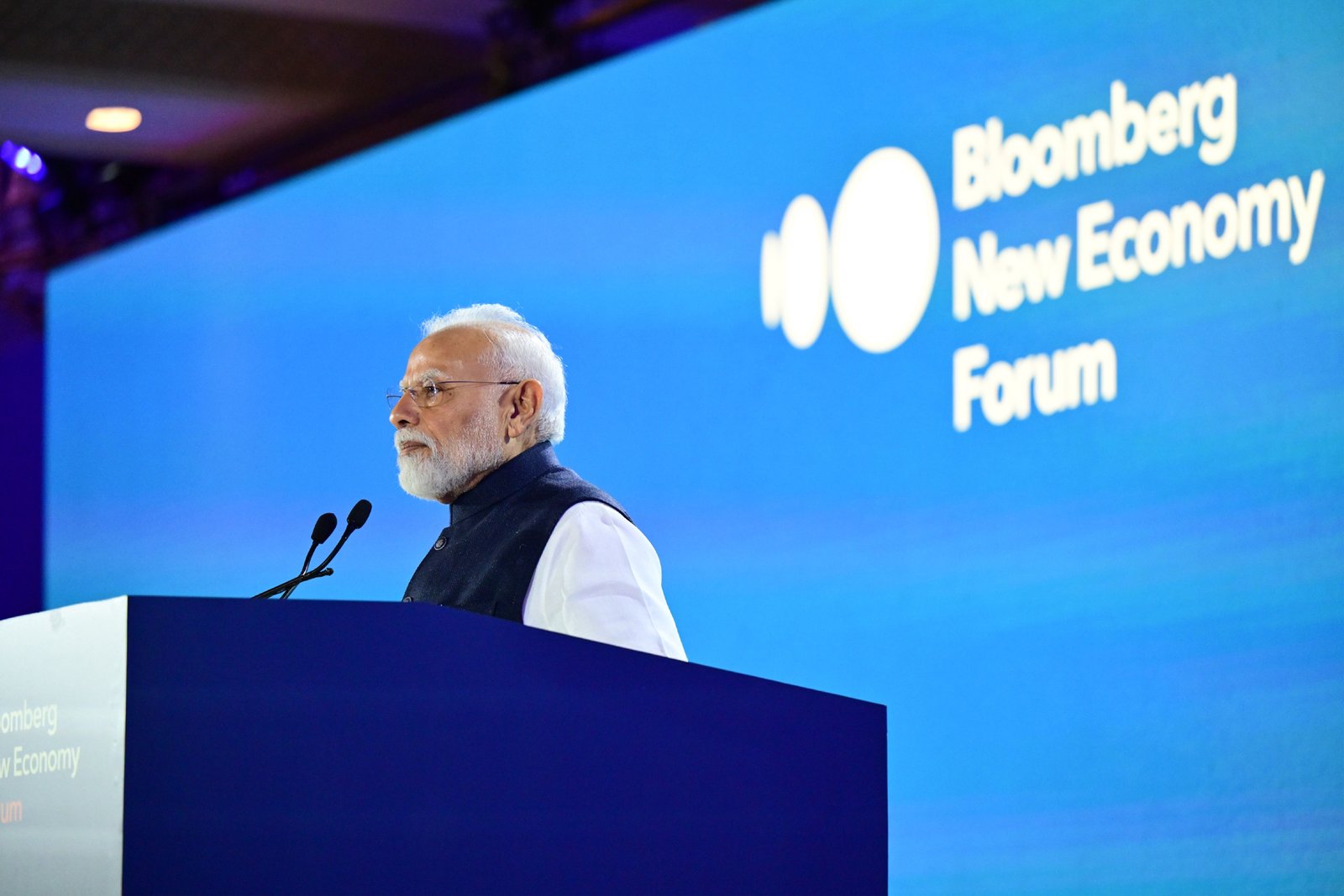
“I think I am significantly ahead in the queue from him. I applied five years back,” Mittal said at the Bloomberg New Economy Forum 2026.
OSLO, Oct 9,2026: South African judge Navanethem “Navi” Pillay, 85, won the Nobel Peace Prize on Friday “for her efforts to promote peace and international law”, the Norwegian Nobel Committee said.
Pillay held states and national leaders accountable and brought hope to victims of violence and conflict, and demonstrated a firm moral compass in her long career, the committee said.
“A common thread runs from her early work defending Nelson Mandela and others who stood up against apartheid to her service as a judge in some of the key international court cases of our time,” the committee said.
Navi Pillay was chair of the United Nations Commission of Inquiry on the Occupied Palestinian Territory that concluded last year that Israel has committed genocide in Gaza. Israel dismissed the report as “scandalous”.
The peace prize is the fifth Nobel awarded this week, after literature, chemistry, physics and medicine. Venezuelan opposition leader Maria Corina Machado won in 2025.
The Nobel Peace Prize, worth 12 million Swedish crowns, or about $1.2 million, is due to be presented in Oslo on December 10, the anniversary of the death of Swedish industrialist Alfred Nobel, who founded the awards in his 1895 will.
Oct 08,2026: Canadian poet and writer Anne Carson won the 2026 Nobel Prize in Literature “for her bold and inventive oeuvre that, in playful dialogue with the classical tradition, has created new forms for contemporary literature,” the award-giving body said on Thursday.
Canadian poet and essayist Carson’s work often blends verse, prose, dialogue and translation in a genre-defying mix.
She is widely known for her translations of classical Greek literature, which heavily influences her work which ranges from opera libretti to literary criticism and verse novels such as “Autobiography of Red” from 1998.
Her style is exemplified in “Norma Jeane Baker of Troy” from 2019, a performance piece which mixes the stories of Helen of Troy in Euripides’ play “Helen” and Marilyn Monroe.
Carson takes a place beside luminaries such as Alexander Solzhenitsyn, Alice Munro and Ernest Hemingway as a recipient of the award, which often divides opinion among book lovers.
Last year’s prize was won by Hungarian writer Laszlo Krasznahorkai, dubbed the “master of the apocalypse” by American critic Susan Sontag.
Established in the will of Swedish dynamite inventor and businessman Alfred Nobel, the prizes for achievements in literature, science and peace have been awarded since 1901.
The prize is awarded by the Swedish Academy and is worth 12 million Swedish crowns ($1.2 million).
Moscow, Oct 3,2026: Global average life expectancy has nearly recovered to pre-COVID-19 pandemic level, the World Health Organisation said on Friday.
The UN health agency estimated health trends by country and region for the period from 2000 to 2023, including the dynamics of life expectancy, mortality and morbidity, and diseases.
“Global life expectancy reached 73.3 years in 2023, close to the 73.4 years recorded in 2019,” the statement read. Non-communicable diseases accounted for 74% of deaths globally in 2023, compared with 58% in 2000. At the same time, mortality from dementia tripled over the period, while health losses associated with anxiety disorders and depression rose sharply since the start of the pandemic.
In 2023, the 10 main causes of death accounted for 33 million of the 61 million deaths recorded worldwide. Non-communicable diseases made up eight of these 10 leading causes.
According to the WHO, the main causes of mortality were cardiovascular diseases, including ischemic heart disease and stroke, as well as respiratory diseases, including chronic obstructive pulmonary disease and lower respiratory infections.
Sept 30,2026: The Indian Coast Guard, in a joint operation with the Gujarat ATS, has seized 526 kg of methamphetamine and heroin valued at more than ₹3,000 crore from an Iranian boat in the Arabian Sea, officials said on Wednesday (September 30, 2026).
Five Pakistani nationals operating the vessel were also detained in the operation carried out near Lakshadweep on September 25, the Coast Guard said in a statement.
Based on intelligence inputs, Coast Guard assets carried out sea-air surveillance and tracked the suspicious dhow before launching a hot pursuit and boarding it west of Lakshadweep, it said.
The seized contraband comprised high-grade methamphetamine and heroin, the Coast Guard said.
The vessel, its crew and the seized drugs were brought to Mumbai under armed escort for joint interrogation and further legal proceedings, it said.
The operation was conducted in coordination with the Gujarat Anti-Terrorist Squad.
The State ATS also confirmed the apprehension of five Pakistani nationals. It is scheduled to brief the media on the operation later in the day.
The seizure comes as security agencies step up efforts to curb transnational drug trafficking through the maritime route.
The Coast Guard said the operation demonstrated its surveillance and maritime interdiction capabilities and its commitment to preventing illicit activities in India’s maritime zones.
The seizure would help disrupt the financial network of international drug syndicates and prevent synthetic drugs from reaching the mainland, it added.
‘Determined to shiled youth’
Union Home Minister Amit Shah praised the joint operation and said that the “Modi government is determined to shield its youth from the scourge of drugs”. In a post on X, Mr. Shah lauded the Coast Guard, Gujarat ATS, and central agencies for ‘upholding a stellar example of coordination and cooperation’.
Sept 29,2026: US and Iranian officials spoke separately with mediators on Monday as part of a renewed effort to end seven months of war, according to officials of both countries.
Any further talks are expected to focus on an amended version of a seven-day proposal that Iran presented last week on the sidelines of the United Nations General Assembly, an official briefed on the negotiations told Reuters.
The war began in late February with US and Israeli attacks on Iran, killing thousands of people over seven months and shocking global markets as vital waterways for oil remained choked. The US and Iran have twice previously agreed to ceasefires in mediated peace talks, in April and June. Those agreements quickly unraveled.
Iranian Foreign Minister Abbas Araqchi, who remained in New York after attending the General Assembly, said Iran expected to receive the US response to its latest ceasefire proposals and its conditions for restoring passage of maritime traffic in the Strait of Hormuz, according to state news agency IRNA.
“If the Americans claim they are seeking an agreement or a peaceful solution, we have presented that solution,” Araqchi said.
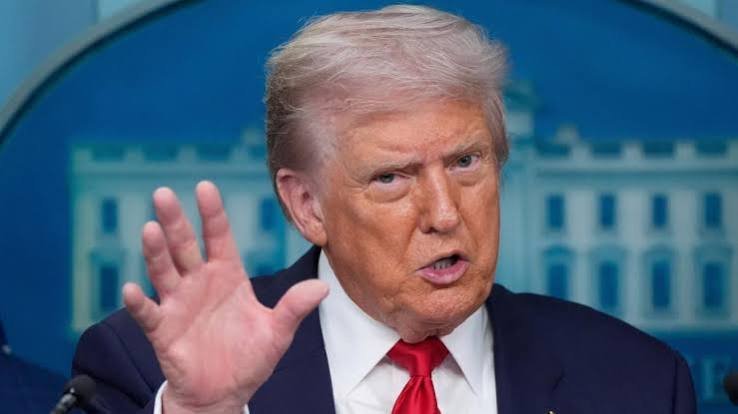
US officials separately spoke with mediators on Monday, US President Donald Trump told reporters at the White House, without giving further details.
Iran’s seven-day plan envisages an end to all hostilities in Iran and Lebanon, the unfreezing of billions of dollars’ worth of Iranian assets, an end to sanctions on Iranian oil and the lifting of the US blockade on Iranian ports.
Iran would then allow the reopening of the Strait of Hormuz, a vital conduit for oil tankers, and the two sides would also resume talks on Iran’s nuclear program and Trump’s wish to seize or eliminate its highly enriched uranium.
Trump said on Saturday he had rejected Iran’s proposal, saying Iran wanted a swift agreement because of the crippling economic pressure it is under. However, he also told Axios on Sunday that he expected US negotiators to engage in further talks this week.
Araqchi said on Sunday that mediators had not formally conveyed a US rejection, and that Iran was awaiting Washington’s definitive position before deciding its next steps.
Washington, Sept 29,2026: US Secretary of State Marco Rubio has suggested the possibility of jointly mining rare earth minerals in Greenland following the conclusion of a deal with local authorities.
On September 22, the US, Denmark, and Greenland signed an agreement to expand the American military presence on the island. “Sure, we will do it in partnership with them,” Rubio said in an interview with Fox News when asked if the US had a chance to engage in mining the rare earth elements with which the island is rich.
The Secretary of State emphasised that this had not been a US priority, but the opportunity arose after the deal with local authorities was finalised. “Now that this (deal) is behind us, I think we have the opportunity to make good investments there,” he concluded. Greenland possesses significant mineral reserves.
According to the Geological Survey of Denmark and Greenland (GEUS), 24 of the 34 raw materials classified by the European union as “critical” have been identified on the island. The exact volumes of many of the discovered resources have yet to be determined. However, the development of these deposits is complicated by natural conditions and a lack of infrastructure.
WASHINGTON/UNITED NATIONS/DUBAI, Sept 27,2026: Iran insisted on Sunday that only diplomacy can solve its conflict with the United States and Israel, after US President Donald Trump said he rejected an Iranian proposal to reopen the Strait of Hormuz and end fighting.
“Our conditions are clear, and any move toward reopening the Strait of Hormuz is contingent on these conditions being met,” Iranian Foreign Minister Abbas Araqchi posted on social media. “Only a negotiated solution can get them out of this deadlock.”
Iran announced a peace proposal last week at the UN General Assembly in New York, saying it had been transmitted to the Americans via Qatari mediators. Trump said on Saturday he rejected the plan, and argued that desperation was driving the Iranians’ push for an agreement on the key waterway.
“They want to make a deal to open the Hormuz Strait immediately because they’re losing so badly,” Trump told reporters at the White House.
Keeping the door to diplomacy open, however, Trump told Axios in a phone interview on Sunday that he expected US negotiators to engage in more talks this week.
Araqchi said mediators facilitating Tehran’s talks with Washington had not officially relayed a US rejection of the plan.
“We are waiting for the mediators to convey the definitive views to us, and we will make a decision based on them,” Araqchi posted.
The US has imposed an economic blockade on Iran to put pressure on Tehran to stop Iranian attacks on vessels in the Strait of Hormuz, which have drastically reduced shipping through the area even as Trump repeatedly asserts that the US controls the waterway.
The commander-in-chief of Iran’s army, Amir Hatam, said the war was at a critical and decisive stage, adding that Tehran would not accept a situation in which it was unable to trade while foreign powers used the region’s strategic waterways.
“If Iran cannot trade, if Iran cannot live, no one will be able to trade or live,” he said, in comments reported by state media.
SAUDI ARABIA DRAWN DEEPER INTO WAR
Previous attempts at diplomacy have failed to end the war, which began on February 28 with US and Israeli strikes on Iran.
Since then it has alternated between pauses and renewed strikes, killing thousands while degrading the conventional forces of Iran and damaging its already ailing economy.
Iran and its allies have responded by extending the conflict throughout the region. Iran has struck US allies in the Gulf with drones and missiles, while its Houthi allies in Yemen have hit Saudi interests.
Saudi Arabia, the largest of the Gulf states, has been drawn deeper into the war this month as Houthi fighters have advanced in Yemen, routing forces of the Saudi-backed government and threatening Saudi oil exports through the Red Sea.
The Iran-backed Houthis have repeatedly fired into Saudi Arabia and, in a possible sign of further escalation, parents in Riyadh received notices from schools on Sunday saying classes would shift to remote learning for the week, according to people who received the messages.
The notice did not give a reason for the decision. Saudi authorities did not immediately respond to a request for comment.
Yemen’s Houthi-run health ministry, meanwhile, said seven people were killed and 40 wounded, including children, in a strike on shops at a market at the Mawiya junction in Taiz province, in the southwest.
Later, Yemen’s internationally recognised government said its forces had targeted a Houthi military camp and vehicles at the same junction.
CONFLICT HAS DISRUPTED OIL FLOWS, HARMED GLOBAL ECONOMY
The Iranians also engaged their Saudi rivals regarding the Strait of Hormuz during the brief flurry of diplomacy in New York, underscoring the stakes of a seven-month-old conflict that has disrupted oil flows through a critical shipping lane and taken a toll on the global economy.
Araqchi told reporters at the UN on Friday the proposed deal would trigger a seven-day countdown to reopening the strait and a pause in regional fighting.
“If there is seriousness on the US side to come to a deal and reopen the Strait of Hormuz, everything is now prepared,” Araqchi said. If the US were to agree, the warring parties could start wider talks “on mutually agreed subjects.”
That could potentially include discussions of Iran’s nuclear programme. Trump has cited preventing Tehran from ever acquiring a nuclear bomb as a key goal, along with ending its ability to attack its neighbours and creating conditions for Iranians to topple their leadership.
US envoy to the United Nations Mike Waltz said on Sunday in an interview with CNN’s State of the Union that Trump had rejected the Iranian proposal because it required the immediate lifting of sanctions and release of frozen assets.
Chennai, September 26,2026: Astronomers have confirmed the existence of a Jupiter-sized planet that is less than a million years old. Named Elias 2-24 b, it is the youngest known planet, offering scientists a rare opportunity to observe a world in the early stages of its formation.Its surprisingly rapid formation challenges leading theories about how giant planets come together, especially so far from their stars.Astronomers have confirmed the youngest known planet yet, a world less than 1 million years old that is still surrounded by the gas and dust from which it formed.According to the Science Daily website, the planet, called Elias 2-24 b, was identified using observations preserved in NASA-funded archives. It is still orbiting within its young star’s dusty disk, giving scientists a rare opportunity to study planet formation while it is still happening.”Our planet-formation models already struggled to explain the previous record holders for the youngest known planet — a four-way tie between two planets orbiting the star PDS 70 and two planets orbiting the star WISPIT 2 — which are all more than 5 million years old,” said Lucas Cieza, a professor at the Instituto de Estudios Astrofísicos in Chile and co-author of a paper detailing the results, as quoted by the website of Science Daily.”Elias 2-24 b shows us that even our best planet-formation models are still missing some important processes,” added Cieza. In a study published September 16 in The Astrophysical Journal Letters, researchers led by Andrea Bernardi, a doctoral candidate at the Universidad Diego Portales in Chile, examined archived observations of seven young stars.The stars were observed using the coronagraph at the W. M. Keck Observatory in Hawaii, which collaborates with NASA under a cooperative agreement. Surrounding each star is a debris disk containing dust, gas, and fragments of ice and rock. Gaps and other features within these disks may indicate that planets are in the process of forming.A coronagraph blocks much of a star’s bright light, making it easier to search for much fainter objects nearby. Using that technique, astronomers looked for planets hidden inside the dusty disks. Planets orbiting stars beyond our solar system are known as exoplanets.”The planets should be found within the gaps, since they are carving them,” Bernardi said. “And that’s exactly where we found Elias 2-24 b.”Elias 2-24 b is roughly as massive as Jupiter and orbits a star about 450 light-years from Earth. Because the system is so young, studying it gives astronomers a glimpse of what our own solar system may have looked like billions of years ago.Stars form inside vast clouds of gas and dust. Planets can then grow from material left over around the newborn star, gradually gathering matter and shaping paths through the surrounding disk.But observing planets during these earliest stages is extremely difficult because thick dust can hide them from view.
Most confirmed exoplanets have instead been found through transits. A transit occurs when a planet passes in front of its star and causes a small temporary drop in the starlight seen from Earth.That method becomes much harder to use when planets are still buried in dust or orbit very far from their stars.As a result, most of the roughly 6,000 confirmed exoplanets are billions of years old and orbit relatively close to their stars.Scientists currently build planet formation models using theories, computer simulations, and observations of young stars surrounded by disks where forming planets are often too difficult to detect directly. Discoveries such as Elias 2-24 b can provide crucial real-world tests for those models.”The galaxy churns out new stars and planets continuously, so there are many in every stage of evolution,” Cieza said. “That means we can see the entire process in theory, but there is a large gap in what most telescopes can detect. We are mostly blind to these baby planets right now.”A Decade-Old Mystery Comes Into FocusThe new confirmation also resolves a question astronomers have been debating for about 10 years.Earlier observations from ALMA (Atacama Large Millimeter/submillimeter Array) in Chile revealed a gap in the dusty disk surrounding the young star Elias 2-24. Later, the European Southern Observatory’s Very Large Telescope in Chile spotted a faint point of light inside that gap, according to the Science Daily website. Scientists wondered whether the object could be a planet. The problem was that existing planet formation theories suggested a large planet should not have been able to form so quickly, especially at such a great distance from its star.Current models suggest that forming a Jupiter-size planet at Jupiter’s distance from the Sun (which is just over five times larger than the distance of Earth to the Sun) takes about 5 million years. A giant planet much farther out should take even longer.Yet the faint object in the Elias 2-24 system sits about 55 times farther from its star than Earth is from the Sun and was already showing signs of being a forming planet.To investigate further, Bernardi and colleagues searched the Keck Observatory Archive, a NASA-funded collaboration between Keck Observatory and the NASA Exoplanet Science Institute at Caltech/IPAC.That analysis ultimately confirmed the object as Elias 2-24 b.”We usually hear about telescopes working separately, but this confirmation was possible only by using multiple telescopes together,” Bernardi said. “Elias 2-24 b is at the limit of what current telescopes can detect, but with new instruments like NASA’s Nancy Grace Roman Space Telescope, such detections should become easier.”They found the same faint object in observations collected in 2018 and 2020. By combining the observations and tracking how the object moved over time, the team determined that it behaved much more like a planet orbiting the star than an imaging artifact or a distant background star.
Sept 17,2026: U.S. President Donald Trump said he hoped an end to the war against Iran was near, as the conflict, in its seventh month, escalated with Saudi aircraft pounding Yemen and Houthi fighters launching drones and missiles at Saudi cities.
The Iran-backed Houthis’ lightning advance in Yemen along the Red Sea and their attacks on Saudi Arabia, along with attacks that damaged Saudi Arabia’s East-West oil pipeline, have extended Tehran’s reach in the war and heightened global oil-supply risks.
As the war expands into a new theatre, the United States tightened its travel warning for Saudi Arabia, banning government employees from travelling within 20 miles (30 km) of the Yemen border.
Still, just hours after reports of the Houthis and Saudi Arabia fighting, Trump told reporters on Wednesday evening: “Well, hopefully we are towards the end of the war.”
TRUMP SAYS IRAN WANTS A DEAL, OIL PRICE STILL ELEVATED
“They want to make a deal. We’ll see how that works out,” he said, referring to Iran, reiterating past comments. Trump also said he had heard from Iran “directly”, without elaborating.
Trump has offered shifting goals and timelines for the war that began on February 28, when the U.S. and Israel attacked Iran and Tehran struck Israel and U.S. bases in Gulf states.
The extension of the war into Yemen threatens to worsen the global energy-supply shortage caused by the war, which has disrupted shipping through the Strait of Hormuz. The strait carried about 20% of global oil and LNG before the conflict.
Traders say a prolonged closure of Saudi Arabia’s East-West pipeline could cut off as much as 4% of global oil supply.
TRUMP TO MEET GULF LEADERS, AXIOS SAYS, AS WAR SPREADS
Axios reported late on Wednesday that Trump was expected to meet Gulf leaders on the sidelines of the U.N. General Assembly on Tuesday to discuss the next steps in the conflict.
The Houthis on Wednesday released battlefield video of fighters seizing armoured vehicles from Saudi-backed forces. The video also showed warplanes flying overhead and huge explosions billowing into the sky from desert dunes.
Houthi military spokesman Yahya Saree said the group had launched fresh drone and missile strikes on the major Saudi Red Sea oil port of Yanbu and at a southern Saudi airbase at Khamis Mushait. He did not say when the strikes had taken place.
Saree said the Saudis had carried out as many as 450 air strikes on Yemen this week. Officials in the Saudi-backed government that controls southern Yemen have acknowledged that their forces and those of Saudi Arabia were conducting air strikes on Houthi positions, though Riyadh has not confirmed them.
Saudi Arabia has led a coalition battling the Houthis since 2015. The conflict had largely quietened under a ceasefire in recent years, but reignited when the Houthis declared a naval blockade against Saudi Arabia in July and fired at southern areas in the kingdom.
September 15, 2026: U.S. Air Force Secretary Troy Meink on Monday revealed that the United States has deployed space-control weapons in orbit, while also disclosing new milestones for military satellite programs tied to missile defense and long-range targeting.
But it has not disclosed what those weapons are, how many exist, which satellites carry them, their orbits, or when they were launched.US Secretary of the Air Force Troy Meink said the “on orbit” weapon was necessary to safeguard US forces against hostile enemy action.
Speaking at the Air, Space and Cyber Conference on Monday, Meink said the US was ready for “evolving threats”, but did not elaborate on the weapon’s capabilities or when it was put into orbit.
Senior military leaders have previously said they planned to boost military capabilities in space, citing Russian and Chinese programmes developing ways to attack and disrupt US satellites in a future conflict.
China responded on Tuesday by warning against an “arms race” in space.
“We urge the US side to stop expanding its military capabilities and preparing for war in outer space,” AFP quoted a foreign ministry spokesman as saying.
Details of how the weapon operates have not been disclosed by US officials.
A US Space Force spokesperson said: “Space control encapsulates the mission areas required to contest and control the space domain – employing kinetic and non-kinetic means to affect adversary capabilities through disruption, degradation and even destruction, if necessary.
“These capabilities can be employed for offensive and defensive purposes at the direction of combatant commands.”
An expert on military uses of outer space noted that “precious little” was publicly known about the technology, and told the BBC there could be a “whole range of different weapons systems”.
Speaking to Radio 4’s Today programme, Dr Bleddyn Bowen, from the Royal United Services Institute (RUSI), said he was “totally guessing” but that the US could have been referring to “some kind electronic warfare or radio jamming platform”.
That would be the sort of weapon that already exists on Earth and could disrupt radio communications, Bowen said.
An alternative would be “a kinetic kill vehicle of some sort – so a vehicle that would release a projectile of some sort that would ram into a satellite and destroy it”.
But this was less likely because such a physically destructive tool would be capable of creating a lot of debris, Bowen added.
The Trump administration has said that space-based capabilities – and interceptor missiles – are a crucial part of its planned “Golden Dome” defence system to protect the US from missiles and other airborne threats.
Last year President Donald Trump issued an executive order underlining the US Space Force’s role in not only defending assets, but also as an attacking force.
The US Space Force – the first new branch of the US military for more than 70 years – was launched in 2019 as a way to protect American assets in space, including hundreds of satellites used for communication and surveillance.
A 1967 treaty banned weapons of mass destruction in orbit. Since then, key powers including the US, Russia, and China have been exploring other capabilities outside of the treaty, such as targeting rivals’ satellites – which are key for military communications, surveillance and navigation.
In early February, it was revealed that two Russian satellites had likely intercepted the communications of at least a dozen European ones since Russia’s invasion of Ukraine in 2022.
Such interceptions may have allowed Russian intelligence services to read the sensitive data they transmit, or hypothetically, even to take control of the satellites.
In 2024, the US said Russia had launched a satellite which it believed may be capable of attacking other such probes. Russia did not publicly comment on the issue.
The US Space Force says China “develops and operates space and counterspace capabilities as part of a military modernisation strategy,” while Russia “views space as a warfighting domain and believes space supremacy will be a decisive factor in future conflicts”.