Oct 16,2026: Mukesh Ambani’s Reliance Industries on Friday responded to Elon Musk’s recent remarks about the Indian market and its role in Starlink’s entry into the country, saying it has never feared competition and that every player must abide by Indian laws and policies.
In a statement, Reliance said it welcomed competition in satellite communications, including from Starlink.
It also said all companies, Indian or foreign, must follow the same regulatory process, pointing out that Jio’s satellite services were also awaiting clearances.
The response follows Musk’s remarks accusing the Indian government of favouring established telecom operators over competing players.
The dispute resurfaced after Lauren Dreyer, SpaceX’s vice-president of Starlink Business Operations, told attendees at the India Mobile Congress (IMC) 2026 that the company was ready to begin operations in India but was waiting for regulatory approvals.
“In light of recent remarks about Reliance and the Indian market, we wish to place the facts on record. Like every Indian enterprise, Reliance has grown in an India that welcomes investment and innovation, homegrown or international, that improve the lives of the people,” Reliance Industries said in a statement on Friday.
The company also defended its record on competition, highlighting Jio’s entry into the crowded Indian telecom market in 2016 without any existing customers. It said Jio had since attracted more than 530 million subscribers and helped make digital connectivity more affordable.
“At Reliance, we have never feared competition. We see it as the truest test of who serves the customer best. Jio itself entered India’s crowded telecom market in 2016 as the newest player, with not a single customer. In just ten years, Jio has earned the trust of over 530 million customers and given Indians some of the best digital infrastructure and most affordable data in the world,” the company stated.
Musk first alleged on his social media platform, X, that Starlink was being blocked by certain “oligarchs” keen to keep a “monopolistic chokehold” on Indians.
India’s ministry of communications hit back the next day, calling any suggestion that the framework or its application was unfair or discriminatory “baseless and misconceived” and that the security assessment of the three entities was underway, with all at “broadly the same regulatory stage”.
On October 8, the communications ministry rejected the charge, calling suggestions of discrimination “baseless and misconceived.” It said India’s satcom framework was fair and non-discriminatory,
Hours later, Musk escalated his attack, saying Starlink was licensed to operate in more than 165 countries and had spent five years complying with Indian rules. “So why still no licence? Is Ambani the real boss of India?” he asked, referring to Reliance Industries chairman Mukesh Ambani.
Ahead of Musk in queue: Sunil Mittal
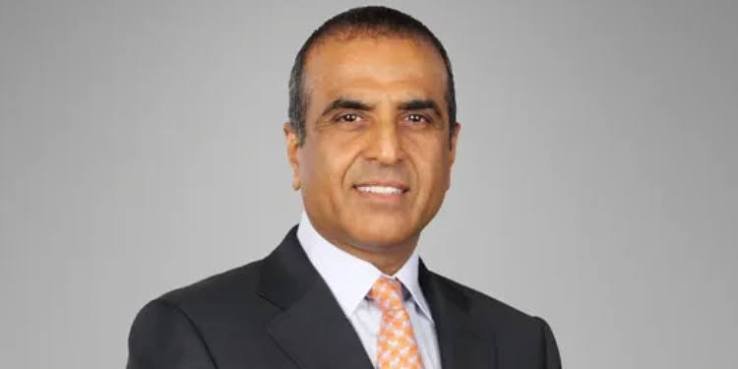
Bharti Airtel chairman Sunil Bharti Mittal on October 14 said his satcom venture Eutelsat OneWeb is significantly ahead of Musk’s Starlink in the satcom queue in India, with the licence applied five years ago, and added that he would be happy to receive the go-ahead at least a few days before the US tech billionaire.
“I think I am significantly ahead in the queue from him. I applied five years back,” Mittal said at the Bloomberg New Economy Forum 2026.
Sept 25,2026: Tata Sons has rejected Tata Trusts chairman Noel Tata’s objections to N Chandrasekaran’s reappointment as chairman, citing legal opinions from three senior lawyers to support the validity of the September 17 board resolution and the use of the chairman’s casting vote.
In a September 24 letter to Noel Tata, the holding company cited opinions from former Chief Justice of India U U Lalit, former Supreme Court judge B N Srikrishna and senior advocate Sudipto Sarkar. Tata Sons said the three opinions supported its interpretation of the company’s Articles of Association (AoA).
The dispute centres on the voting process for Chandrasekaran’s third five-year term. Chandrasekaran recused himself from the vote. Four of the five directors who voted backed his reappointment, including Tata Trusts nominee Venu Srinivasan, while Noel Tata voted against it. Harish Manwani, who presided over the meeting, subsequently exercised the casting vote.
Tata Trusts has challenged the validity of the resolution, arguing that the two Trust-nominated directors must provide the required affirmative majority and that a casting vote cannot be used when there was no equality of votes at the overall board level.
Lalit backed Tata Sons’ interpretation of the casting-vote provision. He said the split between the directors appointed under Article 104B created an occasion for the presiding chairman to exercise the casting vote under Article 121, and concluded that the September 17 resolution “was validly passed”.
Srikrishna also supported the procedure adopted by the board, saying it was “perfectly consonant with the letter and spirit of Article 121”. He said the provision should be read in a manner that allows board proceedings and the company’s business to move forward rather than remain deadlocked.
On Srinivasan’s vote in favour of Chandrasekaran, Srikrishna said the Trust nominee had “rightly acted pursuant to the statutory fiduciary duty” owed to the company.
Sarkar’s earlier opinion, obtained before the board meeting, also supported Tata Sons’ position on the casting vote. He additionally held that Article 118, which lays down a special process for selecting a new chairman, does not apply to the reappointment of an incumbent chairman.
Tata Trusts maintains its objection
Tata Trusts has maintained that the September 17 resolution was a “legal nullity”, arguing that the chairman’s appointment or reappointment requires the support of a majority of the Trust nominees. It has also cited an opinion from former CJI D. Y. Chandrachud backing its position.
The disagreement therefore hinges on competing interpretations of Articles 118 and 121 of Tata Sons’ AoA—specifically, whether the selection process applies to an incumbent seeking another term and whether a casting vote can resolve a split between the Trust nominees.
Tata Sons has now formally stood by Chandrasekaran’s reappointment, setting the stage for the next move by Tata Trusts in the dispute.
Panchkula, Sept 22,2026: Consumers will now be able to identify whether soaps, shampoos, toothpaste, cosmetics and toiletries are of vegetarian or non-vegetarian origin at a glance, with the Centre making colour-coded origin labels mandatory on their packaging.
The union Ministry of Consumer Affairs, Food and Public Distribution has notified the Legal Metrology (Packaged Commodities) Fourth Amendment Rules, 2026, which require a green dot for products of vegetarian origin and, as applicable, a red or brown dot for non-vegetarian products.
The identification mark must be displayed at the top of the principal display panel on packaged soaps, shampoos, toothpaste, and other cosmetics and toiletries. The amendment was notified by the Department of Consumer Affairs on Monday through G.S.R. 826(E) and came into force from the date of its publication in the Official Gazette. This measure establishes a clear visual disclosure requirement for personal-care products, allowing consumers to distinguish between vegetarian and non-vegetarian origins without relying solely on ingredient lists.
The government has amended Rule 6 of the Legal Metrology (Packaged Commodities) Rules, 2011, by inserting the new labelling provision. The notification also omits sub-rule (8) of Rule 6. This change is important for consumers who base their purchasing decisions on the origin of ingredients in cosmetics and personal-care products.
Manufacturers and packers must ensure that packaging for covered products includes the required colour-coded declaration on the principal display panel, as specified in the amended rules.
New Delhi, September 3,2026: India will announce the final details of its Bilateral Trade Agreement (BTA) with the United States only after Washington agrees to offer preferential tariff terms over India’s competitors, Commerce and Industry Minister Piyush Goyal said on Thursday.”As soon as the US is able to give us the preferential rate in comparison to our competition, we will finalise the BTA and announce the final details,” Goyal said, addressing a national workshop on Leveraging FTAs Outreach program.
The minister said the trade pacts India has already concluded are opening up significant export opportunities for domestic businesses.He added that India is on track to conclude several more trade agreements in the coming months and years, naming Canada, Mexico, Chile, the Brazil-led Mercosur bloc, the Southern African Customs Union (SACU), a South Africa-led group of nations, the six-member Gulf Cooperation Council (GCC), and Israel as prospective partners.India and the US have been holding talks for a mutually beneficial Bilateral Trade Agreement (BTA).During his June 22-24 visit to New Delhi, US Trade Representative Ambassador Jamieson Greer and Commerce and Industry Minister Piyush Goyal reviewed key elements of the agreement, including enhanced market access, digital trade, supply chain resilience, reduction of non-tariff barriers and cooperation in strategic sectors.Both sides had noted substantial progress by their negotiating teams and reaffirmed their commitment to an agreement that is balanced, commercially meaningful and delivers tangible benefits for businesses, farmers, workers and consumers in both countries.In February, India and the US had announced a framework for an Interim Agreement on reciprocal and mutually beneficial trade, reaffirming their commitment to the broader BTA negotiations.In the latest development in June, U.S. Trade Representative Ambassador Jamieson Greer led a delegation to New Delhi to meet Union Minister of Commerce and Industry Piyush Goyal, reviewing core BTA elements and pushing forward the interim deal.For 2025, India’s total goods exports to the U.S. reached USD 103.82 billion, while U.S. exports to India totalled approximately USD 45.6 billion, for a total bilateral trade of USD 149.42 billion.The bilateral services trade in 2025 was recorded at USD 92.23 billion, where India exported USD 48.67 billion worth of services to the US and imported USD 43.56 billion worth of services from the US.
Aug 23,2026: The Union Cabinet on Wednesday approved a Rs 62,500 crore Mobile Phone Manufacturing Scheme (MPMS) aimed at scaling up domestic mobile phone production, deepening local value addition and strengthening India’s position as a global electronics manufacturing hub.
Chaired by Prime Minister Narendra Modi, the Cabinet cleared the scheme with a five-year tenure from FY2026-27 to FY2030-31.
The scheme succeeds the Production Linked Incentive Scheme for Large Scale Electronics Manufacturing (PLI-LSEM), which ended on March 31, 2026.
Under the scheme, companies manufacturing mobile phones in India will receive production-linked incentives ranging from 2.25% to 5% on eligible sales.
Manufacturers can also claim an additional incentive of up to 1.5% for sourcing major components and sub-assemblies domestically, encouraging deeper localisation of the supply chain.
To promote Indian smartphone brands, the government will provide an additional 3% incentive on eligible sales linked to product design and research and development (R&D).
According to the government, the scheme aims to boost production, increase domestic value addition, strengthen supply chain resilience, enhance global competitiveness and build Indian brands capable of developing indigenous technologies and patents.
Rs.39 lakh crore production target
The Centre expects the scheme to generate cumulative mobile phone production worth around Rs.39 lakh crore during its five-year tenure.
It is also projected to create around 60,000 direct jobs, contributing to employment generation and economic growth.
“Smartphones have emerged as the single largest exported product category from India in 2025, surpassing traditional leading export items such as diesel fuel and cut diamonds,” the government said in a statement.
It added that mobile phones now account for a significant share of India’s electronics production and exports and play a critical role in integrating the country into global value chains.
India’s mobile manufacturing growth
The government said India’s electronics manufacturing sector has expanded rapidly under the Make in India initiative, with electronics production growing sevenfold and exports increasing elevenfold since FY2014-15.
India is now the world’s second-largest mobile phone manufacturer by volume, with 99.2% of mobile phones used in the country being manufactured domestically.
According to the Ministry of Electronics and Information Technology (MeitY), mobile phone production has increased from ₹18,900 crore in FY2014-15 to Rs.6.27 lakh crore in FY2025-26, while exports have surged from ₹1,566 crore to RS.2.60 lakh crore during the same period.
The government also noted that mobile phones have risen from being India’s 153rd largest export item in FY2014-15 to becoming the country’s largest export product in FY2025-26, underscoring India’s growing competitiveness in global electronics manufacturing.
New Delhi, Feb 1,2026: Finance Minister Nirmala Sitharaman presented the union Budget for 2026-27 in the Lok Sabha on Sunday, emphasising India’s sustained economic growth and resilience amid global uncertainties.
Highlighting a strong macroeconomic stability with a growth rate of around 7 pc, she said, “The Modi government has decisively chosen action over ambivalence, delivering reforms that have improved lives and reduced poverty.”
The Budget focuses on balancing ambition with inclusion, aiming to transform aspiration into achievement. Sitharaman noted, “This is a Yuva Shakti-driven Budget inspired by three duties: to accelerate economic growth, build resilience to global volatility, and ensure inclusive development.”
Key reforms announced include significant steps to build domestic manufacturing capacity, enhance energy security, and cut critical import dependency. The government proposes to boost manufacturing in sectors such as biopharma, semiconductors, textiles, and infrastructure, with dedicated funds like Rs 100 billion for Biopharma Shakti and an expanded Rs 400 billion outlay for electronics manufacturing.
A major thrust is on supporting MSMEs through a three-pronged approach, including a proposed Rs 100 billion SME growth fund and measures to improve liquidity and compliance via TReDS and GeM integration. Infrastructure development will be scaled up with a capital expenditure target of Rs 12.2 trillion and initiatives like 20 new waterways and coastal shipping schemes aimed at boosting trade and connectivity.
On the financial front, the Budget aims to strengthen the banking sector with a new high-level committee for banking reforms and restructuring of key public NBFCs. Tax reforms include the rollout of the new Income Tax Act from April 1, reduced TCS rates for education and medical expenses, and rationalization of prosecution under the Income Tax Act. Notably, tax holidays are extended till 2047 for cloud services from Indian data centers, and safe harbor provisions are enhanced for IT services.
Sitharaman stressed the importance of integrating India with global markets, stating, “India must continue to take confident steps to ensure long-term economic stability while fostering innovation through cutting-edge technology and AI as force multipliers.”
The fiscal deficit for FY27 is pegged at 4.3 per cent of GDP with a debt-to-GDP ratio expected to decline to 55.6 per cent, underscoring the government’s commitment to fiscal prudence. Tax devolution to states continues at 41 per cent, with Rs 1.4 trillion allocated as grants.
The Budget also prioritizes social sectors and employment generation, proposing schemes for medical tourism hubs, upgrading allied health skills, promoting sports goods manufacturing, and supporting vulnerable populations, including women entrepreneurs and the differently-abled.
Finance Minister Sitharaman reaffirmed the government’s reform momentum: “Over 350 reforms have been rolled out since August 15, and the reform express is well on its way to boosting growth, employment, and production across the country.”
New Delhi, Dec 16,2025: For the first time in history, the Indian Rupee on Tuesday breached the 91-per-dollar threshold.
The fall in the rupee was pressured by increased hedging activity and portfolio outflows, which is coming amid issues in the trade negotiations between the US and India.
Indian Rupee fell 0.3 per cent to 91.0750, hitting a record low for a fourth consecutive session.
Notably, in 2025, the Indian rupee has fallen by over 6 per cent against the US dollar.
The fall in the rupee was driven by a persistent imbalance in dollar flows. Further, the importer hedging has intensified, and foreign investors have remained cautious on Indian equities, keeping the currency under constant strain.
On the other hand, most Asian currencies have advanced over the past month, with the Thai Baht climbing over 3 per cent, the Yuan, Ringgit, and Singapore dollar appreciating by at least 1 per cent.
In 2025, foreign investors have been selling Indian stocks at a rapid pace.
FIIs have so far this year sold record shares worth Rs 1,59,779 crore, data compiled by the National Securities Depository Limited (NSDL) showed.
New Delhi, Dec 10,2025: In a major endorsement of India’s technological trajectory, Prime Minister Narendra Modi and Microsoft Chairman and CEO Satya Nadella today announced a massive US$17.5 billion investment by the tech giant into the country.
This commitment, which Microsoft terms its largest-ever investment in Asia, is specifically aimed at building the necessary infrastructure, skills, and sovereign capabilities to realize India’s ambitious “AI first” future.
The announcement followed a “very productive discussion” between the two leaders, highlighting the growing synergy between India’s push for digital public infrastructure and the global need for AI innovation.
Satya Nadella confirmed the monumental investment via a post on X, detailing the purpose of the capital injection: “Thank you, PM @narendramodi ji, for an inspiring conversation on India’s AI opportunity. To support the country’s ambitions, Microsoft is committing US$17.5B—our largest investment ever in Asia—to help build the infrastructure, skills, and sovereign capabilities needed for India’s AI first future.”
The focus on “sovereign capabilities” is particularly significant, signalling Microsoft’s intent to tailor its cloud and AI services to meet India’s unique regulatory and data residency requirements, thereby empowering Indian companies and government bodies with advanced AI tools while ensuring compliance.
PM Modi welcomed the commitment, emphasizing the potential benefits for India’s vast and digitally active young population. The Prime Minister’s post on X, conveyed a strong sense of optimism regarding India’s role in the global AI landscape: “When it comes to AI, the world is optimistic about India! Had a very productive discussion with Mr Satya Nadella. Happy to see India being the place where Microsoft will make its largest-ever investment in Asia. The youth of India will harness this opportunity to innovate and leverage the power of AI for a better planet.”
This sentiment aligns with the government’s “Digital India” initiative and its recent push to establish India as a hub for both AI talent and AI-driven solutions for global challenges. The investment is expected to significantly boost the country’s cloud computing capacity, accelerate the development of AI-powered solutions across sectors like healthcare, agriculture, and governance, and create millions of jobs requiring next-generation digital skills.
Microsoft’s US$17.5 billion pledge is the latest in a series of major investments by global tech giants, underscoring the confidence in India’s digital economy. The country’s large, open data sets, rapidly expanding internet penetration, and strong talent pool have made it an increasingly attractive destination for developing and deploying large-scale AI models.
The size of this specific investment—US$17.5 billion—is unprecedented for Microsoft in the Asian region and reflects the company’s strategic decision to make India a cornerstone of its global AI deployment strategy. The capital is expected to flow into establishing new hyperscale data centres, expanding digital skilling programmes, and forming deeper collaborations with local startups and educational institutions.
Sept 22,2025: The goods and services tax (GST) rate rationalisation announced by the GST Council earlier this month will come into effect today, on September 22, 2025.
Union Finance Minister Nirmala Sitharaman said the Council approved revision of GST slabs from four (5 per cent, 12 per cent, 18 per cent, and 28 per cent); to two (5 per cent and 18 per cent), plus a special rate of 40 per cent on select items and sin goods.
‘Relief for middle-class’: Nirmala Sitharaman
Termed as a “Diwali gift” to consumers, Sitharaman said the aim of the new reforms is to bring relief to the middle class. “In common man and middle class items, there is a complete reduction,” she stated.
“This reform is not just about rationalising rates. It’s also on structural reforms. It’s also about ease of living, so that businesses can conduct their operations with the GST with great ease. We’ve reduced the slabs. There shall be only two slabs, and we are also addressing the issues of compensation cess,” the finance minister added.
GST rate: What items get cheaper?
As many as 375 items, including automobiles, electronics, equipment, kitchen staples and medicines, are set to get cheaper for you from today.
Food items that will see reduced prices include beverages containing milk, coffee, condensed milk, biscuits, butter, cereals, corn flakes, drinking water packed in 20-litre bottles, dry fruits, fruit pulp or fruit juice, ghee, ice cream, jam and fruit jellies, ketchup, namkeen, paneer, pastry, sausages and meat, and tender coconut water, among others.
Other daily items such as after-shave lotion, face cream, face powder, hair oil, shampoos, shaving cream, talcum powder, toothbrush, and toilet soap bars could see reduction in prices.
In electronics, the items that will see price cuts include, airconditioners (ACs), diswashers, televisions (TVs), and washing machines.
Cost of medicines will come down for the common man, GST for medical devices such as diagonistic kits and glucometers has been cut to 5 per cent, which could lead to price cuts as well. The government has already directed pharmacies to revise their MRP or sell medicines at a lower rate after taking into account GST cut benefits, according to a PTI report.
In the beauty and physical well-being services, GST has been slashed for barbers, fitness centres, health clubs, salons, and yoga, which could be passed to the end customers.
For homebuyers, GST on cement has been reduced from 28 per cent to 18 per cent, which is likely to lead in lower home prices.
The biggest beneficiary has been the auto space, where effective tax including cess has been reduced from 35-50 per cent to flat 40 per cent.
Notably, after the GST rate cut announcement, several consumer brands announced reduction in the prices of their goods, including Amul, HUL, L’Oréal and Himalaya. Auto brands also rushed to announced the “Diwali” rate reductions from September 22, 2025.
WASHINGTON, Sept 13,2025: Group of Seven nations’ finance ministers discussed in a call on Friday further sanctions on Russia and possible tariffs on countries that they consider “enabling” its war in Ukraine, as the U.S. called on its allies to impose tariffs on purchasers of Russian oil.
Canadian Finance Minister Francois-Philippe Champagne chaired the G7 meeting, which was held to discuss further measures to increase pressure on Russia to end its war against Ukraine, according to a statement from Canada, the head of the rolling G7 presidency.
The ministers agreed to speed up discussions to use frozen Russian assets to fund Ukraine’s defense, and discussed a “wide range of possible economic measures to increase pressure on Russia, including further sanctions and trade measures, such as tariffs, on those enabling Russia’s war effort,” the statement said.
U.S. Treasury Secretary Scott Bessent told finance ministers during the call that they should join the U.S. in imposing tariffs on countries that purchase oil from Russia, Bessent and U.S. Trade Representative Jamieson Greer said in a separate statement following the meeting.
“Only with a unified effort that cuts off the revenues funding Putin’s war machine at the source will we be able to apply sufficient economic pressure to end the senseless killing,” Bessent and Greer said.
Bessent and Greer welcomed commitments made during the call to increase sanctions pressure and explore using immobilized Russian sovereign assets to benefit Ukraine’s defense, according to the joint statement.
Earlier in the day, a U.S. Treasury spokesperson called on G7 and European Union allies to impose “meaningful tariffs” on goods from China and India to pressure them to halt their purchases of Russian oil.
President Donald Trump has imposed an extra 25% tariff on imports from India to pressure New Delhi to halt its purchases of discounted Russian crude oil, bringing total punitive duties on Indian goods to 50% and souring trade negotiations between the two democracies.
But Trump has refrained from imposing additional tariffs on Chinese imports over China’s purchases of Russian oil, as his administration navigates a delicate trade truce with Beijing.
Bessent is due to travel to Madrid on Friday for another round of talks with his Chinese counterpart, Vice Premier He Lifeng, that will cover trade issues, Washington’s demands for Chinese-owned TikTok to divest its U.S. operations, and anti-money laundering issues.
New Delhi, July 31,2025: Day after announcing 25 percent tariff with ‘’penalty’’ against India for
buying military equipment and energy from Russia, US President Donald Trump today said a trade deal with Pakistan had been concluded and both countries (India and Russia) could take their ‘’dead economies’’ down together.
He said the US had just concluded a trade deal with Pakistan where Pakistan and US could work together on developing their massive oil reserves and may be they (Pakistan) will sell their oil to India.
‘’We have just concluded a deal with the country of Pakistan whereby Pakistan and the United States will work together on developing their massive oil reserves. We are in the process of choosing the oil company that will lead this partnership. Who knows may be they’ll be selling oil to India some day.’’
He said he does not care what India does with Russia. ‘’They can take their dead economies down together, for all I care,’’ he said in a series of tweets on his social media platform.
President Trump had yesterday announced on Truth Social that 25 per cent tariff would be imposed on India along with ‘’penalty’’ from August one for buying military equipment and energy from Russia.
‘’All things are not good! India will therefore be paying a tariff of 25 percent plus a penalty starting August one,’’ he said. Describing India as ‘’our friend,’’ he said US had done relatively little business with India because their (India’s) tariffs are too high.
Commenting on Trump’s tariffs an official spokesman here said the Government attaches utmost importance to protecting and promoting the welfare of our farmers, entrepreneurs and MSMEs and will take all necessary steps to secure our national interest.
‘’The Government will take all steps necessary to secure our national interest, as has been the case with other trade agreements including the latest Comprehensive Economic and Trade Agreement with the UK,’’ the spokesman said.
He said the Government had taken note of the statement by the US President on bilateral trade. The Government is studying its implications.
The spokesman said India and the US have been engaged in negotiations on concluding a fair, balanced and mutually beneficial bilateral trade agreement over the last few months and India remains committed to that objective.
Trump said he is ‘’very busy’’ in the White House working on Trade Deals and he had spoken to the leaders of many countries all of whom wanted make the United States ‘’Extremely Happy.’’
In another tweet he said the US has a ‘’massive trade deficit with India.’’ The US had done very little business with India, their tariffs are too high among the highest in the world.
‘’Russia and the US do almost no business together. Let’s keep it that way,’’ he said.