BOGOTA, March 24,2026: A Colombian military plane crashed in a takeoff disaster on Monday, killing 66 people as rescuers shuttled dozens of survivors to nearby hospitals and searched for four who were still missing, according to a top official.
The Lockheed Martin-built Hercules C-130 transport plane was carrying 128 people, including 11 Air Force members, 115 army personnel and two national police officers, according to Hugo Alejandro Lopez, head of the nation’s armed forces.
The death toll was nearly double that of the previous figure given by authorities, who continued search and recovery efforts at the site of the deadly crash.
The accident occurred as the plane was taking off from Puerto Leguizamo, on the border with Peru, Defense Minister Pedro Sanchez said on X.
The plane was believed to have suffered an impact near the end of the runway as it was taking off, firefighter Eduardo San Juan Callejas told Caracol, with a wing of the plane later clipping a tree as it was plummeting.
The crash caused the plane to catch fire and detonate some sort of explosive devices on board, he added.
Residents of the remote area were the first to pull out survivors, with videos showing men speeding down a dirt road with wounded soldiers on the back of their motorcycles.
Military vehicles later arrived, though authorities said the crash site was difficult to reach, impeding rescue efforts.
Lopez said that 57 of the survivors had been hospitalized, with 30 of them in non-serious condition at a military clinic.
DUBAI/WASHINGTON, March 21,2026: President Donald Trump said the U.S. was considering “winding down” its military operation against Iran, as Iran and Israel traded attacks on Saturday and Iranian media said the nuclear enrichment facility in Natanz had been attacked.
In a social media post, Trump said the U.S. was close to meeting its goals but insisted that other countries should take the lead in policing the vital shipping lane of the Strait of Hormuz, whose near-closure threatens a global energy shock.
Trump and his administration have sent mixed messages about U.S. goals throughout the war, now entering its fourth week, leaving traditional U.S. allies struggling to respond.
In less than 24 hours, Trump suggested the war could wind down as the Iranian threat was being eliminated, while at the same time U.S. Marines and heavy landing craft were headed to the region on a mission whose goals were not immediately clear.
Natural gas prices in Europe surged as much as 35% this week as Iran and Israel hit some of the region’s most important gas infrastructure. The European Union urged members to lower gas-storage targets and start refilling reserves gradually to curb demand, the Financial Times reported on Saturday.
The Strait of Hormuz, conduit for around a fifth of global oil and liquefied natural gas supplies, has been effectively closed to most shipping.
Leading allies of the U.S. from Europe as well as Japan and Canada have pledged to join “appropriate efforts” to ensure safe passage through the strait, but Germany and France have spelled out that fighting must stop first.
Foreign Minister Abbas Araqchi told Kyodo news agency that Iran was ready to let Japan-related vessels pass through the narrow waterway. Japan gets around 90% of its oil shipments via the strait.
The White House, in an effort to increase supply and lower prices, said it would waive sanctions on Iranian oil for 30 days to allow the sale of 140 million barrels on tankers. The administration had previously eased sanctions on a similar amount of Russian oil.
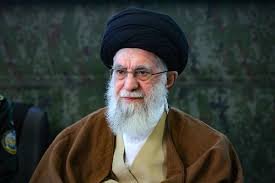
As Muslims celebrated Eid al-Fitr on Friday to end the fasting month of Ramadan and Iranians marked Nowruz, the Persian New Year, Iran’s new supreme leader, Ayatollah Mojtaba Khamenei, issued a message of defiance.
Khamenei – who did not appear at Eid prayers and has not been seen in public since the initial Israeli attack that killed his father and predecessor, Ayatollah Ali Khamenei – said in his statement that Iranians had responded with unity and resistance and “dealt a disorienting blow to the enemy”.
Russian President Vladimir Putin also sent Nowruz greetings to Iran’s leaders, using the occasion to say Moscow remained a loyal friend and reliable partner.
The extent of Moscow’s support for Iran is in dispute though. Some Iranian sources say they have had little real help from Moscow in the biggest crisis for Iran since the U.S.-backed shah was toppled in the 1979 Islamic Revolution.
Reporting by Phil Stewart and Idrees Ali in Washington, Andrew Mills in Doha and Timour Azhari in Riyadh; Additional reporting by Reuters bureaus; Writing by Tom Hogue and Matthias Williams; Editing by William Mallard
Our Standards: The Thomson Reuters Trust Principles., opens new tab
National security correspondent focusing on the Pentagon in Washington D.C. Reports on U.S. military activity and operations throughout the world and the impact that they have. Has reported from over two dozen countries to include Iraq, Afghanistan, and much of the Middle East, Asia and Europe. From Karachi, Pakistan.
Phil Stewart has reported from more than 60 countries, including Afghanistan, Ukraine, Syria, Iraq, Pakistan, Russia, Saudi Arabia, China and South Sudan. An award-winning Washington-based national security reporter, Phil has appeared on NPR, PBS NewsHour, Fox News and other programs and moderated national security events, including at the Reagan National Defense Forum and the German Marshall Fund. He is a recipient of the Edwin M. Hood Award for Diplomatic Correspondence and the Joe Galloway Award.
New Delhi, March 19,2026: India’s direct tax collections continued to show steady growth in the current financial year, with net collections rising by 7.19 per cent as of March 17, 2026, driven by robust corporate tax inflows and higher advance tax payments.
According to the latest data, net direct tax collections for FY 2025-26 stood at Rs 22,80,236.73 crore, compared to Rs 21,27,375.42 crore in the same period last year. Gross collections also registered a healthy increase of 4.86 per cent, reaching Rs 27,14,748.29 crore.
Corporate tax collections remained a key contributor, rising to Rs 10,91,801.32 crore in net terms, up from Rs 9,68,271.99 crore a year ago.
Non-corporate tax collections, which include taxes paid by individuals and other entities, also showed growth, climbing to Rs 11,32,394.07 crore.
However, refunds issued during the period declined by 5.86 per cent to Rs 4,34,511.56 crore, compared to Rs 4,61,573.72 crore in the previous year, supporting higher net collections.
Advance tax collections also reflected continued economic momentum. Total advance tax receipts grew by 6.42 per cent to Rs 11,13,106.15 crore.
Within this, corporate advance tax rose sharply by 9.54 per cent to Rs 8,29,877.61 crore, indicating improved profitability and compliance among companies.
In contrast, advance tax collections from non-corporate taxpayers saw a marginal dip of 1.78 per cent, standing at Rs 2,83,228.54 crore.
The data points to sustained strength in tax buoyancy, with corporate earnings and compliance playing a crucial role, even as individual tax contributions show mixed trends. The overall rise in collections underscores stable revenue generation for the government in the ongoing fiscal year.
LOS ANGELES, March 16,2026: The darkly comic thriller “One Battle After Another” won best picture at the Academy Awards, leading a haul of six trophies on a Sunday night when Hollywood handed its top movie honors to unconventional stories.
Before this year Paul Thomas Anderson,the director of this had 11 career Oscar nominations and no wins. In addition to best picture, he won best director and best adapted screenplay on Sunday.
“Sinners” had entered the ceremony with 16 nominations, more than any other film in the nearly 100-year-old history of the Oscars. The movie finished with four awards including a best actor trophy for Michael B. Jordan, who played the dual roles of twin brothers Smoke and Stack. Set in the Segregation-era U.S. South, the movie was a celebration of blues and Black culture told with a supernatural twist.
Autumn Durald Arkapaw became the first woman and first Black cinematographer to win the cinematography honor for “Sinners.”
Irish actor Jessie Buckley landed the best actress accolade for playing William Shakespeare’s wife, Agnes Hathaway, in “Hamnet.” The movie explores how the couple navigates the death of their 11-year-old son “Hamnet.”
‘KPOP DEMON HUNTERS’ TAKES BEST ANIMATED FEATURE
“KPop Demon Hunters,” a Netflix movie that became a global phenomenon, was named best animated feature. Its catchy song, “Golden,” won the award for best original song.
“Sentimental Value,” directed by Joachim Trier, won for best international feature film on Sunday, the first Norwegian film to win in this category after six previous nominations.
New Delhi, March 16,2026: The Ambassador of Israel to India, Reuven Azar, has affirmed that the strategic objectives of the joint US-Israel operations against Iran remain firm, stating that there has been “no shifting of the goalposts” regarding their military aims.While speaking to ANI, the Israeli envoy detailed the primary mission of the current conflict, asserting that the coalition is focused on three specific outcomes.”We have stated at the outset that we have three goals: to neutralise the nuclear threat, to neutralise the ballistic missile threat, and to give the Iranian people an opportunity to embrace the future by degrading the capability of the forces of oppression inside Iran,” Azar said.The Ambassador emphasised that the ongoing military campaign is strictly aligned with these established intentions.”So, we are doing exactly that. Nothing has changed in terms of our aims,” he remarked, adding that the ultimate goal is to ensure that “after this war is over, the Iranian regime cannot reconstitute these plans.”Addressing the recent retaliatory actions taken by Tehran, Azar noted that the Iranian military response was expected.He claimed that previous operations in June had already significantly diminished Iran’s offensive power, resulting in a less effective strike against Israel this time.”We are not surprised. We knew that the Iranians have these capabilities. In fact, following our effort back in June, we have degraded the capabilities of the Iranians, and the damage that they are inflicting on Israel now is much less than what they did back in June,” the Ambassador explained.He further criticised the scale of the Iranian response, describing the decision to target multiple nations as a “completely irresponsible” escalation of the conflict.”They decided to escalate by attacking 12 countries in the region. I think this is completely irresponsible,” he added.The envoy maintained that the international community should view Tehran as the primary instigator.”The pressure is on them and will continue to be on them because they are the aggressors,” Azar stated.
New Delhi, March 15,2026: The Election Commission on Sunday announced the schedule for Assembly elections in Assam, Kerala, Tamil Nadu, West Bengal and the union Territory of Puducherry, setting the stage for the first major round of state elections after the 2025 Assembly polls in Bihar. The poll panel said voting will be conducted over April in different phases, with the counting of votes for all states and the union Territory scheduled for May 4.
According to the schedule, polling will be held in a single phase in Assam, Kerala and Puducherry on April 9, while elections in Tamil Nadu will be conducted on April 23. West Bengal will go to the polls in two phases on April 23 and April 29.
Announcing the dates at a press conference, Chief Election Commissioner Gyanesh Kumar said the Commission had completed extensive consultations and preparations to ensure a smooth, transparent and inclusive electoral process.
“We are fully prepared to conduct free, fair and peaceful elections across these states and the union Territory. All necessary arrangements have been made in consultation with state authorities and security agencies,” Kumar said.
In West Bengal, voting in the first phase will be held on April 23 for 152 Assembly constituencies, while the remaining 142 seats will vote in the second phase on April 29.
The notification for the first phase will be issued on March 30, with April 6 as the last date for filing nominations. Scrutiny of nominations will take place on April 7, and the last date for withdrawal of candidature will be April 9. For the second phase, the notification will be issued on April 2, with April 9 as the last date for nominations. Scrutiny will be held on April 10 and candidates will be able to withdraw their nominations until April 13.
For Tamil Nadu, the notification for elections will be issued on March 30, with the last date for filing nominations on April 6. Scrutiny of nominations will take place on April 7 and the last date for withdrawal will be April 9 before polling on April 23.
For Assam, Kerala and the UT of Puducherry, which are going to booths together on April 9, the election process will begin earlier, with the notification scheduled for March 16. The last date for filing nominations will be March 23, followed by scrutiny on March 24 and the final date for withdrawal on March 26. Polling will take place on April 9.
The Chief Election Commissioner said the Model Code of Conduct had come into immediate effect in all poll-bound states and the union Territory following the announcement of the election schedule. “The Model Code of Conduct is effective from this moment. We expect all political parties and candidates to adhere strictly to the guidelines to maintain the integrity of the democratic process,” Kumar said.
New Delhi, Mar 10,2026: Russia on Tuesday called for de-escalating the Iran-US-Israel war as soon as possible by resuming political and diplomatic peace settlement dialogue and expressed readiness to facilitate the process.
Russian Foreign Minister Sergey Lavrov held a telephone conversation with his Iranian counterpart Abbas Araghchi on Tuesday evening and discussed the current situation in the Middle East, the Russian Foreign Ministry said.
‘The Ministers continued to exchange opinions regarding the current situation in the Middle East that has deteriorated drastically due to the unprovoked US-Israeli aggression against Iran,’ the Ministry said.
It said Sergey Lavrov once again set forth the Russian side’s ‘principled position’ in favour of deescalating the conflict as soon as possible and resuming the process of a political and diplomatic peace settlement.
‘The Russian side is invariably ready to facilitate this process, with due consideration for security interests of Iran and its regional neighbours,’ The Ministry added.
Kathmandu/New Delhi, Mar 6,2026: The Rastriya Swatantra Party (RSP) appeared to be heading for a sweep in Nepal’s first elections since a Gen-Z revolt in September last year toppled the Communist-led coalition headed by Prime Minister KP Sharma Oli.
With two of four seats declared and leads in 101 constituencies out of 165 where direct elections are held, the newbie RSP party led by former Kathmandu Mayor Balendra ‘Balen’ Shah looks set to form the government. The Nepal Congress, often called the ‘Grand old party of Nepal’ has won one seat and is leading in 11 more seats.
“The two Communist parties – Nepali Communist Party led by Prachanda Oli’s CPN (UML) – which dominated the country for more than a decade are really fighting for the third spot with 12 and 10 leads as of now,” said Kuvera Chalise, Consulting Editor of Nepalkhabar.
“This victory in Nepal is really the net result of the anger and frustration of the younger generation because of the poor governance and lack of efforts by the old guard to create employment opportunities within Nepal even as rampant corruption and its fruits became more and more visible,” added Chalise, a well-known political analyst.
The momentum suggested that the RSP’s bell symbol had resonated across the country, from major urban centres to remote mountain districts and the plains of the Terai, turning the party’s signature blue colour into the dominant feature of the electoral map, analysts said.
Interestingly, the results in Nepal were just the opposite of Bangladesh’s. “It needs to be studied why Bangladesh rejected the parties born out of the students’ movement, while Nepal supported the new party RSP,” pointed out Pinak R Chakravarty, former Secretary in the Ministry of External Affairs.
Balendra Shah had fought and is poised to win his seat in parliament from Oli in what was earlier the communist leader’s personal stronghold in the Terai region’s Jhapa-5 south-eastern Nepal. However, the charismatic Communist leader Prachanda, has also won his Rukum East seat, in northern Nepal, near the border with China.
The electoral victory by the new party RSP led by a youthful new leader, who has advocated a ‘Nepal First’ policy, marks a critical political moment for Nepal as also a question mark for powerful neighbours India and China, both of whom will have to negotiate ahead with the strategically-located Himalayan state, wedged between their borders.
While India has traditionally been an ally and has had strong relations with Nepal, China with its ideological linkages with the communist parties and its cheque book diplomacy has enjoyed considerable clout in Kathmandu.
“The students were bound to win given the pent up frustration of the youth and the demographic profile of Nepal. We have to see how our new party negotiates the way ahead,” said KC Sunil, President of Nepal India Chamber & Commerce I& Industry.
Nepal, one of the world’s poorest countries, struggles with the South Asian region’s lowest per capita income and an unemployment rate approaching 13 per cent, according to official estimates. The Himalayan nation has a fairly young population with the male median age at 22 years and with 34 per cent of population still aged below 14.
The economic hardship has been compounded by deep-seated corruption and a heavy reliance on remittances from a large segment of the population who have been forced to work abroad in search of opportunities.
The emerging results appeared to reflect a deep reservoir of public frustration with the three major old parties, which many voters accuse of failing for years to generate employment, deliver meaningful development, or act in the broader national interest. The outcome also seemed to echo lingering public anger over the handling of the student protests in September last year, an episode that intensified distrust toward the political establishment.
Voters are directly electing 165 members to the House of Representatives, the lower chamber of Parliament. The remaining 110 seats in the 275-member body will be allocated through a proportional representation system under which political parties nominate lawmakers based on their share of the vote.
New Delhi, March 3,2026: In a major boost to India’s maritime combat capabilities, the Ministry of Defence today signed contracts worth Rs 5,083 crore for the acquisition of six Advanced Light Helicopters (ALH) Mk-II (Maritime Role) for the Indian Coast Guard and Surface-to-Air Vertical Launch (VL-SRSAM) Shtil missile systems for the Indian Navy.
The contract for the procurement of Surface-to-Air Vertical Launch – Shtil missiles and associated missile holding frames, valued at Rs 2,182 crore, has been signed with JSC Rosoboronexport, Russian Federation.
The agreements, formalised at South Block in the presence of Defence Secretary Rajesh Kumar Singh, are aimed at significantly enhancing surveillance reach, rapid-response capability and layered air defence preparedness across India’s maritime domain.
The contract for ALH Mk-III (MR) along with operational role equipment, an engineering support package, and performance-based logistics support, valued at Rs 2,901 crore, has been inked with Hindustan Aeronautics Limited, Bengaluru under the Buy (Indian-Indigenously Designed, Developed and Manufactured) category.
These twin-engine helicopters incorporate state-of-the-art features superior to the currently operated airborne platforms and are capable of undertaking a wide spectrum of maritime security missions from shore-based airfields as well as from ships at sea. The induction will significantly enhance the Indian Coast Guard’s capability for fulfilling the duties of safety and protection of artificial islands, offshore installations, and protection of fishermen and marine environment.
The project envisages supply of equipment from more than 200 MSMEs and is expected to generate approximately 65 lakh man-hours of employment.
The contract for the procurement of Surface-to-Air Vertical Launch – Shtil missiles and associated missile holding frames, valued at Rs 2,182 crore, has been signed with JSC Rosoboronexport, Russian Federation.
The acquisition is intended to substantially enhance the air defence capabilities of frontline warships against a wide spectrum of aerial threats.
The system will reinforce the layered air defence architecture onboard the platforms of the Indian Navy by providing rapid-reaction, all-weather engagement capability and improved survivability in contested maritime environments. The contract further underscores the longstanding and time-tested defence partnership between India and Russia, founded on mutual trust and strategic alignment, a statement from the Ministry of Defence stated.
New Delhi, Mar 3,2026: Prime Minister Narendra Modi on Tuesday held separate telephonic conversations with the leaders of Qatar, Kuwait and Oman, reiterating India’s strong condemnation of any violation of their sovereignty and territorial integrity and underscoring the urgent need for dialogue and diplomacy to restore peace in West Asia.
In posts on X, the Prime Minister said he spoke with the Amir of Qatar, Tamim bin Hamad Al Thani, expressing firm solidarity with the Gulf nation.
He also conveyed appreciation for the Qatari leadership’s continued support and care for the Indian community residing in the country during what he described as a challenging period.
In a separate outreach, Prime Minister Modi spoke with the Crown Prince of Kuwait, Sabah Al-Khaled Al-Hamad Al-Mubarak Al-Sabah, reaffirming India’s support for Kuwait.
Tehran/New Delhi, Feb 28,2026 Shattering the fragile peace in the Persian Gulf, the United States and Israel launched massive missile strikes on several Iranian cities, including capital Tehran, early Saturday morning and Iran, in retaliation, attacked American bases in many Gulf countries, including the Al Udeid Air Base in Qatar.
In the early hours of February 28, the United States and Israel launched a massive, coordinated military strike against Iran, targeting multiple cities across the country, including Tehran, Qom, Isfahan, Kermanshah, and Karaj.
Israel has officially designated its campaign “Operation Lion’s Roar,” while the Pentagon is referring to the American military action as “Operation Epic Fury.” The Islamic Revolutionary Guard Corps (IRGC) code-named its operation “True Promise-4.’’
The US said the mission is aimed at eliminating imminent threats and ensuring Iran never possesses a nuclear weapon. The conflict has expanded into a multi-theatre confrontation, raising fears of a broader Middle Eastern war.
While the number of casualties in the attacks was not known, Israel’s Israeli broadcaster N12 said the commander of the Islamic Revolutionary Guard Corps (IRGC), Mohammad Pakpour, was killed in the strikes. Among the most powerful men in Iran, Pakpour was the IRGC commander for 260 days. However, there has been no official confirmation from Tehran regarding Pakpour’s death.
Iranian News Agency (IRNA) reported from Bandar Abbas that 57 girl students were killed and 60 were wounded in an Israeli strike at a girls’ school in Minab, Hormozgan Province. Minab’s provincial governor, Mohammad Radmehr, confirmed that the Shajareye Tayabeh school had been hit and several students had been killed. Radmehr also said that 53 students are still under the rubble, according to IRNA.
The IRGC said it had struck several US military bases in the region, including the American Navy’s Fifth Fleet in Bahrain. In its second statement, following the launch of missile and drone strikes, the IRGC said it severely targeted the American bases in Bahrain, Qatar, and the United Arab Emirates, as well as military hideouts in the heart of the occupied Palestinian lands.
The IRGC pledged that the missile and drone attacks by Iran’s armed forces will continue.
In retaliatory strikes, Iran launched a wave of drones and ballistic missiles directly targeting northern Israel and Tel Aviv.
The conflict expanded beyond Israel and Iran, threatening American assets in the Persian Gulf. Bahrain’s official news agency reported that a missile attack targeted the headquarters of the US Navy’s Fifth Fleet in Manama. Reports of explosions also came from Qatar and the UAE.
The Middle East. Iran, Israel, Iraq, the UAE, Bahrain, and Qatar have all indefinitely closed their airspace, causing massive flight diversions and groundings worldwide.
An air strike also took place near the offices of Iran’s Supreme Leader Ayatollah Ali Khamenei. However, according to reports, the 86-year-old Khamenei was not in Tehran and has been taken to a secure location in anticipation of the attacks. Media advisor to the Presidential Office said the President is in good health, and the ‘’enemies’ assassination attempts have not been successful.’’
Iran’s news agency ‘Fars’ also reported that President Masoud Pezeshkian, former parliamentary speaker Ali Larijani, Parliament Speaker Mohammad Bagher Qalibaf, Judiciary Chief Gholamhossein Mohseni Eje’i, and Army Commander-in-Chief Abdolrahim Mousavi Hatami are “alive and well”.
The conflict has expanded into a multi-theatre confrontation, raising fears of a broader Middle Eastern war.
IRGC said the American FP-132 radar, with a range of 5,000 kilometres and stationed in Qatar, equipped with unique technology used to intercept ballistic missiles, has been destroyed.
Israeli Defence Minister Israel Katz said Israel launched a pre-emptive attack against Iran to remove ‘’threats to the State of Israel.”
The US and Israeli attacks took place even as the US and Iran had concluded three rounds of negotiations in Geneva to resolve the stalemate. Moderated by Oman, the negotiations were described as successful even as the US had positioned its two aircraft carriers in the area, ostensibly to pressure Iran. Iran’s Supreme Leader Ali Khameini had warned that if the US attacked Iran, they (Iran) would involve the entire region.
While peace negotiations continued, US President Donald Trump said he was unhappy with the progress of talks with Iran over a potential nuclear deal. “I’m not happy with the fact that they’re not willing to give us what we have to have. I’m not thrilled with that.’’ The US said its primary objectives are to destroy Iran’s missile industry, permanently dismantle its nuclear program, and force regime change.
Feb 27,2026: Afghan troops stormed dozens of Pakistani border positions and Pakistan responded with a wave of airstrikes targeting major cities and military hubs.
Beyond Kabul, home to six million people, the strikes hit the southern city of Kandahar — where the Taliban’s supreme leader, Sheikh Haibatullah Akhundzada, lives — and four border provinces, according to Lt. Gen. Ahmed Sharif Chaudhry, the Pakistani military spokesman.
“That’s what has been done so far,” General Sharif said at a news briefing on Friday. “This is continuing.”
Pakistan launched strikes on more than 20 locations, General Sharif said, hours after Afghan troops had attacked more than 50 Pakistani border positions. Afghan officials described that assault as retaliation for Pakistani strikes earlier in the week.
“Our operation last night was a retaliatory operation and a response to Pakistan’s operation, not an attack to start a war against Pakistan,” Zabiullah Mujahid, the Taliban spokesman, said at a news conference in Kandahar on Friday.
But Pakistani officials showed no willingness to stop the most expansive fighting in years.
“Our cup of patience has overflowed,” Pakistan’s defense minister, Khawaja Asif, said on social media. “Now it is open war between us and you.”
The fighting comes as both countries have been bracing for the fallout on trade and the movement of people from potential U.S. military strikes in neighboring Iran, adding yet another layer of uncertainty in an area already on edge.
At least one ammunition depot was bombed in Kabul, according to an Afghan military officer who reached the site shortly afterward and spoke on condition of anonymity because he was not authorized to discuss the clashes publicly. Satellite images reviewed by The New York Times confirmed the strike. Pakistan’s state broadcaster said an ammunition depot in Kandahar had also been bombed.
The extent of any casualties or damage from the airstrikes was unclear, while each side claimed to have killed dozens of combatants in the border clashes.
Kabul, dotted with checkpoints and officers in uniform even in calmer times, saw a heavier presence of soldiers and security personnel on the streets on Friday. In most areas, however, residents went on with their errands and gathered at mosques for midday prayers.
The clashes showcased what armies from both countries are well-known for — air power from Pakistan’s side, and ground incursions from Afghanistan’s. The Taliban deployed and mastered ground incursions on isolated military outposts during their 20-year insurgency against the U.S.-led coalition, said Ibraheem Bahiss, an Afghanistan analyst at the International Crisis Group.
“The Pakistanis have replied by using overwhelming force and that escalates the ladder from Kabul’s perspective, which looks at how to respond better,” Mr. Bahiss said.
“The two sides keep doing what they think are measured responses,” Mr. Bahiss added. “But they keep upping the ante.”
Relations between the neighboring countries have deteriorated recently over Pakistan’s accusations that the Afghan government is harboring the Pakistani Taliban, known as Tehreek-e-Taliban Pakistan. The militant group has killed hundreds of Pakistani security personnel in recent years, and in November claimed responsibility for a suicide bombing that killed a dozen people at a courthouse in Islamabad.
Pakistan says the Taliban allow the Pakistani Taliban to train and operate freely in Afghanistan, from where they launch attacks across the 1,600-mile, mountainous border.
The Taliban deny hosting the group and accuse Pakistan’s government of trying to deflect blame for its own domestic security failures. But privately, Afghan officials acknowledge the presence of the Pakistani Taliban in Afghanistan, at least.
The presence of the Pakistani Taliban and the resurgence of other groups in Afghanistan, including Al Qaeda, has alarmed countries across the region and beyond.
The government in Afghanistan has faced pressure from China and Russia to rein in militant groups operating in the country. China has had sustained diplomatic ties with the Taliban administration in Afghanistan, and Russia was the first country last year to recognize the group as the country’s legitimate authority.
The Afghan government has provided the Pakistani Taliban with weapons, including rifles and drones, according to the U.N. Security Council. The United Nations also noted in a report published this month that “Al Qaeda continued to enjoy the patronage of the de facto authorities,” referring to Afghanistan’s Taliban-led administration.
Pakistan and Afghanistan released diverging claims on Friday about the number of deaths from the day’s fighting at the border region. The Pakistani military spokesman, Lt. Gen. Ahmed Sharif Chaudhry, said at least 274 people had been killed there. Zabiullah Mujahid, the Taliban government spokesman, said 55 Pakistani soldiers had been killed.
Since October, Pakistan has kept critical border crossings closed to civilians and traders, reopening them only intermittently to expel Afghans living in Pakistan.
The suspension of trade and the expulsion of more than a million Afghans last year alone have hurt the economies of both countries.
In some villages on the Pakistani side, officials have in recent months instructed families to evacuate as a preventive measure. They have advised residents who chose to remain to seek shelter in basements when tensions flare up.
Colombo, Feb 25,2026: Sri Lanka’s criminal investigators on Wednesday arrested the country’s former intelligence chief in connection with the 2019 Easter Sunday bombings that killed 279 people, including 45 foreigners.
Police said retired Major General Suresh Sallay was taken into custody at dawn in a suburb of Colombo, marking the most high-profile arrest in the long-running investigation, The local media reported.
There have been accusations that Sri Lanka’s former government, led by strongman president Gotabaya Rajapaksa, obstructed the investigation into the country’s deadliest terrorist attack, amid claims that they may have exploited the crisis to aid their return to power.
The Rajapaksa family had dominated Sri Lankan politics for nearly a decade from 2005. While they were credited with ending the nation’s 26-year civil war, their tenure was also marked by authoritarian tactics, including the alleged use of “death squads” to silence critics and journalists.
Mahinda Rajapaksa was removed from office in 2015 following allegations of corruption, but the family sought a political comeback in 2019.
Sallay was appointed head of the State Intelligence Service (SIS) in 2019 after Gotabaya Rajapaksa became president, has been accused of involvement in the coordinated suicide bombings, a charge he denied.
On Easter Sunday 2019, six suicide bombers struck churches and luxury hotels across Sri Lanka, killing 269 people, including eight British tourists.
New Delhi/Washington, Feb 25,2026: The US Department of Commerce has announced preliminary countervailing duties on solar panel imports from India, Indonesia, and Laos, aimed at what it describes as offsetting subsidies provided by these countries to their producers.
Preliminary duty rates have been set at 125.87 per cent for India, 104.38 per cent for Indonesia, and 80.67 per cent for Laos. U.S. Customs will begin collecting cash deposits based on these preliminary rates.
The duties follow petitions filed on July 17, 2025, by the Alliance for American Solar Manufacturing and Trade, representing domestic solar panel producers.
The petitions claimed that imports of crystalline silicon photovoltaic cells, whether or not assembled into modules, from the three countries were being sold in the US at less than fair value (LTFV) and were causing, or threatening, material injury to the domestic solar industry.
The petitions included countervailing duty requests and were accompanied by supplementary information submitted between July 21 and August 4, 2025, records revealed.
The action follows findings by the US International Trade Commission in August 2025 that imports from India, Indonesia, and Laos had caused material injury to the domestic industry. The US Commerce department’s review used import data from India’s most recent fiscal year and 2024 calendar-year data for Indonesia and Laos.
Preliminary anti-dumping duty determinations are scheduled for April, with final combined duty rates expected in September. A final injury determination by the International Trade Commission is set for October, after which Customs will collect the final tariffs.
Shares of Indian solar equipment makers plunged on Wednesday after the United States imposed preliminary duties on imports from India, Indonesia, and Laos. Makers were hit hard in early trading, with Waaree Energies and Premier Energies tumbling around 15 per cent, while Vikram Solar fell nearly 8 per cent before partially recovering some losses.
New Delhi, February 24,2026: India’s economy is expected to maintain strong growth momentum, with GDP projected to expand by around 8.1 per cent in the third quarter of the current financial year (FY26), according to a report by the State Bank of India (SBI).The report highlighted that despite global headwinds, the Indian economy has remained resilient, supported by strong domestic demand and steady economic activity across sectors.It stated “we expect Q3FY26 real GDP growth of closer to 8.1 per cent”.According to the report, high-frequency economic indicators suggest resilient economic activity during the third quarter of FY26. Rural consumption has remained strong, supported by positive signals from both farm and non-farm activities.At the same time, urban consumption has shown a steady improvement, supported by fiscal stimulus and increased spending since the last festive season.As per the first advance estimates, India’s GDP is projected to grow at 7.4 per cent in FY26, with growth largely driven by domestic demand.The report emphasised that domestic consumption continues to play a key role in supporting economic expansion despite uncertainties in the global economic environment.
The report also noted that the second advance estimates of GDP for FY26 are scheduled to be released on February 27, 2026. These estimates will incorporate additional data and revisions, and previous quarterly GDP figures for the first and second quarters are expected to change due to the revision in the base year.India has updated its GDP base year from 2011-12 to 2022-23, with the new series scheduled for release on February 27, 2026. The report stated that, given the significant methodological changes, it is difficult to predict the direction of revisions in the GDP data.The base year revision is aimed at better reflecting the current structure of the Indian economy, including changes such as the growing role of digital commerce and the services sector.In addition, India has also updated the base year for the Consumer Price Index (CPI) to 2024, which will help provide a more accurate measure of inflation based on current consumption patterns.Recently, Reserve Bank of India (RBI) Governor Sanjay Malhotra also said that the revision of the inflation targeting range following the CPI base year update is under examination and will be considered in the next policy.”The revised framework would be taken into account in the RBI’s next set of projections to be released during the April monetary policy,” he said.The report highlighted that strong domestic demand, resilient consumption trends, and ongoing economic activity continue to support India’s growth outlook, even as global economic challenges persist.
New Delhi , February 23,22026: In a push to expand India’s parliamentary diplomacy, Lok Sabha Speaker Om Birla has constituted Parliamentary Friendship Groups with over 60 countries, aiming to deepen engagement between India’s legislature and parliaments across the world.The initiative seeks to “widen India’s inter- parliamentary engagement with the world” according to a release by the Lok Sabha secretariat.It said, the move reflects a conscious effort by the Indian Parliament to deepen dialogue and exchanges with legislatures across continents and to complement traditional diplomacy with sustained parliamentary interaction.The Friendship Groups bring together Members of Parliament from across the political spectrum. The group will be led by senior leaders, including Ravi Shankar Prasad, M Thambidurai, P Chidambaram, Ram Gopal Yadav, TR Baalu, Kakoli Ghosh Dastidar, Gaurav Gogoi, Kanimozhi Karunanidhi, Manish Tiwari, Derek O’Brien, Abhishek Banerjee, Asaduddin Owaisi, Akhilesh Yadav, KC Venugopal, Rajiv Pratap Rudy, Supriya Sule, Sanjay Singh, Baijayant Panda, Shashi Tharoor, Nishikant Dubey, Anurag Singh Thakur, Bhartruhari Mahtab, D. Purandeswari, Sanjay Kumar Jha, Hema Malini, Biplab Kumar Deb, Sudhanshu Trivedi, Jagdambika Pal, Sasmit Patra, Aparajita Sarangi, Shrikant Eknath Shinde, PV Midhun Reddy and Praful Patel.The countries with whom Parliamentary Friendship Groups have been constituted include Sri Lanka, Germany, New Zealand, Switzerland, South Africa, Bhutan, Saudi, Israel, Maldives, USA, Russia, EU Parliament, South Korea, Nepal, United Kingdom, France, Japan, Italy, Oman, Australia, Greece, Singapore, Brazil, Vietnam, Mexico, Iran and UAE. The idea behind the initiative is to allow lawmakers to speak directly to their counterparts abroad, share legislative experience, and build trust through regular engagement and exchange best practices to further strengthen bilateral relations and promote greater mutual understanding.Beyond parliamentary procedure, the groups are expected to facilitate conversations on trade, technology, social policy, culture, and global challenges that democracies face today. Speaker Om Birla has consistently emphasised the role of parliamentary diplomacy in strengthening India’s global standing, the Lok Sabha Secretariat said. “By prioritising Parliament-to-Parliament and people-to-people connections, this initiative signals a more participatory approach to foreign engagement. The Friendship Groups will enable structured exchanges through dialogues, study visits, and joint discussions, helping to sustain long-term cooperation rooted in democratic values. In doing so, the Indian Parliament reinforces its role as a bridge between nations and as a living reflection of the world’s largest democracy,” it said.”While friendship groups have been constituted with more than 60 countries in the first phase, efforts are being made to constitute these groups with many more countries in the near future,” the Lok Sabha Secretariat said.
New Delhi, Feb 23,2026: India on Monday asked its citizens in Iran to leave the country, exercise caution and avoid areas of protests and demonstrations in view of the evolving situation there.
The Indian Embassy in Tehran issued an Advisory saying Indian nationals currently in Iran, including students, pilgrims, business persons and tourists, are advised to leave Iran by available means of transport, including commercial flights.
The Embassy, while reiterating the January 14 Advisory, said ‘’all Indian citizens should exercise due caution, avoid areas of protests and demonstrations, stay in contact with the Indian embassy and monitor local media for any development.’’
The Advisory said all Indian nationals should have their travel and immigration documents readily available and contact the Embassy on emergency helpline numbers 989128109115, 98912809109, 98912809102 and 989932179359 and email cons.tehran@mea.gov.in
Aizawl, Feb 23,2026: Mizoram is currently providing shelter to 38,059 refugees from Myanmar and Bangladesh, State Home Minister K. Sapdanga informed the Legislative Assembly on Monday.
In a written reply to a question raised by ruling Zoram People’s Movement (ZPM) legislator V.L. Zaithanzama, the Home Minister said that biometric enrolment of refugees from Myanmar is being carried out by district administrations across all 11 districts. As of February 5, 93.04 per cent of the enrolment process had been completed. He expressed hope that the exercise would be concluded shortly.
Sapdanga further informed the House that biometric registration of refugees from Bangladesh is also in progress and is expected to be completed within the next few months.
However, officials of the Home Department indicated that the pace of biometric enrolment has slowed in recent weeks. According to them, the process has remained stalled since January in six districts- Siaha, Kolasib, Mamit, Khawzawl, Saitual and Hnahthial — despite most of these districts having comparatively smaller refugee populations.
Among these, Siaha district in southern Mizoram hosts 3,195 refugees from Myanmar, making it the fourth highest in terms of refugee concentration in the state. The remaining five districts have refugee numbers running only into three digits. Officials said they were not aware of the reasons behind the lack of progress in these districts over the past nearly two months.
Data provided by the Home Department shows that there are 28,355 refugees from Myanmar currently residing in various districts of Mizoram. Of these, 26,592 individuals, or 93.78 per cent, have already undergone biometric enrolment.
The enrolment process has been fully completed in Aizawl, Lunglei, Serchhip and Champhai districts. Apart from these, only Lawngtlai district in southern Mizoram recorded progress recently, with district authorities enrolling 211 refugees during the past week.
With regard to refugees from Bangladesh, Lunglei, Serchhip and Aizawl districts, which host 235, 76 and seven refugees respectively, have completed their biometric registration. In contrast, Lawngtlai district, which shelters 2,042 refugees from Bangladesh, has made little headway in initiating the enrolment process.
The government has not specified a revised timeline for completion in the districts where the exercise has slowed, but officials maintain that efforts are ongoing to bring the remaining beneficiaries under the biometric system.