SYDNEY, Dec 2,2025: Australia on Tuesday unveiled a roadmap to ramp up the adoption of artificial intelligence across its economy but said it would rely on existing laws to manage emerging risks, stepping back from earlier plans for tougher rules on high-risk scenarios.
Australia currently has no specific AI laws though the centre-left Labor government last year signalled it would introduce voluntary guidelines amid concerns over privacy, safety and transparency.
In its National AI Plan released on Tuesday, Labor said it would focus on luring investment in advanced data centres, building AI skills to support and protect jobs, and ensuring public safety as AI becomes more integrated into daily life.
“The government’s regulatory approach to AI will continue to build on Australia’s robust existing legal and regulatory frameworks, ensuring that established laws remain the foundation for addressing and mitigating AI-related risks,” it said in the plan.
Agencies and regulators will remain responsible for identifying and managing potential AI-related harms within their sectors, it said.
The roadmap comes after the government last month said it would set up an AI Safety Institute in 2026 to help authorities monitor emerging risks and respond to threats.
Global regulators have increasingly raised concerns about misinformation associated with generative AI tools.
Federal Industry Minister Tim Ayres said the AI roadmap aims to ensure Australians can benefit from new technology while maintaining a balance between innovation and risk management.
“As the technology continues to evolve, we will continue to refine and strengthen this plan to seize new opportunities and act decisively to keep Australians safe,” Ayres said.
But Australian Catholic University Associate Professor Niusha Shafiabady said there were critical gaps in the government’s updated AI roadmap.
“The plan is ambitious in unlocking data and boosting productivity, but it leaves critical gaps in accountability, sovereignty, sustainability, and democratic oversight,” Shafiabady said.
“Without addressing these unexplored areas, Australia risks building an AI economy that is efficient but not equitable or trusted.”
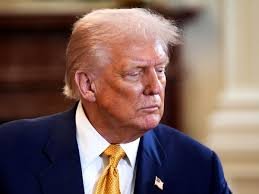
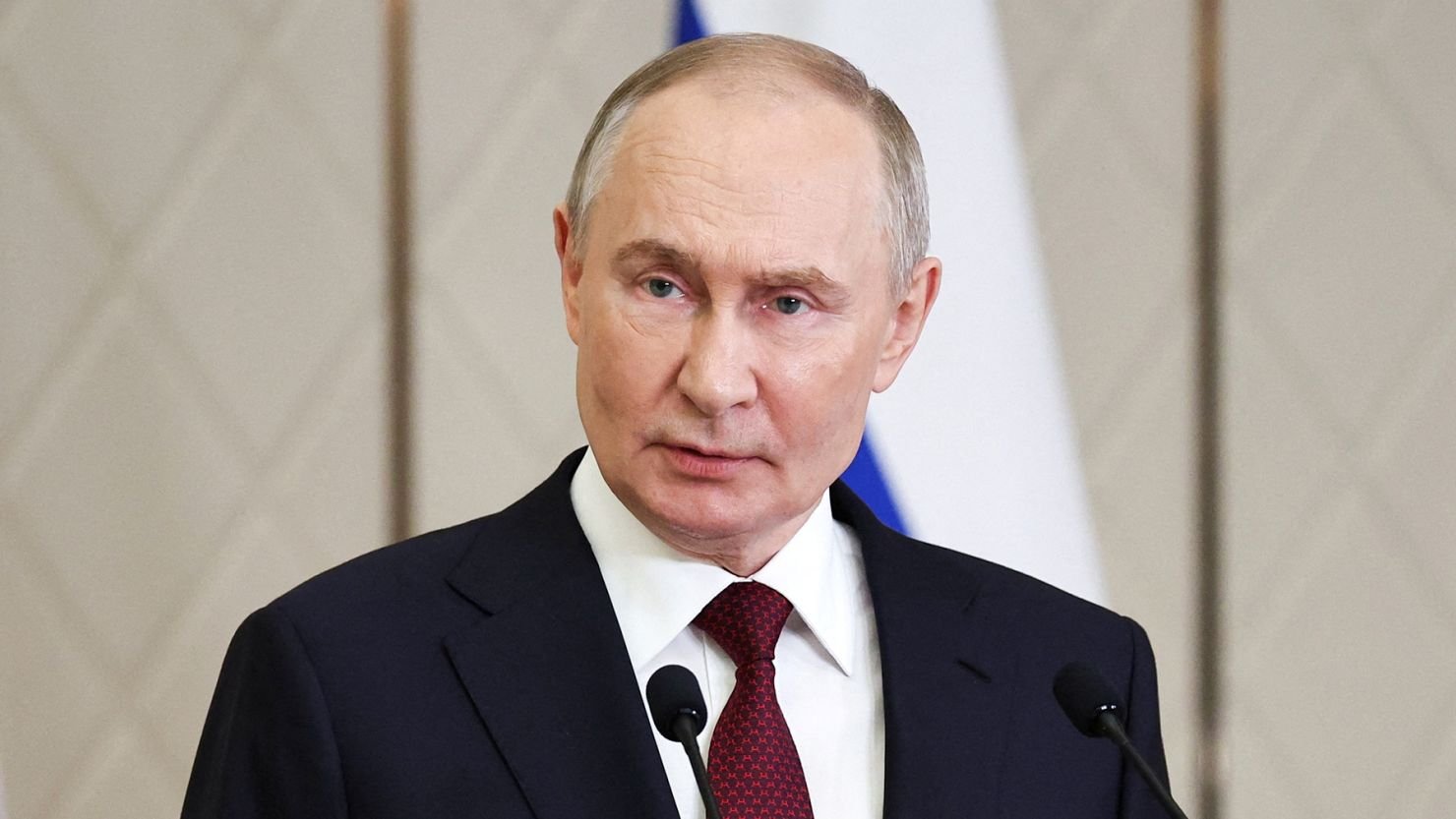
Dec 2,2025: Envoys for United States President Donald Trump are due to meet Russian President Vladimir Putin to discuss Washington’s proposed peace plan to end the war in Ukraine.
In advance of the meeting in Moscow on Tuesday, the White House said it was “very optimistic” about reaching a deal. However, Ukraine remains wary that despite meetings with US officials on Sunday and Monday, the proposal still reflects Russian demands that are difficult to accept.
Trump’s special envoy Steve Witkoff, alongside the president’s son-in-law, Jared Kushner, travels to the Russian capital as part of the renewed US diplomatic push to broker an end to the war in Ukraine, which was triggered in February 2022 when Moscow launched a full-scale invasion of its neighbour.
Trump, who had promised to resolve the conflict quickly during his election campaign, has expressed frustration that achieving that result has proved more difficult than planned.
Last week, a 28-point draft proposal was leaked. It quickly earned condemnation as a Russian “wish list” as it called for Ukraine to give up huge territory, limit its military, and abandon efforts to join NATO.
The plan has since been altered, first with input from Kyiv alongside its European allies and then on Sunday and Monday in meetings between Ukrainian and US officials.
The full details of the proposal as it stands have not been disclosed.
However, President Volodymyr Zelenskyy said on Monday evening that preserving Ukraine’s “territorial integrity” remains the “biggest challenge” in ongoing negotiations.
Putin has repeatedly said he is ready to talk peace and that Moscow is generally OK with the latest US proposals as a “basis for future agreements”.
However, he has also threatened that if Ukraine refuses an agreement, Russian forces will continue to advance.
Russian troops have made some headway in recent months on the front line in eastern Ukraine, which has seen little movement over years of attritional conflict.
“Ukrainian troops must withdraw from the territories they hold, and then the fighting will cease. If they don’t leave, then we shall achieve this by armed means. That’s it,” Putin said last week.
Speaking about Witkoff and Kushner’s upcoming visit, Kremlin spokesman Dmitry Peskov declined to specify Russia’s red lines, saying megaphone diplomacy was not constructive.
However, Moscow has long reiterated that it will not agree to any ceasefire that does not meet its maximalist demands, which Kyiv and its allies warn would put Ukraine at its mercy.
‘Looks better’
Following discussions in Paris with European and US officials on Monday, Zelenskyy said the latest peace plan “looks better” but that points regarding Ukrainian control over its territories are “the most complicated” issue.
French President Emmanuel Macron, speaking alongside Zelenskyy at a joint news conference in Paris, said the flurry of diplomatic activity could be “a moment that could be a turning point” but reiterated “Ukraine must be the one to decide its own territorial boundaries”.
Russian forces control more than 19 percent of Ukraine, up one percentage point from two years ago. This year, however, they have advanced at the fastest pace since 2022, according to pro-Ukrainian maps.
Putin’s military commanders told him on Monday that Russian forces had captured the strategic front-line town of Pokrovsk.
However, Ukraine refuted that claim on Tuesday, saying its forces still control the northern part of of the key logistics hub and were mounting assaults on Russian positions in the south.
US officials say more than 1.2 million men have been killed or injured in the war. Neither Ukraine nor Russia discloses their losses.
Colombo, Nov 29,2025: More than 120 people have died and over 130 remain missing after Tropical Cyclone Ditwah battered Sri Lanka, the Disaster Management Centre (DMC) said on Saturday.
The storm, which triggered widespread flooding and landslides, has left a trail of destruction across several districts.
The DMC confirmed that 123 deaths have been recorded so far, with 373,430 people affected nationwide.
More than 43,000 people have been displaced and are currently housed in 488 temporary shelters. Cyclone Ditwah exited Sri Lanka early Saturday, but severe weather continues to batter the island.
The DMC has issued a red-level alert, warning of persistent heavy rainfall, the threat of further flooding, and unstable slopes that could trigger additional landslides over the next 24 hours.
Sri Lankan President Anura Kumara Dissanayake on Friday directed the Tourism Authority to take all necessary steps to assist foreign tourists affected by the emergency. All government offices and schools across the country remain closed due to the extreme weather conditions.
Early Friday morning, Ditwah made landfall over the eastern and central regions with wind speeds touching 65 km/h (40 mph). These regions recorded more than 300 mm (11.8 inches) of rainfall between Thursday and Friday.
Dramatic footage released by the Sri Lanka Air Force showed stranded residents being airlifted from rooftops as floodwaters submerged homes and entire streets.
Airlines and transport systems have been severely disrupted. Nearly 300 Indian passengers, including around 150 Tamil travellers en route from Dubai to Chennai via Colombo, were stranded due to flight cancellations and weather-related delays.
With the scale of destruction mounting, the Sri Lankan government is considering a formal request for urgent foreign assistance to support relief and recovery efforts.
The Government of Maldives has extended relief assistance to Sri Lanka through financial support of USD 50,000 and a donation of 25,000 cases of tuna cans.
The Government of Maldives took this decision to extend humanitarian and relief assistance on behalf of the Maldivian people to the people of Sri Lanka, in response to the widespread devastation caused by Cyclone Ditwah.
“This gesture is a demonstration of solidarity with our close neighbour and the friendly people of Sri Lanka. The Maldives hopes that this modest donation will contribute towards the efforts of the Government of Sri Lanka, to assist those affected – reflecting the deep commitment to the close bonds shared between the two nations and their peoples,” the statement of Maldives Foreign Ministry said in a statement.
More News
New York, Nov 1,2025: The United Nations Security Council has adopted a US-backed resolution supporting Morocco’s sovereignty over the disputed territory of Western Sahara, marking the strongest international endorsement yet of Rabat’s plan, despite opposition from Algeria.
The resolution was passed in the UNSC with 11 votes in favor and none against, with three abstentions (China, Pakistan, and the Russian Federation). Algeria did not participate in the vote. Authorizing the continued operations of the United Nations Mission for the Referendum in Western Sahara (MINURSO) until 31 October 2026, the 15-member organ adopted resolution 2797 (2025) (to be issued as document S/RES/2797(2025)).
The Security Council also renewed for one year the mandate of the long-standing UN peacekeeping mission in Western Sahara, referencing Morocco’s Autonomy Proposal presented in 2007—which envisions the territory as self-governing under Moroccan sovereignty—as a basis for negotiations.
Adopted on Friday, the text calls for negotiations based on Morocco’s 2007 autonomy plan. It does not mention a referendum on self-determination that includes independence—an option long supported by the pro-independence Polisario Front and its allies, including Algeria, Russia, and China.
The resolution frames the autonomy plan as the basis for resolving the decades-long conflict with the Algeria-backed Polisario Front. Western Sahara, a desert territory roughly the size of Britain, has been disputed since Spain withdrew in 1975 and Morocco annexed the region. The Polisario Front, which operates from refugee camps in southwestern Algeria, seeks an independent Sahrawi Republic.
The vote highlights broad international support for Morocco, including most European union nations and several African countries, while leaving the question of independence unresolved.
MINURSO was established by Council resolution 690 (1991) in accordance with UN–Organization of African Unity settlement proposals accepted in 1988 by Morocco and the Frente Popular para la Liberación de Saguia el-Hamra y de Río de Oro (Frente POLISARIO). The settlement proposals, as approved by the Council, provided for a transitional period to prepare a referendum in which the people of Western Sahara would choose between independence and integration with Morocco.
While the referendum has never taken place, MINURSO has continued to perform the tasks entrusted to it by the Council. In today’s text, the Council expressed “its full support for the Secretary-General and his Personal Envoy in facilitating and conducting negotiations, taking as basis Morocco’s Autonomy Proposal with a view to achieving a just, lasting and mutually acceptable resolution to the dispute, consistent with the UN Charter,” and welcomed “any constructive suggestions by the parties in response to the Autonomy Proposal.”
The 15-member organ also called upon the parties to the dispute to “engage in these discussions without preconditions, taking as basis Morocco’s Autonomy Proposal, with a view to achieving a final and mutually acceptable political solution that provides for the self-determination of the people of Western Sahara.”
It also recognized that “genuine autonomy could represent a most feasible outcome” and encouraged the parties to submit ideas to support “a final mutually acceptable solution.” The Council requested the Secretary-General to submit a strategic review within six months on MINURSO’s future mandate, considering the progress of the talks.
The US representative, which drafted the text and led negotiations on it, welcomed “today’s historic vote, which seizes upon this unique moment and builds on the momentum for a long, long overdue peace in Western Sahara.” “We’ve made a genuine effort to incorporate everyone’s proposals, and they were quite numerous from across the Council,” he recalled, adding that the United States and its President Donald J. Trump are resolute in their “support for peace.”
He urged all parties to use the coming weeks to engage in serious discussions, using Morocco’s “credible and realistic” autonomy proposal as “the only basis for a just and lasting solution to the dispute.” “We believe regional peace is possible this year, and we will make every effort to facilitate progress towards this shared goal of peace and prosperity for the people of Western Sahara,” he concluded.
Algeria’s delegate, however, said the text does not faithfully or sufficiently reflect the United Nations doctrine on decolonization—a doctrine that has allowed many countries to join the UN. He quoted former US President Woodrow Wilson: “Peoples are not to be handed about from one sovereignty to another by an international conference or an understanding between rivals and antagonists. National aspirations must be respected. Peoples may now be dominated and governed only by their own consent. Self-determination is not a mere phrase; it is an imperative principle of action.”
ISLAMABAD/KABUL, Oct 18,2025: Afghanistan and Pakistan will hold peace talks in Doha on Saturday, both sides said, after the South Asia neighbours extended a ceasefire following a week of fierce border clashes.
Pakistan and Afghanistan on Friday extended the 48-hour truce for the duration of the Doha talks, sources said, as they seek to resolve the clashes that killed dozens and wounded hundreds in the worst violence between the two countries since the Taliban seized power in Kabul in 2021.
In a statement, Pakistan’s foreign office said Defence Minister Khawaja Muhammad Asif will lead discussions with representatives of the Afghan Taliban.
“The talks will focus on immediate measures to end cross-border terrorism against Pakistan emanating from Afghanistan and restore peace and stability along the Pak-Afghan border,” it said.
PAUSE IN WORST FIGHTING SINCE TALIBAN TOOK KABUL
The fierce ground fighting between the one-time allies and Pakistani airstrikes across their contested 2,600-km (1,600-mile) frontier were triggered after Islamabad demanded that Kabul rein in militants who had stepped up attacks in Pakistan, saying they operated from havens in Afghanistan.
The Taliban denies giving haven to militants to attack Pakistan and accuses the Pakistani military of spreading misinformation about Afghanistan, provoking border tensions and sheltering ISIS-linked militants to undermine its stability and sovereignty. Islamabad denies the accusations.
Militant violence in Pakistan has been a major irritant in its relationship with the Afghan Taliban.
On Friday, a suicide attack near the Afghan border killed seven Pakistani soldiers and wounded 13, security officials said.
KABUL CONDEMNS PAKISTAN AIRSTRIKES
Islamabad does not seek escalation, Pakistan’s foreign office said, urging the Afghan Taliban authorities to address Pakistan’s “legitimate security concerns by taking verifiable action against terrorist entities”.
“The Afghan regime must rein in the proxies who have sanctuaries in Afghanistan and are using Afghan soil to perpetrate heinous attacks inside Pakistan,” the Pakistan Army chief, Field Marshal Asim Munir, said on Saturday, addressing a graduation ceremony of cadets.
The Afghan government’s spokesperson said Pakistan had conducted airstrikes in Afghanistan hours after the ceasefire was extended.
He condemned the strikes, saying Kabul reserved the right to respond but that Afghan fighters had been directed to refrain from retaliating to maintain the status of and respect for its negotiating team.
The Pakistani military did not respond to a request for a comment on the airstrikes.
The airstrikes killed some local Afghan cricketers, prompting Kabul to announce that its national team will not play a cricket tournament in Pakistan scheduled for November, the Afghanistan Cricket Board said in a statement.
Oct 9, 2025: The recently approved ceasefire deal between Israel and Hamas in the Gaza Strip is set to go into effect after the Knesset formally ratifies the deal on Thursday evening, after which a 24-hour countdown will commence during which appeals over the decision can made to the High Court of Justice.
Post that window, Hamas will have 72 hours to uphold its side of the deal — notably the release of all hostages, both living and deceased, reports Times of Israel.
Under this framework, the final phase of hostage releases could conclude on Monday, rather than Sunday as initially anticipated.
The ceasefire deal is notably based on an informal understanding between the two parties and is not part of any signed formal document, which has compounded worries by officials who cite the questionable compliance of Hamas operatives to the deal’s dictates, coupled with the lack of any formal signature – making all agreements non-binding and unofficial.
As part of the agreement, a joint Israeli-US-Qatari-Egyptian-Turkish task force will be formed to assist in locating and recovering the bodies of deceased hostages whose whereabouts remain unknown.
The task force will be equipped with heavy machinery and authorised to conduct excavation and demolition operations across Gaza to retrieve the remains of those captives, lost somewhere in the rubble of the war-torn enclave.
Officials familiar with the initiative say the effort’s primary objective is to ensure that as many abductees as possible—both living and dead—are returned to Israel within the initial 72-hour implementation period.
Bengaluru,Oct 03,2025: Thayil Jacob Sony George, the famed journalist known simply as TJS, passed away at the age of 97 in Bengaluru on Friday.
TJS began his career in 1950 at The Free Press Journal in India’s Maximum City known then as Bombay.
He went on to work with The Searchlight, the International Press Institute and the Far Eastern Economic Review before becoming the founding editor of Asiaweek, published from Hong Kong.
At Searchlight, TJS became the first Indian editor to be charged with sedition in India. When he was arrested for his columns against then Bihar Chief Minister KB Sahay, the former Defence Minister of India, VK Krishna Menon, rushed down to Patna to defend him.
TJS did not take a backward step during the rest of his career too, never flinching from speaking truth to power.
As Asiaweek founding editor, he drew the ire of many of Southeast Asia’s rulers with the trenchant articles that were published in his magazine.
In his final column, TJS explained how he saw it.
“Some of us feel that we should not criticise our own country. Some feel exactly the other way — that a big country like ours needs to be cautioned all the way about pitfalls. All arguments have their own supporters and their own critics, their own validities and their own drawbacks. But there is something not right if a country and its rulers start feeling that they should not be criticised at all — and especially by newspaperwallahs,” he wrote.
During his long association with The New Indian Express, TJS famously contributed 1300 columns for 25 years before laying down his pen on June 12, 2022 with Now is the time to say Goodbye.
A Padma Bhushan awardee, TJS was was born on May 7, 1928, as the fourth child of Thayil Thomas Jacob, a magistrate, and his wife Chachiamma Jacob. He went on to graduate from the Madras Christian College with an honours in English Literature before embarking on his journalistic career.
Besides his journalism, he also authored many well-received books including Krishna Menon, The Life and Times of Nargis, Lessons in Journalism – The Story of Pothan Joseph, MS: A Life in Music, Askew: A Short Biography of Bangalore and The Dismantling Of India. Ghoshayatra, Ottayan and Malayilude Swathu: Basheer Muthal Mohanlal Vare are his Malayalam books.
His was also the vision that brought to life the esteemed Asian College of Journalism, which began life in The New Indian Express’ Bengaluru buildings with the goal of giving India well-trained journalists and continues to thrive in Chennai.
As his late famous contemporary and friend BRP Bhaskar once observed few mediapersons experienced the romance of journalism in as great a measure as TJS.
Moscow, Sep 27,2025: Russian President Vladimir Putin today said the country will launch in the Tomsk Region, the world’s first nuclear power system with a closed fuel cycle wherein 95 percent of the spent fuel will be reused in the reactors more than once.
Speaking at the Global Atomic Forum here yesterday evening Putin said, “As per OECD estimates, all uranium resources under an optimistic scenario will be fully depleted by 2090, which is about eight million tons. In practice the depletion may even happen as early as the 2060s.”
The forum is being held as part of World Atomic Week, which marks the 80th anniversary of Russia’s nuclear industry and is themed “From a New Technological Paradigm to a New Worldview.”
“Given that a quarter of uranium reserves are found in deposits where uranium is a by-product, by 2030 – here I come to what I believe Russia can truly be proud of – we plan to launch in the Tomsk Region the world’s first nuclear power system with a closed fuel cycle,” Putin said.
Terming it as a revolutionary development made possible by Russian scientists and engineers, Putin said by closing the nuclear fuel cycle, almost the entire volume, that is, 95 percent of spent fuel will be reused in reactors more than once.
“This mechanism will, in the long term, make it possible to virtually eliminate the problem of radioactive waste accumulation and, which is also extremely important, essentially remove the issue of uranium supply,” Putin added.
According to him, the full range of advanced materials for the closed fuel cycle will be tested at the International Research Centre now being established in the Ulyanovsk Region.
“We invite scientists from different countries to cooperate in developing technologies that, without exaggeration, open a new era in nuclear energy,” Putin said.
On the funding of new nuclear power plants, he said, “There is a need to develop modern financing models and involve international financial institutions and development banks.”
Putin said, “Earlier this year, the New Development Bank established by the BRICS countries confirmed its readiness to finance nuclear projects, while at the end of last year, on Russia’s initiative, a BRICS coordination mechanism – the Nuclear Energy Platform – was established.”
He said Russia’s principled approach ensures its leadership in this field.
“First, we strictly honour our contractual obligations. I want to emphasise this. We fulfill all our obligations entirely regardless of political circumstances,” he said.
“Second, we reject “technological colonialism” and do not make our partners dependent on Russian technical solutions. On the contrary, we help them establish their own sovereign national nuclear industries, including personnel training and the creation of competence centres. We enlist local companies, assist in the operation of power units, and ensure the supply of nuclear fuel and waste management,” Putin said.
Continuing further Putin said, Russia shares its experience and knowledge in building other advanced industries of the 21st century, such as nuclear medicine, digital systems, electric transport and innovative materials.
“As a result, we help our partners make a genuine development leap, bring their economies to a whole new level of efficiency, and ultimately improve quality of life,” Putin said.
Russia views peaceful nuclear technologies as the foundation for extensive international cooperation and for fostering closer ties among nations. Russia is keen on establishing stable, long-term conditions for projects within the nuclear sphere, Putin said.
LONDON/TORONTO, Sept 22,2025: Britain, Canada, Australia and Portugal all recognised a Palestinian state on Sunday in a move borne out of frustration over the Gaza war and intended to promote a two-state solution, prompting a furious response from Israel.
The decision by four nations from the West, which has traditionally allied with Israel, aligned them with more than 140 other countries also backing Palestinians’ aspiration to forge an independent homeland from the occupied territories.
Britain’s decision carried particular symbolism given its major role in Israel’s creation as a modern nation in the aftermath of World War Two.
“Today, to revive the hope of peace for the Palestinians and Israelis, and a two-state solution, the United Kingdom formally recognises the State of Palestine,” said Prime Minister Keir Starmer.
“The man-made humanitarian crisis in Gaza reaches new depths. The Israeli government’s relentless and increasing bombardment of Gaza, the offensive of recent weeks, the starvation and devastation are utterly intolerable.”
Other nations, including France, are expected to follow suit this week at the United Nations General Assembly in New York.
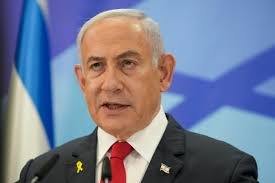
Israeli Prime Minister Benjamin Netanyahu condemned the move.
“I have a clear message to those leaders who recognise a Palestinian state after the horrific massacre of October 7: You are giving a huge reward to terrorism,” he said, referring to Palestinian militant group Hamas’ 2023 attack on Israel that triggered the nearly two-year war in Gaza.
“And I have another message for you: It will not happen. A Palestinian state will not be established west of the Jordan River.”
The Hamas-led attack on Israel killed 1,200 people and saw 251 others taken hostage, according to Israeli tallies.
Israel’s ensuing campaign in Gaza has killed more than 65,000 Palestinians, most of them civilians, according to local health authorities, spread famine, demolished most buildings and displaced most of the population – often multiple times.
PALESTINIANS WELCOME RECOGNITION
“It is a human duty of every respectful and free human being in the world to support Palestinians during the ordeal they are going through and Britain’s role now comes within this,” said Sharaf Al Tarda, a Palestinian resident of Hebron in the Israeli-occupied West Bank.
Hamas welcomed the move but said it must be accompanied by “practical measures” to end the war in Gaza and prevent Israel from annexing the West Bank.
Palestinian President Mahmoud Abbas said recognition would help pave the way for the “State of Palestine to live side by side with the State of Israel in security, peace, and good neighbourliness”.
Starmer wrote to Abbas to confirm Britain’s decision, noting that London had backed a Jewish homeland in 1917 while also pledging to protect the rights of non-Jewish communities.
Western governments have been under pressure from many in their parties and populations angry at the ever-rising death toll in Gaza, images of starving children and their states’ inability to rein in Israel, even continuing to provide arms.
Announcing his country’s decision, Canadian Prime Minister Mark Carney said it would empower those seeking peaceful co-existence and the end of Hamas. “This in no way legitimises terrorism, nor is it any reward for it,” he added.
Portugal’s Foreign Affairs Minister Paulo Rangel said this recognition was a “fundamental line of Portuguese foreign policy”. Speaking to reporters at the headquarters of Portugal’s permanent mission to the United Nations in New York, he said: “Portugal advocates the two-state solution as the only path to a just and lasting peace…a ceasefire is urgent.”
The United States, Israel’s closest ally, did not comment immediately on the decision by three of its allies to recognise a Palestinian state, but President Donald Trump has previously made clear he opposes such a move.
Israeli Security Minister Itamar Ben-Gvir said he would propose that the cabinet apply sovereignty in another Israeli-occupied Palestinian territory, the West Bank. That would represent de facto annexation of land seized in a 1967 war.
BRITAIN PLAYED A KEY HISTORIC ROLE
British troops captured Jerusalem from the Ottoman Empire in 1917, and in 1922 the League of Nations awarded Britain an international mandate to administer Palestine during the post-war deal-making that redrew the map of the Middle East.