SEOUL, Jan 21,2026: A South Korean court jailed former Prime Minister Han Duck-soo for 23 years on Wednesday, on charges that included insurrection relating to ex-President Yoon Suk Yeol’s declaration of martial law in December 2024.
Han, 76, is the first former cabinet minister to be handed a ruling by a court on criminal charges directly related to martial law, which legal experts have said could prove a bellwether for other trials.
The Seoul Central District Court found Han guilty because he was instrumental in setting up the outward appearance of a cabinet meeting that facilitated the declaration, a judge said, a move he described as a “top-down insurrection”.
Han also discussed plans to block the function of major institutions such as parliament as part of the insurrection, the judge added.
“The defendant was a prime minister who had been indirectly given democratic legitimacy and responsibility … Nevertheless, the defendant chose to turn a blind eye … and participate as a member of the December 3 insurrection,” the judge said.
“As a result, South Korea was in danger of returning to the dark past when the basic rights and liberal democratic order of the people were violated, potentially preventing them from escaping … dictatorship for a long time.”
The court found Han guilty of “engaging in (the) key action of insurrection”, as well as on related charges of perjury and falsifying an official document.
“I will humbly follow the judge’s decision,” Han, clad in a suit and green tie, said after the ruling.
He had denied wrongdoing on all charges except perjury, saying in November that while he regretted not being able to stop Yoon from declaring martial law, he “never agreed to it or tried to help”.
In an unusual instance in South Korean court proceedings, the 23-year term exceeded a sentence of 15 years sought by prosecutors in November.
Han was detained by the court immediately after the ruling, which can be appealed. Han’s lawyer said it would be taken to the Supreme Court.
HELD SENIOR POSTS UNDER FIVE PRESIDENTS
Han is an experienced technocrat who served in senior posts under five presidents. He became acting president after Yoon was impeached, before his own impeachment on accusations of having aided Yoon in the martial law declaration.
The Constitutional Court overturned Han’s impeachment, restoring his powers to serve as leader before he resigned from the post to run in a snap election in June. He ended his bid for the presidency following rifts among conservatives.
“I don’t know whether this elderly man (Han)… meant to devote himself to the people of South Korea in his own way, but the outcome wasn’t good,” said another commuter, 79-year-old Kim In-sik.
Yoon, who faces eight separate trials, was handed a five-year jail term last week for charges that included obstructing attempts to arrest him following martial law. He has appealed.
Yoon faces another ruling on February 19 on the most serious charge of “masterminding an insurrection”.
Prosecutors have sought the death penalty in that case, though South Korea has had no execution since 1997.
Thiruvananthapuram, Jan 21,2026: Some of the most consequential cyber operations underway today do not look like attacks at all. They cause no immediate disruption, trigger no alarms and may remain invisible for years.
Their strategic value lies not in what they do at the moment, but in what they quietly make possible. Modern cyber conflict, security analysts say, is increasingly prepared long before it is ever revealed.
“This reality came sharply into focus with the widely reported Lebanon pager incident. Communication devices that appeared simple, benign and technologically unremarkable were later activated in a coordinated manner, causing physical harm without any indication of real-time hacking,” K.S. Manoj, a cyber-physical systems security expert associated with Intelegrid said.
Subsequent international reporting suggested that the decisive compromise may have taken place much earlier, during the design, manufacture or distribution of the devices.
For analysts, the episode illustrated a growing shift in how conflict unfolds: modern attacks may be embedded and positioned well before they are triggered.
Security experts describe this approach as pre-positioned cyber operations, a strategy centred on the covert establishment of persistent or dormant access within systems, devices or infrastructure, without immediate activation.
Unlike conventional cyber attacks that seek instant impact, pre-positioning focuses on long dwell times, minimal forensic traces and activation only when strategic or geopolitical conditions warrant it. In many cases, such access is never used. Its value lies in the option it provides rather than in execution itself.
The Lebanon pager case is also significant because it demonstrates how cyber operations are expanding beyond digital networks into supply chains and physical objects.
By compromising systems upstream, before a device is ever deployed, attackers can bypass traditional cyber defences altogether.
Analysts note that this means systems do not need to be online to carry risk, cyber actions and physical effects can be separated by long time gaps, and trust in manufacturing and procurement has become a critical vulnerability.
These dynamics blur the boundary between cyber and physical security and complicate detection, attribution and response.
India offers a useful lens through which to examine these trends. As a large and rapidly digitising economy with complex infrastructure and deep reliance on global supply chains, it reflects challenges increasingly faced by many countries.
Investigations following the 2020 Mumbai power disruption identified advanced malware linked to grid-related systems, with indications that elements of the intrusion may have occurred months earlier.
While no definitive attribution of the outage to cyber sabotage was established, analysts observed that the timeline was consistent with pre-positioned access rather than a sudden intrusion.
A similar pattern emerged in 2019, when malware was detected on systems associated with the Kudankulam nuclear facility.
The incident showed evidence of access without activation. In nuclear and other high-consequence environments, analysts note that restraint itself can be strategic, as access may carry value even if it is never exercised.
The Mumbai power disruption occurred during a period of heightened India–China military tensions following the Galwan Valley clash. Analysts caution that coincidence in timing does not establish causation, particularly when infiltration appears to predate visible events.
The sequence nonetheless illustrates why timing alone has become an unreliable indicator of cyber intent in an era defined by dormant, long-term access.
Recent launch vehicle anomalies in India have also prompted discussion among security and engineering experts.
While there is no public evidence linking such incidents to cyber sabotage, specialists argue that failure analysis for high-consequence aerospace systems increasingly needs to incorporate cyber-physical and supply-chain risk models alongside conventional engineering and procedural factors.
In parallel, India has experienced a rise in reports of GPS spoofing and navigation interference affecting aviation, maritime operations and unmanned systems.
Such incidents, widely documented in other regions, are increasingly viewed as part of a broader category of geographically bounded or “geofenced” cyber-electronic activity, in which effects are limited to specific locations and time windows.
Following post-Sindoor security operations, analysts note that such selective cyber and electronic interference has come under closer scrutiny, even as attribution remains difficult and public evidence limited.
Taken together, these developments reinforce a central concern among security experts: modern cyber risk is no longer defined solely by visible attacks or system failures, but by silent access, localised interference and capabilities that may remain dormant or be activated selectively, complicating detection, attribution and response.
India’s experience mirrors developments elsewhere. Authorities in the United States have acknowledged that foreign actors maintained long-term access to parts of critical infrastructure without causing outages. In Ukraine, years of dormant cyber access preceded cyber-physical attacks once conflict escalated.
Security assessments across regions indicate that state-aligned cyber groups from multiple countries, including China and North Korea, have demonstrated advanced capabilities in stealthy infiltration, long-term persistence and supply-chain compromise.
Analysts note that patience and restraint, rather than frequent disruption, are increasingly defining features of such operations.
At the same time, experts caution against over-attribution. Aerospace failures, aviation incidents and industrial accidents are complex events with multiple potential causes, and cyber sabotage should not be assumed without evidence.
The deeper challenge lies in limited visibility, namely the difficulty of knowing what access may already exist, inactive and undetected.
Pre-positioned cyber operations are forcing a rethink of security itself. Traditional defences such as firewalls and monitoring systems remain necessary but are no longer sufficient on their own.
Increasingly, resilience depends on deeper supply-chain scrutiny, cyber-informed engineering and independent investigation of cyber-physical incidents. In this environment, deterrence is shaped as much by what remains silent as by what becomes visible.
The Lebanon pager incident ultimately serves as a reminder that modern conflict may be shaped long before any attack is perceived. As cyber operations extend into devices, supply chains and physical systems, the central security question is no longer simply who attacked, but what capabilities may already be embedded, and whether they can be detected before they are ever used.
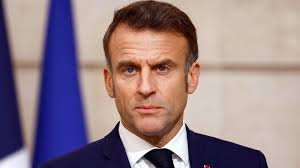
Jan 19,2026: European Commission President Ursula von der Leyen said she had discussed Greenland and US actions with NATO Secretary-General Mark Rutte, French President Emmanuel Macron, Italian Prime Minister Giorgia Meloni, UK Prime Minister Keir Starmer, and German Chancellor Friedrich Merz.
“I spoke to Mark Rutte, Emmanuel Macron, Keir Starmer, Friedrich Merz, and Giorgia Meloni. Together we stand firm in our commitment to uphold the sovereignty of Greenland and the Kingdom of Denmark,” von der Leyen said in a post on X.
She emphasised that the European union will always defend its strategic economic and security interests. “We will face these challenges to our European solidarity with steadiness and resolve,” she added.
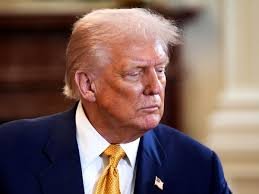
The comments come as NATO Secretary-General Mark Rutte confirmed he had spoken with President Donald Trump on January 18 regarding the security situation in Greenland and the Arctic.
“Spoke with Trump regarding the security situation in Greenland and the Arctic. We will continue working on this, and I look forward to seeing him in Davos later this week,” Rutte wrote on X.
The discussions follow Trump’s announcement that he would impose a 10 percent tariff on Denmark, Finland, France, Germany, the Netherlands, Norway, Sweden, and the United Kingdom. The tariffs were triggered after these countries deployed troops to Greenland’s capital, Nuuk, in a military exercise called “Operation Arctic Endurance.”
The NATO nations said the deployment was aimed at supporting Greenland’s autonomy, following reports that the Trump administration had expressed interest in annexing the Arctic island for “national security purposes.”
In response to their pushback, Trump stated that the tariff would take effect on February 1 and rise to 25 percent on June 1, remaining in place “until a Deal is reached for the Complete and Total purchase of Greenland.”
European leaders strongly condemned the planned tariffs, warning that such measures risked undermining transatlantic relations and could trigger a “dangerous downward spiral.” They stressed that the Danish-led exercise “responds to this necessity and poses no threat to anyone.”
US Treasury Secretary Scott Bessent told a television channel that European leaders would eventually “come around” and recognize the need to remain “under the U.S. security umbrella.”
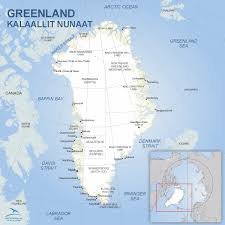
Greenland, part of the Kingdom of Denmark, has been at the center of tension after Trump has repeatedly expressed interest in acquiring the resource-rich Arctic island, a stance that has alarmed European allies and stirred tensions within NATO.
Danish and Greenlandic authorities have insisted that their territorial integrity must be respected.
As the tension escalated, Denmark’s Foreign Minister Lars Løkke Rasmussen said there is a “fundamental disagreement” with the United States over Greenland following talks at the White House.
Rasmussen described Wednesday’s meeting with US Vice President JD Vance and Secretary of State Marco Rubio as “frank but constructive,” but added that President Trump’s insistence on “conquering” Greenland was “totally unacceptable.”
“We made it very, very clear that this is not in the interest of Denmark,” he said.
The hour-long meeting involving the US, Denmark, and Greenland did not produce a major breakthrough. However, all sides agreed to establish a high-level working group to discuss the future of the autonomous Danish territory.
Moreover, Rasmussen highlighted that there were “red lines” the US could not cross.
“It’s productive to start discussions at a high level,” Rasmussen said.
The Danish foreign minister also acknowledged that there is “an element of truth” in Trump’s argument that Arctic security should be strengthened to counter Russian and Chinese interests. However, he refuted the president’s claims about Russian and Chinese warships operating near Greenland, calling them “not true.”
Tehran [Iran], January 12,2026: On the 8th of January, in an attempt to dampen the protests, the Khamenei regime shutdown internet throughout the country, blocking all access to the country. On Monday, the nationwide shutdown crossed the 84-hour mark as per cybersecurity and digital governance think tank Netblocks.”As Iran wakes up to a new day, metrics show the national internet blackout is past the 84 hour mark. Years of digital censorship research point to these workarounds,” Netblocks posted on X. Posting video that she received from Iran, journalist and Activist MasihAlinejad said,”Videos received from Tehran via Starlink: Despite mass killings and widespread repression, people are still in the streets.”According to the latest data from Human Rights Activists News Agency, the deaths of 544 people during the protests have been confirmed, and dozens of additional cases remain under review. More than 10,681 individuals have also been transferred to prisons following arrest. Protests have taken place at 585 locations across the country, in 186 cities, spanning all 31 provinces.The protests which began over worsening economic conditions on the 28th of December and have since evolved into broader demonstrations opposing the leadership of Supreme Leader Ayatollah Ali Khamenei.Meanwhile the exiled Iranian Crown Prince Reza Pahalavi has emerged as a vocal supporter of the demonstrators, backing what he describes as a nationwide movement against the Islamic Republic.In a video message on X he said , “I announce another stage of the national uprising to overthrow the Islamic Republic and reclaim our dear Iran. Inside Iran, in addition to seizing and holding the central streets of cities, all institutions and apparatuses responsible for the regime’s false propaganda and cutting off communications are considered legitimate targets. Government employees, and the armed and security forces, have the opportunity to join the people and be helpers of the nation, or to choose complicity with the murderers of the nation and buy eternal shame and the curse of the nation for themselves.”
Addressing Iranians abroad, he asserted that Iranian embassies and consulates belong to the people and should display Iran’s national flag rather than that of the Islamic Republic.”The regime is facing a serious shortage of repressive forces, and the increased shooting at the people is not out of strength, but due to a lack of mercenaries and fear of faster collapse and fall. We will not allow these criminals to shed more of our youth’s blood on the ground. We will not give them that opportunity. We will not go back. The freedom of Iran is near. The blood spilled on the ground of Iran’s immortal children guides us toward victory. We are not alone. Global assistance will arrive soon as well. Wait for my next messages. We will soon reclaim our dear Iran from the Islamic Republic and hold celebrations of freedom and victory everywhere in Iran,” he said.Earlir, US President Donald Trump said that the Islamic Republic appears to be crossing a “red line” set by his administration, following the reports of the killing, mostly of protestors, prompting Washington to consider what he described as “very strong options”.Speaking to reporters onboard Air Force One, when asked whether Iran had appeared to have crossed the red line he had drawn over the treatment of protesters, Trump said, “They’re starting to, it looks like.”The US President, referring to the ongoing protests in the Islamic Republic, added that those in power were ruling through violence.He emphasised that the situation was being closely monitored at the highest levels of the US government.”There seem to be some people killed that aren’t supposed to be killed. These are violent – if you call them leaders, I don’t know if they’re leaders or if they just rule through violence – but we’re looking at it very seriously. The military’s looking at it. We’re looking at some very strong options; we’ll make a determination,” Trump stated.The US President did not elaborate on the specific actions Washington might take, but according to a New York Times report, Trump was briefed on a range of military options targeting Iran.
Washington, Jan 8,2026: Days after US President Donald Trump suggested that military action against Colombia “sounds good,” Trump said Wednesday that arrangements are underway for talks with Colombian President Gustavo Petro at the White House, following a phone call between the two leaders.
In a post on Truth Social, Trump said Petro called to discuss drug trafficking and other disputes between the two countries, marking their first direct conversation since Trump returned to office in January 2025and the recent military operation in Venezuela.
“It was a Great Honor to speak with the President of Colombia, Gustavo Petro, who called to explain the situation of drugs and other disagreements that we have had,” Trump wrote. “I appreciated his call and tone, and look forward to meeting him in the near future.”
Trump said preparations are being coordinated between Secretary of State Marco Rubio and Colombia’s foreign minister, adding the meeting will take place at the White House, though no date has been announced.
Petro confirmed the call, describing it as “cordial”, and said he requested the “restoration of direct dialogue between the two governments”. Speaking to supporters at a rally in Bogotá, Petro said the conversation lasted more than an hour.
Relations between Washington and Bogotá have been tense since Trump’s return to the presidency. Trump has repeatedly accused Petro’s administration, without presenting evidence, of enabling “cocaine trafficking” into the United States.
In October, the US imposed sanctions on Petro, and in September revoked his visa after he joined a pro-Palestinian demonstration during the UN General Assembly in New York.
Over the weekend, Trump intensified his rhetoric, referring to Petro as “a sick man” and alleging that Colombia operates “cocaine mills and factories.”
When asked aboard Air Force One whether the US would consider an operation in Colombia, Trump replied, “It sounds good to me.”
The remarks come after a US military operation that resulted in the capture of Venezuelan leader Nicolás Maduro, who was flown to the United States and are facing trial on drug and weapons charges.
The Trump administration has carried out more than 30 strikes since September against suspected drug-smuggling boats in the Caribbean and eastern Pacific, operations that have killed at least 110 people.
Petro pushed back against Trump’s charges, saying Colombia would resist any attack. “For the homeland I will take up arms again that I do not want,” Petro wrote on X, while denying any links to drug trafficking and calling Trump’s allegations false.
Colombia’s Foreign Ministry said it remains committed to relations “based on dialogue, cooperation and mutual respect,” adding that threats or the use of force between states are unacceptable.
Jan 06,2026: Denmark’s Prime Minister Mette Frederiksen has warned that any bid by the United States to take over Greenland will result in the end of the NATO military alliance, as reverberations from Washington’s military attack on Venezuela and the abduction of its leader are felt across the globe.
Frederiksen made the comments on Monday following US President Donald Trump’s latest calls for the Arctic island to come under direct control of Washington.
Trump told reporters on Sunday that he would “talk about Greenland in 20 days”. He has maintained that Greenland should come under the jurisdiction of the US, and his latest threat came just a day after US forces abducted Venezuelan leader Nicolas Maduro and his wife.
That military operation has caused alarm in Denmark and Greenland, which is a semiautonomous territory of the Danish kingdom and thus part of NATO.
“If the United States chooses to attack another NATO country militarily, then everything stops,” said Frederiksen.
.“That is, including our NATO and thus the security that has been provided since the end of the second world war,” she told Danish broadcaster TV2.
Trump has not ruled out using military force to take control of Greenland, and last month, Louisiana Governor Jeff Landry, who publicly supports annexation, was named as special envoy to the mineral-rich Arctic island.
Palm Beach [US], December 28,2025: Ukrainian President Volodymyr Zelenskyy is scheduled to meet US President Donald Trump later today at Mar-a-Lago, even as Ukraine’s capital, Kyiv, came under fresh Russian missile and drone attacks, underlining that hostilities continue alongside intensified diplomatic efforts to end the war.The meeting, set for 1:00 pm ET (11:30 pm IST), was announced only two days ago and is aimed at narrowing differences in a peace framework first proposed by Trump last month, CNN reported. Ukraine has since revised the original 28-point proposal to 20 points, with US envoys working intensively to shape a plan that could be acceptable to both Kyiv and Moscow.Trump, who has been in Palm Beach since December 20, will pause his holiday break to hold the talks. The meeting was arranged after Zelenskyy held an hour-long phone call last week with Steve Witkoff, Trump’s foreign envoy, and Jared Kushner, who is involved in finalising the peace proposal, according to CNN.Earlier this month, Trump had indicated that talks with Zelenskyy or European leaders would only be useful if negotiations were nearing a breakthrough, signalling what US officials describe as an advanced stage of discussions. American officials have said substantial progress has been made, with one US official stating that about 90 per cent of the deal’s terms had been settled, a figure Zelenskyy publicly confirmed on Friday, CNN reported.”It isn’t easy. No one is saying that it will be 100% right away, but nevertheless, we must bring the desired result closer with every such meeting, every such conversation,” Zelenskyy said.The remaining unresolved issues include land concessions to end the nearly four-year war, with Russia maintaining demands that Ukraine cede the entire eastern Donbas region. Zelenskyy has said he is no longer ruling out concessions entirely and would submit the peace plan to a referendum if Russia agrees to a ceasefire, in line with Ukraine’s constitutional requirements.US officials have floated what were described as “thought-provoking” ideas to address the impasse, including the creation of an “economic free zone” in eastern Ukraine, CNN reported.
Another unresolved issue is the Russia-occupied Zaporizhzhia nuclear power plant. Zelenskyy has said Kyiv proposes operating the facility as a joint US-Ukraine enterprise, with half the electricity allocated to Ukraine and the rest distributed by the United States.Russia will not be represented at Sunday’s meeting, and it remains unclear whether Moscow is prepared to accept an immediate ceasefire. Trump has repeatedly said that both sides have acted as obstacles to peace. Speaking a day before the meeting, Russian President Vladimir Putin said that “if Kyiv is not willing to resolve the matter peacefully, Russia will accomplish all the aims of the special military operation by military means,” according to Russian state media cited by CNN.Ukraine’s air force said Russia launched 519 drones and 40 missiles overnight into Saturday. Zelenskyy said the continued attacks showed that Russia’s actions on the battlefield contradicted its participation in talks.US officials expressed hope that Sunday’s meeting would be productive after a week of intensive engagement between American and Ukrainian negotiators, though no specific outcome was publicly outlined, CNN reported.Zelenskyy said he wants to finalise a framework to end the conflict, including securing concrete security guarantees from Washington to prevent further Russian aggression. US, European and Ukrainian officials have discussed guarantees similar to NATO’s Article 5, which would include deterrence measures, monitoring mechanisms and consequences for violations.”This is the most robust set of security protocols they have ever seen. It is a very, very strong package,” a senior US official said, adding that Trump is willing to take US-backed guarantees to Congress. Another official described the proposal as the “platinum standard” of what Washington could offer.US officials also said Russia had indicated openness to Ukraine joining the European Union as part of a peace agreement. Sunday’s meeting is not expected to include European leaders, unlike some previous engagements, CNN reported.Trump said in an interview with Politico on Friday that he expects the meeting with Zelenskyy to “go good” but added that the Ukrainian president “doesn’t have anything until I approve it.”European officials said they were cautiously optimistic about the talks but acknowledged uncertainty. “There is no low-risk scenario with Trump,” a NATO official said.
Sriharikota (Andhra Pradesh), Dec 24,2025: India’s heavy-lift rocket LVM3, also called ‘Bahubali’, successfully launched the US-based AST SpaceMobile’s advanced communication satellite BlueBird-6 into Low Earth Orbit (LEO) on Wednesday, precisely placing the American satelite and marking a major milestone in India’s commercial space capabilities.
The launch set a new record as the heaviest payload carried by an Indian rocket, with the mission focused on beaming broadband signals straight from space to everyday smartphones, eliminating the need for special devices.
After a smooth 24-hour countdown, the 43.5-metre-tall, 640-tonne LVM3 rocket lifted off majestically from the Second Launch Pad at the Satish Dhawan Space Centre (SDSC) SHAR here at about 0855 hrs.
Prime Minister Narendra Modi hailed the successful launch, terming it a “proud milestone” in India’s space journey.
Addressing scientists from the Mission Control Centre, ISRO Chairman and Secretary, Department of Space, Dr V. Narayanan, announced that the US satellite had been successfully and precisely placed into its intended orbit. “This is a great achievement.
All the vehicle parameters performed normally. “This is the second LVM3 mission in a short span of 52 days,” he said, congratulating the entire ISRO team.
Narayanan added that this was the third commercial mission of LVM3 and the first involving a satellite from US-based AST SpaceMobile, thanking the company for reposing confidence in Indian launch capabilities.“We have lined up more launches in the coming days,” he said.
Scientists at the Mission Control Centre, including former ISRO chairmen, senior ISRO officials, and representatives from AST SpaceMobile, closely monitored the flight with bated breath as real-time data streamed in. LVM3-M6 marked the sixth operational flight of the LVM3 and maintained its impeccable record of ninth consecutive successful missions.
ISRO said the mission carried the heaviest payload ever launched from Indian soil into LEO, weighing 6,100 kg. “LVM3 is the operational heavy-lift launch vehicle. LVM3-M6 is its sixth operational flight and third dedicated commercial mission,” ISRO said.
The mission was undertaken as part of a commercial agreement between NewSpace India Limited (NSIL), the commercial arm of the Department of Space, and AST SpaceMobile LLC, USA. BlueBird-6 is part of AST SpaceMobile’s global LEO constellation designed to provide direct-to-mobile connectivity, enabling 4G and 5G voice and video calls, messaging, streaming, and data services anywhere in the world.
The satellite features a massive 223-square-metre phased array, making it the largest commercial communications satellite ever deployed into LEO.
AST SpaceMobile describes its network as the world’s first space-based cellular broadband system designed to connect directly with standard smartphones for both commercial and government users.
Founder, Chairman and CEO Abel Avellan had earlier said the next-generation satellites would enable ubiquitous cellular broadband from space. The company plans to deploy 45–60 satellites by the end of 2026.
LVM3, formerly known as GSLV Mk III, is nicknamed ‘Bahubali’, a name originally coined by Telugu media, drawing inspiration from the blockbuster film Bahubali, in which the hero effortlessly lifts a massive lingam, symbolising strength. On Wednesday, the nickname appeared to receive informal official recognition when Dr Narayanan referred to the vehicle as the “LVM3 Bahubali rocket” while announcing mission success.
The three-stage LVM3 consists of two S200 solid strap-on boosters, an L110 liquid core stage, and a C25 cryogenic upper stage. It can currently lift about 10 tonnes to LEO and 4 tonnes to GTO, with efforts underway to enhance its GTO capacity. With this mission, AST SpaceMobile becomes the second satellite broadband customer to fly on LVM3, after Eutelsat OneWeb, which launched 72 satellites using the vehicle in 2022 and 2023.
The successful BlueBird-6 launch further cements India’s position as a reliable global player in the commercial heavy-lift launch market.
Colombo, Dec 23,2025: India has committed a relief and reconstruction package worth USD 450 million to help Sri Lanka recover from the devastation caused by Cyclone Ditwah, External Affairs Minister S. Jaishankar announced on Tuesday.
Speaking as Prime Minister Narendra Modi’s special envoy in Colombo, Jaishankar handed over a letter from the Prime Minister to Sri Lankan President Anura Kumara Dissanayake detailing the assistance, which includes USD 350 million in concessional lines of credit and USD 100 million in grants.
The EAM held discussions with Sri Lankan Foreign Affairs Minister Vijitha Herath, focusing on expediting aid delivery and addressing the island nation’s reconstruction priorities.
He emphasised India’s immediate response to the disaster. “Our assistance builds on India’s first responder role. Operation Sagar Bandhu commenced on the very day the cyclone made landfall,” the EAM said, noting that restoring connectivity and critical infrastructure was a top priority.
Jaishankar underscored India’s continued support to Sri Lanka during its ongoing economic challenges, mentioning efforts to promote Indian tourism and encourage foreign direct investment to help boost the nation’s economy during this critical period.
“As our closest neighbour and in line with our neighbourhood first policy, it was only natural that India stepped forward at a time when Sri Lanka faced a crisis. We have done so when you were going through economic difficulties as well. In the case of cyclone Ditwah, you would also appreciate that India has been also a strong advocate of cooperation,” Jaishankar sai
THE HAGUE, Dec 16,2025: European leaders including Ukraine’s Volodymyr Zelenskiy meet in The Hague on Tuesday to launch an International Claims Commission to compensate Kyiv for hundreds of billions of dollars in damage from Russian attacks and alleged war crimes.
The one-day conference, co-hosted by the Netherlands and the 46-nation Council of Europe, the continent’s top rights group, was to be attended by dozens of senior figures including European Union foreign policy chief Kaja Kallas.
The meeting coincides with ongoing U.S.-backed peace diplomacy aimed at stopping the war, which began with Russia’s full-scale invasion of Ukraine in February 2022.
Russian officials were not immediately reachable to comment on the plan, but have repeatedly rejected allegations that Russian forces committed war crimes during the conflict.
POSSIBLE AMNESTY IN PEACE DEAL
The possible inclusion of an amnesty for wartime atrocities in a peace deal, which was at one point proposed by the administration of President Donald Trump, could complicate Europe’s plans to also compensate victims of abuses in Ukraine ranging from sexual violence and child deportations to destruction of religious sites.
The two-year-old Register of Damage, which will become part of the commission, has received more than 80,000 claims submitted by individuals, organisations and public bodies in Ukraine under a wide range of categories.
More than 50 states and the European Union have drafted a Council of Europe convention to create the commission, which will take force after it has been ratified by 25 signatories, as long as sufficient funds have been secured to finance the work.
A member of the White Angel unit of Ukrainian police officers, who evacuate people from the frontline towns and villages, checks an area for residents, amid Russia’s attack on Ukraine, in the frontline town of Dobropillia in Donetsk region, Ukraine December 9, 2025.
New Delhi, Dec 10,2025: In a major endorsement of India’s technological trajectory, Prime Minister Narendra Modi and Microsoft Chairman and CEO Satya Nadella today announced a massive US$17.5 billion investment by the tech giant into the country.
This commitment, which Microsoft terms its largest-ever investment in Asia, is specifically aimed at building the necessary infrastructure, skills, and sovereign capabilities to realize India’s ambitious “AI first” future.
The announcement followed a “very productive discussion” between the two leaders, highlighting the growing synergy between India’s push for digital public infrastructure and the global need for AI innovation.
Satya Nadella confirmed the monumental investment via a post on X, detailing the purpose of the capital injection: “Thank you, PM @narendramodi ji, for an inspiring conversation on India’s AI opportunity. To support the country’s ambitions, Microsoft is committing US$17.5B—our largest investment ever in Asia—to help build the infrastructure, skills, and sovereign capabilities needed for India’s AI first future.”
The focus on “sovereign capabilities” is particularly significant, signalling Microsoft’s intent to tailor its cloud and AI services to meet India’s unique regulatory and data residency requirements, thereby empowering Indian companies and government bodies with advanced AI tools while ensuring compliance.
PM Modi welcomed the commitment, emphasizing the potential benefits for India’s vast and digitally active young population. The Prime Minister’s post on X, conveyed a strong sense of optimism regarding India’s role in the global AI landscape: “When it comes to AI, the world is optimistic about India! Had a very productive discussion with Mr Satya Nadella. Happy to see India being the place where Microsoft will make its largest-ever investment in Asia. The youth of India will harness this opportunity to innovate and leverage the power of AI for a better planet.”
This sentiment aligns with the government’s “Digital India” initiative and its recent push to establish India as a hub for both AI talent and AI-driven solutions for global challenges. The investment is expected to significantly boost the country’s cloud computing capacity, accelerate the development of AI-powered solutions across sectors like healthcare, agriculture, and governance, and create millions of jobs requiring next-generation digital skills.
Microsoft’s US$17.5 billion pledge is the latest in a series of major investments by global tech giants, underscoring the confidence in India’s digital economy. The country’s large, open data sets, rapidly expanding internet penetration, and strong talent pool have made it an increasingly attractive destination for developing and deploying large-scale AI models.
The size of this specific investment—US$17.5 billion—is unprecedented for Microsoft in the Asian region and reflects the company’s strategic decision to make India a cornerstone of its global AI deployment strategy. The capital is expected to flow into establishing new hyperscale data centres, expanding digital skilling programmes, and forming deeper collaborations with local startups and educational institutions.