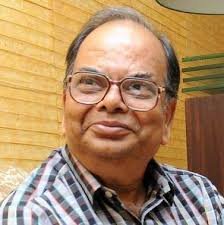
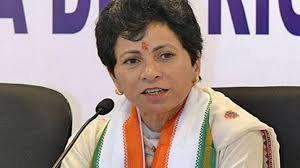
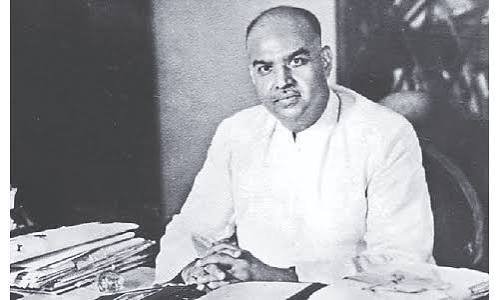
Kolkata, July 4 ,2026: In a major setback to the Trinamool Congress (TMC) amid an escalating internal feud, the party’s State President and former Minister Chandrima Bhattacharya resigned from all party posts on Saturday.The resignation comes at a time of high drama in West Bengal politics, as the property owner of the TMC’s state party office in Kolkata locked the premises from the inside following reports that a rebel faction, led by Leader of the Opposition (LoP) Ritabrata Banerjee, had taken possession of the building.In her resignation letter addressed to Mamata Banerjee, Bhattacharya stated that she was stepping down from the post of State President conferred upon her in June 2026. She also withdrew herself as the authorised signatory for the party’s bank accounts and as ‘Didi’s’ authorised person before the Election Commission of India.”I hereby tender my resignation from the post of State President of All India Trinamool Congress… I also hereby resign from all other post which I hold at present. Please note that I withdraw myself as the authorized signatory… in respect of the accounts maintained in Various Banks. I also withdraw myself from being your authorized person before the Election Commission of India,” the letter read.
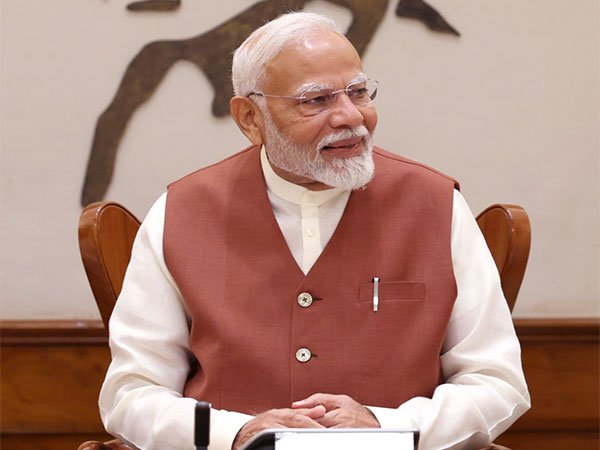
New Delhi, July 3,2026: Prime Minister Narendra Modi will undertake a day-long visit to Rajasthan and Gujarat on Saturday, launching and inaugurating a series of major infrastructure and industrial projects aimed at strengthening India’s aviation, energy, urban transport, renewable energy and semiconductor sectors.
The Prime Minister’s Office said Modi will begin his visit in Jodhpur, where he will inaugurate the new terminal building at Jodhpur Airport and launch the Modified UDAN scheme. He will later travel to Balotra to dedicate, inaugurate and lay the foundation stone for projects worth around Rs 1.06 lakh crore before addressing a public gathering. In the evening, he will visit Sanand in Gujarat to inaugurate the CG Semi Outsourced Semiconductor Assembly and Test (OSAT) facility and interact with stakeholders.
According to the PMO, the launch of the Modified UDAN scheme marks the next phase of India’s regional aviation programme and is aimed at expanding air connectivity under the vision of “Ude Desh ka Aam Nagrik.”
“With an allocation of Rs 28,840 crore over the next 10 years, the scheme aims to accelerate the next phase of aviation-led development,” the PMO said.
The revamped programme envisages the development of 100 aerodromes from existing unserved airstrips, construction of 200 modern helipads, continued viability gap funding for airlines and greater use of indigenous aircraft, including HAL Dhruv helicopters and Dornier aircraft, to improve connectivity in remote and underserved regions.
The Prime Minister will also inaugurate the new terminal building at Jodhpur Airport, built at a cost of Rs 480 crore. Spread across more than 23,000 square metres, the terminal has the capacity to handle up to 20 lakh passengers annually. Inspired by Rajasthan’s architectural heritage, the terminal incorporates traditional elements such as arches and jharokhas while featuring energy-efficient systems, water conservation measures and green building practices targeted at achieving a five-star GRIHA rating.
In Balotra, Modi will dedicate to the nation India’s first greenfield integrated refinery-cum-petrochemical complex at Pachpadra, developed as a joint venture between Hindustan Petroleum Corporation Limited (HPCL) and the Government of Rajasthan at an investment of over Rs 79,450 crore.
The 9 MMTPA refinery-cum-petrochemical complex integrates refining with petrochemical production and has a petrochemical capacity of 2.4 MMTPA. According to the PMO, the project will strengthen India’s energy security, reduce dependence on petrochemical imports, promote downstream industries and generate large-scale employment in the region.
The Prime Minister will also lay the foundation stone for the second phase of the Jaipur Metro Rail Project, estimated to cost more than Rs 13,000 crore.
The 41-kilometre north-south corridor from Prahladpura to Todi Mod will comprise 36 stations and connect major industrial, residential and commercial hubs, including Jaipur Airport, Sitapura Industrial Area, Vishwakarma Industrial Area, SMS Hospital and Vidyadhar Nagar.
The PMO said the metro expansion would provide “faster, safer and more convenient public transport” while improving connectivity across the Rajasthan capital.
Among other key projects, Modi will dedicate the Churu-Sadulpur and Churu-Ratangarh rail doubling projects built at a cost of around Rs 900 crore, inaugurate the four-laning of the NH-125A Jodhpur Ring Road section developed for about Rs 740 crore, and dedicate SJVN’s 1,000 MW Bikaner Solar Energy Project and NHPC’s 300 MW Karnisar Bikaner Solar Energy Plant.
He will also inaugurate a power transmission line built at a cost of over Rs 1,900 crore for evacuating renewable energy from Rajasthan’s Renewable Energy Zone and lay the foundation stone for a 530-kilometre transmission system that will further strengthen the state’s clean energy infrastructure.
During the programme, the Prime Minister will hand over appointment letters to around 54,000 newly recruited youth across various departments of the Rajasthan government, including education, energy, home, transport, agriculture, information technology and skill development.
In the final leg of his visit, Modi will inaugurate the CG Semi OSAT facility at Sanand near Ahmedabad, marking the commencement of commercial semiconductor production at one of the first four projects approved under the India Semiconductor Mission.
Developed with an investment of over Rs 7,500 crore, the facility will offer end-to-end semiconductor assembly and testing services, including wafer sorting, packaging, testing, failure analysis and logistics support.
“Once fully ramped up, the facility will have an annual production capacity of up to 5 billion semiconductor chips and will help address the growing global demand for memory and storage solutions driven by rapid advancements in Artificial Intelligence and high-performance computing,” the PMO said.
The facility is expected to serve customers across the automotive, industrial, telecommunications, 5G and Internet of Things sectors and is being positioned as a key milestone in India’s efforts to emerge as a trusted global semiconductor manufacturing hub under the India Semiconductor Mission.
The visit comes as the Centre continues to push large-scale investments in infrastructure, manufacturing and strategic technologies as part of its broader agenda to enhance connectivity, boost industrial growth, strengthen energy security and promote self-reliance in critical sectors.
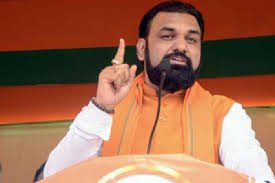
Kolkata, June 29,2026: The West Bengal Assembly on Monday passed two significant legislations aimed at restructuring the state’s Other Backward Classes (OBC) reservation framework and strengthening the powers of the Backward Classes Commission, marking another major development in the politically sensitive issue of reservations in the state.
The two Bills – The West Bengal Backward Classes (Other than SC and ST) Reservation of Vacancies in Services and Posts (Amendment) Bill, 2026 and The West Bengal Commission for Backward Classes (Amendment) Bill, 2026 — were tabled in the Assembly and subsequently passed after a vote.
The first Bill amends the Trinamool Congress government’s 2012 law on OBC reservations, while the second modifies the 1993 legislation governing the West Bengal Commission for Backward Classes.
Presenting the Bills in the House, Backward Classes Welfare Minister Gouri Shankar Ghosh said the government was acting in accordance with the directions of the Calcutta High Court and denied any political motive.
“We have removed 113 classes that had been included earlier without any field survey, and retained 66 communities that were included after various surveys. The 113 communities have now been removed in accordance with the Calcutta High Court judgment,” Ghosh told the Assembly.
“The Commission will conduct inquiries and if it feels any community should be included, it will make recommendations which the government will consider. The previous government bypassed the Commission and that is why the High Court struck down the process.”
Ghosh was referring to the 113 communities listed in Schedule I under the 2012 Act — which contained 65 communities under Category A and 78 communities under Category B. These, according to the new bill, will be removed from the statute.
However, under the new amendment, the state government, in consultation with the Backward Classes Commission, is empowered to classify OBC citizens into different categories based on the degree of backwardness identified through assessment and inquiry.
The government will also have the power, after consultation with the Commission, to determine reservation percentages for different categories of OBC communities.
The Bill provides scope for increasing reservation quotas if required, although the total reservation cannot exceed the constitutional ceiling of 50 per cent.
The legislation also introduces changes relating to the functioning of the Commission.
Members of the Commission will now hold office for three years from the date of assuming office, while the tenure of the Member-Secretary will be determined by the government.
The second amendment Bill significantly expands and clarifies the powers and responsibilities of the Backward Classes Commission.
Under the amended provisions, the Commission will examine applications seeking the inclusion of any class in the backward classes list. If necessary, it will advise the state government on such inclusion.
The Commission will also hear complaints from citizens regarding inclusion or exclusion from the backward classes list. Importantly, recommendations and advice issued by the Commission will generally be treated as binding upon the state government.
The issue of OBC reservation in West Bengal has remained contentious for over a decade.
The controversy dates back to 2012, when the then Mamata Banerjee-led Trinamool Congress government added a large number of communities to the OBC list through executive orders.
Official records showed that 77 new communities were included during that period, including 75 Muslim sub-groups.
The BJP repeatedly alleged that the move amounted to religion-based reservation aimed at minority appeasement.
Petitioners who challenged the policy argued before the courts that proper socio-economic surveys had not been conducted and that the statutory role of the Backward Classes Commission had been bypassed.
In May 2024, the Calcutta High Court struck down all OBC certificates issued after 2010 under the revised framework, observing that religion had effectively become the “sole criterion” for granting OBC status and holding the process unconstitutional.
However, certificates issued before 2010 remained protected and those already employed under reservation benefits retained their jobs.
Subsequent attempts by the previous government to restructure the OBC framework through fresh notifications were also stayed by the High Court, which observed that legal procedures had not been adequately followed.
The matter later reached the Supreme Court, which sought empirical data and emphasised that reservations must be based on measurable social and economic backwardness rather than religious identity.
June 13,2026: DRDO successfully tested missile defense system. So India demonstrates multi-layer missile defense. Three consecutive DRDO flight tests have been successful. Interceptors hit the targets.
India has now joined the elite BMD club. India now boosts its missile defense shield with these tests that have been successful. This is India’s missile shield and we already saw how crucial a shield is when India neutralize Pakistan drones and missiles during operations in 2025. And that is why it is a big big milestone for the DRDO and for India with these tests being successful.
Defense minister Rajnat Singh has congratulated DRDO for this grate success.
New Delhi, June 10,2026: A fresh political confrontation erupted on Wednesday as the Congress launched a sharp attack on Prime Minister Narendra Modi on the day he surpassed Jawaharlal Nehru to become India’s longest-serving Prime Minister, with senior Congress leader Jairam Ramesh accusing the Prime Minister of attempting to erase Nehru’s legacy while presiding over what he termed a “Murder of Democracy” in the country.
In a post on social media platform X, Ramesh highlighted what he described as the transformative achievements of independent India’s first five years under Jawaharlal Nehru’s leadership and contrasted them with the present political climate under the Modi government.
”Jawaharlal Nehru became Prime Minister of India on August 15, 1947, presiding over a stellar Cabinet — the likes of which have rarely been seen in the world. Over the next five years, modern India came into being,” Ramesh said.
The Congress leader listed a series of milestones achieved between 1947 and 1952, including the peaceful integration of more than 560 princely states into the Indian Union, the framing and adoption of the Constitution, the abolition of the zamindari system, the introduction of reservations for Scheduled Castes and Scheduled Tribes, the launch of major irrigation and power projects, and the establishment of India’s scientific and technological infrastructure, including in the field of nuclear energy.
He also underscored India’s emergence as a significant voice in global affairs during the period and recalled the preparation of electoral rolls covering nearly 170 million voters ahead of the country’s first general elections held between October 1951 and February 1952.
Ramesh credited several national leaders alongside Nehru for laying the foundations of modern India. “The 1947-52 record of achievements of India with Nehru as PM and in which stalwarts like Sardar Patel, Dr. Ambedkar, Dr. Rajendra Prasad, C. Rajagopalachari, and Maulana Abul Kalam Azad played such a pivotal role is now sought to be erased by Modi, who has a pathological fixation on Nehru,” he alleged.
Launching a direct attack on the Prime Minister, Ramesh said that while Modi may have crossed a “self-proclaimed and dubiously invented milestone”, he was “a millstone around India’s neck” and accused his government of weakening democratic institutions.
”The very same establishments of democracy — an independent Election Commission and a sacrosanct voter list — are now threatened,” he claimed.
The Congress general secretary also accused the government of undermining scientific temper and weakening educational institutions. Referring to recent controversies surrounding examinations, he said, “Scientific temper has been erased through the destruction of our educational institutions — as exposed most recently by the NEET-CBSE scandals.”
Ramesh further alleged that reservations for Scheduled Castes, Scheduled Tribes and Other Backward Classes had been diluted through privatisation and mechanisms such as “Not Found Suitable”.
Drawing an electoral comparison between Nehru and Modi, the Congress leader pointed out that Nehru secured decisive mandates in the 1952, 1957 and 1962 general elections. He argued that the BJP failed to secure an outright majority on its own in the 2024 Lok Sabha elections and relied on its National Democratic Alliance partners to form the government.
”Mr. Modi did NOT secure even a simple majority by a considerable margin in 2024 and had to hurriedly convene an NDA meeting, bypassing the BJP Parliamentary Party to anoint himself as PM. 2024 was most certainly not a mandate for Him,” Ramesh said.
The remarks came amid a broader political debate surrounding Prime Minister Modi’s historic tenure milestone, with the BJP celebrating the achievement as a reflection of sustained public trust and leadership continuity, while opposition parties have sought to contrast the government’s record with that of previous administrations, particularly the Nehru era.
May 28,2026: Karnataka’s Chief Minister Sidaraya has announced his resignation. He is likely to formally submit his resignation to the governor later today. The resignation comes amid reports of elevation of his deputy DK Shivakumar as the new chief minister.
He was supposed to submit his resignation at Lok Bhavan but he announced it at the breakfast meeting since the governor is currently not in Bengaluru.
The developments follow a Congress high command meeting where reports say a decision on Shivakumar’s elevation was taken ending a prolonged power struggle in the state.
New Delhi , May 15,2026: Union Minister Kiren Rijiju on Friday defended the hike in fuel prices, comparing the 3.2% and 3.4% price increase in petrol in India to other countries, claiming that they witnessed the hikes ranging from 20% to nearly 100% due to the West Asia conflict. Praising Prime Minister Narendra Modi’s leadership for balancing economic stability with public welfare, he credited the government for governing with responsibility and putting people first while making decisions. “As the world battled rising fuel costs after the West Asia conflict, India stood apart. While several countries witnessed petrol & diesel hikes ranging from 20% to nearly 100%, India limited the increase to just +3.2% for petrol & +3.4% for diesel,” Rijiju said in a post on X. “Even as Brent crude crossed $100/barrel & global markets turned volatile, India’s public sector oil companies absorbed huge losses for weeks to protect citizens from inflation & economic pressure. This is governance with responsibility. This is leadership that puts people first. Under PM Narendra Modi, India continues to balance economic stability with public welfare,” he added.
Rijiju also attached a list of countries that hiked their fuel prices due to the West Asia Conflict. According to the list, Malaysia saw a growth of 89.7% in petrol prices and 112.7% in Diesel prices. The US reported a hike of 44.% in petrol prices and 48.1% in diesel prices. China saw a hike of 21.7% in petrol and 23.7% in diesel prices. This comes after the Centre on Friday increased petrol and diesel prices by Rs 3 per litre across the country. Following the revision, petrol prices in New Delhi rose from Rs 94.77 to Rs 97.77 per litre, while diesel prices increased from Rs 87.67 to Rs 90.67 per litre.The fuel price hike comes amid escalating global crude oil prices triggered by the ongoing conflict in West Asia. The geopolitical tensions, particularly the US-Israel and Iran conflict that began on February 28 this year, have disrupted global crude oil supplies and pushed Brent crude prices above USD 100 per barrel.
New Delhi, Apr 2,2026: In a move aimed at cushioning domestic industries from global supply shocks, the Government has announced a full exemption from customs duty on a wide range of critical petrochemical products until June 30, 2026, citing disruptions caused by the ongoing conflict in West Asia.
In an official statement the government said the decision was taken as a temporary but targeted relief measure to ensure uninterrupted access to essential industrial inputs and to contain rising costs across multiple sectors.
“The exemption is intended to maintain supply stability and ease cost pressures on downstream industries that rely heavily on petrochemical feedstock,” a senior government official said.
The conflict in West Asia has strained global supply chains, particularly affecting the availability and pricing of petrochemical derivatives, many of which are crucial to manufacturing processes. India, being a major importer of several such inputs, has faced increasing volatility in recent months.
According to the government, the duty waiver covers a broad spectrum of chemicals and polymers, including anhydrous ammonia, methanol, isopropyl alcohol, monoethylene glycol, phenol, acetic acid, and vinyl acetate monomer.
It also extends to key industrial plastics and resins such as polyethylene, polypropylene, polyvinyl chloride (PVC), polystyrene, epoxy resins, and polyethylene terephthalate (PET) chips.
The exemption is expected to benefit a wide range of sectors including plastics, packaging, textiles, pharmaceuticals, automotive components, and other manufacturing industries.
By reducing the cost of raw materials, the government also aims to prevent price escalation in finished goods, thereby offering indirect relief to consumers.
Experts say the inclusion of polymers such as acrylonitrile-butadiene-styrene (ABS), polycarbonates, and polyurethanes will particularly aid the automotive and electronics sectors, while chemicals like purified terephthalic acid (PTA) and monoethylene glycol are crucial for the textile industry.
The government has indicated that the measure is temporary and will remain in place until the end of June 2026, after which the situation will be reviewed based on global market conditions.
A detailed annexure released alongside the announcement lists dozens of exempted items across various tariff headings, reflecting the wide scope of the intervention.
Officials emphasised that the move is part of a broader strategy to safeguard domestic manufacturing and ensure resilience in the face of external economic shocks.
New Delhi, March 19,2026: India’s direct tax collections continued to show steady growth in the current financial year, with net collections rising by 7.19 per cent as of March 17, 2026, driven by robust corporate tax inflows and higher advance tax payments.
According to the latest data, net direct tax collections for FY 2025-26 stood at Rs 22,80,236.73 crore, compared to Rs 21,27,375.42 crore in the same period last year. Gross collections also registered a healthy increase of 4.86 per cent, reaching Rs 27,14,748.29 crore.
Corporate tax collections remained a key contributor, rising to Rs 10,91,801.32 crore in net terms, up from Rs 9,68,271.99 crore a year ago.
Non-corporate tax collections, which include taxes paid by individuals and other entities, also showed growth, climbing to Rs 11,32,394.07 crore.
However, refunds issued during the period declined by 5.86 per cent to Rs 4,34,511.56 crore, compared to Rs 4,61,573.72 crore in the previous year, supporting higher net collections.
Advance tax collections also reflected continued economic momentum. Total advance tax receipts grew by 6.42 per cent to Rs 11,13,106.15 crore.
Within this, corporate advance tax rose sharply by 9.54 per cent to Rs 8,29,877.61 crore, indicating improved profitability and compliance among companies.
In contrast, advance tax collections from non-corporate taxpayers saw a marginal dip of 1.78 per cent, standing at Rs 2,83,228.54 crore.
The data points to sustained strength in tax buoyancy, with corporate earnings and compliance playing a crucial role, even as individual tax contributions show mixed trends. The overall rise in collections underscores stable revenue generation for the government in the ongoing fiscal year.
New Delhi, March 15,2026: The Election Commission on Sunday announced the schedule for Assembly elections in Assam, Kerala, Tamil Nadu, West Bengal and the union Territory of Puducherry, setting the stage for the first major round of state elections after the 2025 Assembly polls in Bihar. The poll panel said voting will be conducted over April in different phases, with the counting of votes for all states and the union Territory scheduled for May 4.
According to the schedule, polling will be held in a single phase in Assam, Kerala and Puducherry on April 9, while elections in Tamil Nadu will be conducted on April 23. West Bengal will go to the polls in two phases on April 23 and April 29.
Announcing the dates at a press conference, Chief Election Commissioner Gyanesh Kumar said the Commission had completed extensive consultations and preparations to ensure a smooth, transparent and inclusive electoral process.
“We are fully prepared to conduct free, fair and peaceful elections across these states and the union Territory. All necessary arrangements have been made in consultation with state authorities and security agencies,” Kumar said.
In West Bengal, voting in the first phase will be held on April 23 for 152 Assembly constituencies, while the remaining 142 seats will vote in the second phase on April 29.
The notification for the first phase will be issued on March 30, with April 6 as the last date for filing nominations. Scrutiny of nominations will take place on April 7, and the last date for withdrawal of candidature will be April 9. For the second phase, the notification will be issued on April 2, with April 9 as the last date for nominations. Scrutiny will be held on April 10 and candidates will be able to withdraw their nominations until April 13.
For Tamil Nadu, the notification for elections will be issued on March 30, with the last date for filing nominations on April 6. Scrutiny of nominations will take place on April 7 and the last date for withdrawal will be April 9 before polling on April 23.
For Assam, Kerala and the UT of Puducherry, which are going to booths together on April 9, the election process will begin earlier, with the notification scheduled for March 16. The last date for filing nominations will be March 23, followed by scrutiny on March 24 and the final date for withdrawal on March 26. Polling will take place on April 9.
The Chief Election Commissioner said the Model Code of Conduct had come into immediate effect in all poll-bound states and the union Territory following the announcement of the election schedule. “The Model Code of Conduct is effective from this moment. We expect all political parties and candidates to adhere strictly to the guidelines to maintain the integrity of the democratic process,” Kumar said.
New Delhi, March 3,2026: In a major boost to India’s maritime combat capabilities, the Ministry of Defence today signed contracts worth Rs 5,083 crore for the acquisition of six Advanced Light Helicopters (ALH) Mk-II (Maritime Role) for the Indian Coast Guard and Surface-to-Air Vertical Launch (VL-SRSAM) Shtil missile systems for the Indian Navy.
The contract for the procurement of Surface-to-Air Vertical Launch – Shtil missiles and associated missile holding frames, valued at Rs 2,182 crore, has been signed with JSC Rosoboronexport, Russian Federation.
The agreements, formalised at South Block in the presence of Defence Secretary Rajesh Kumar Singh, are aimed at significantly enhancing surveillance reach, rapid-response capability and layered air defence preparedness across India’s maritime domain.
The contract for ALH Mk-III (MR) along with operational role equipment, an engineering support package, and performance-based logistics support, valued at Rs 2,901 crore, has been inked with Hindustan Aeronautics Limited, Bengaluru under the Buy (Indian-Indigenously Designed, Developed and Manufactured) category.
These twin-engine helicopters incorporate state-of-the-art features superior to the currently operated airborne platforms and are capable of undertaking a wide spectrum of maritime security missions from shore-based airfields as well as from ships at sea. The induction will significantly enhance the Indian Coast Guard’s capability for fulfilling the duties of safety and protection of artificial islands, offshore installations, and protection of fishermen and marine environment.
The project envisages supply of equipment from more than 200 MSMEs and is expected to generate approximately 65 lakh man-hours of employment.
The contract for the procurement of Surface-to-Air Vertical Launch – Shtil missiles and associated missile holding frames, valued at Rs 2,182 crore, has been signed with JSC Rosoboronexport, Russian Federation.
The acquisition is intended to substantially enhance the air defence capabilities of frontline warships against a wide spectrum of aerial threats.
The system will reinforce the layered air defence architecture onboard the platforms of the Indian Navy by providing rapid-reaction, all-weather engagement capability and improved survivability in contested maritime environments. The contract further underscores the longstanding and time-tested defence partnership between India and Russia, founded on mutual trust and strategic alignment, a statement from the Ministry of Defence stated.
New Delhi, February 24,2026: India’s economy is expected to maintain strong growth momentum, with GDP projected to expand by around 8.1 per cent in the third quarter of the current financial year (FY26), according to a report by the State Bank of India (SBI).The report highlighted that despite global headwinds, the Indian economy has remained resilient, supported by strong domestic demand and steady economic activity across sectors.It stated “we expect Q3FY26 real GDP growth of closer to 8.1 per cent”.According to the report, high-frequency economic indicators suggest resilient economic activity during the third quarter of FY26. Rural consumption has remained strong, supported by positive signals from both farm and non-farm activities.At the same time, urban consumption has shown a steady improvement, supported by fiscal stimulus and increased spending since the last festive season.As per the first advance estimates, India’s GDP is projected to grow at 7.4 per cent in FY26, with growth largely driven by domestic demand.The report emphasised that domestic consumption continues to play a key role in supporting economic expansion despite uncertainties in the global economic environment.
The report also noted that the second advance estimates of GDP for FY26 are scheduled to be released on February 27, 2026. These estimates will incorporate additional data and revisions, and previous quarterly GDP figures for the first and second quarters are expected to change due to the revision in the base year.India has updated its GDP base year from 2011-12 to 2022-23, with the new series scheduled for release on February 27, 2026. The report stated that, given the significant methodological changes, it is difficult to predict the direction of revisions in the GDP data.The base year revision is aimed at better reflecting the current structure of the Indian economy, including changes such as the growing role of digital commerce and the services sector.In addition, India has also updated the base year for the Consumer Price Index (CPI) to 2024, which will help provide a more accurate measure of inflation based on current consumption patterns.Recently, Reserve Bank of India (RBI) Governor Sanjay Malhotra also said that the revision of the inflation targeting range following the CPI base year update is under examination and will be considered in the next policy.”The revised framework would be taken into account in the RBI’s next set of projections to be released during the April monetary policy,” he said.The report highlighted that strong domestic demand, resilient consumption trends, and ongoing economic activity continue to support India’s growth outlook, even as global economic challenges persist.
Aizawl, Feb 23,2026: Mizoram is currently providing shelter to 38,059 refugees from Myanmar and Bangladesh, State Home Minister K. Sapdanga informed the Legislative Assembly on Monday.
In a written reply to a question raised by ruling Zoram People’s Movement (ZPM) legislator V.L. Zaithanzama, the Home Minister said that biometric enrolment of refugees from Myanmar is being carried out by district administrations across all 11 districts. As of February 5, 93.04 per cent of the enrolment process had been completed. He expressed hope that the exercise would be concluded shortly.
Sapdanga further informed the House that biometric registration of refugees from Bangladesh is also in progress and is expected to be completed within the next few months.
However, officials of the Home Department indicated that the pace of biometric enrolment has slowed in recent weeks. According to them, the process has remained stalled since January in six districts- Siaha, Kolasib, Mamit, Khawzawl, Saitual and Hnahthial — despite most of these districts having comparatively smaller refugee populations.
Among these, Siaha district in southern Mizoram hosts 3,195 refugees from Myanmar, making it the fourth highest in terms of refugee concentration in the state. The remaining five districts have refugee numbers running only into three digits. Officials said they were not aware of the reasons behind the lack of progress in these districts over the past nearly two months.
Data provided by the Home Department shows that there are 28,355 refugees from Myanmar currently residing in various districts of Mizoram. Of these, 26,592 individuals, or 93.78 per cent, have already undergone biometric enrolment.
The enrolment process has been fully completed in Aizawl, Lunglei, Serchhip and Champhai districts. Apart from these, only Lawngtlai district in southern Mizoram recorded progress recently, with district authorities enrolling 211 refugees during the past week.
With regard to refugees from Bangladesh, Lunglei, Serchhip and Aizawl districts, which host 235, 76 and seven refugees respectively, have completed their biometric registration. In contrast, Lawngtlai district, which shelters 2,042 refugees from Bangladesh, has made little headway in initiating the enrolment process.
The government has not specified a revised timeline for completion in the districts where the exercise has slowed, but officials maintain that efforts are ongoing to bring the remaining beneficiaries under the biometric system.
Dhaka [Bangladesh], February 22,2026: Tourist visa services from Bangladeshi diplomatic missions located in India will resume on Monday, a Bangladesh Foreign Ministry official stated on Sunday.The Bangladesh government had suspended tourist visa services from its diplomatic missions in India due to security reasons. However, after the Bangladesh election, the situation has improved, and the visa service will be fully resumed from Monday.”Including the Bangladesh High Commission in Delhi, and in various cities of India such as Guwahati, Agartala, Mumbai and Kolkata–wherever Bangladeshi diplomatic missions are located–apart from tourist visas, other visa services were mostly ongoing. However, tourist visas had generally been stopped, though they were still issued in urgent cases,” a Bangladesh Foreign Ministry official said on Sunday.
“Although we did not formally announce it as stopped, we are not formally announcing it as resumed either; in fact, it was ongoing and will now be expanded widely from Monday,” the official told. Additionally, around the election held in Bangladesh on February 12, the Bangladesh government had instructed its missions in India to suspend tourist visas from January 15 to February 15. In urgent cases, visas were issued. Apart from India, due to security reasons, services were also completely stopped for countries such as Bhutan and Nepal. Now, after reviewing the overall situation, all types of visas, including tourist visas, are being fully resumed from all places from Monday.Indian visa services for Bangladeshis are still suspended–specifically tourist visa services, though some categories remain ongoing.
During the period of the interim government led by Professor Muhammad Yunus, relations between India and Bangladesh had deteriorated. However, after the February 12 election, when the government led by Prime Minister Tarique Rahman took office, there are signs of improvement in relations. At the swearing-in ceremony of the new cabinet after the election, a high-level Indian delegation led by Speaker Om Birla participated and met with the Prime Minister.
Thiruvananthapuram, Feb 22,2026: The Kerala State Disaster Management Authority (KSDMA) has reported elevated Ultraviolet (UV) index levels across parts of Kerala during the past 24 hours and has urged the public to take strict precautionary measures against prolonged exposure to direct sunlight.
Data collected from 14 UV monitoring stations installed by KSDMA in collaboration with ICFOSS indicate that several locations witnessed high readings, with the highest UV index touching 10 in high-range areas, including Munnar.
Elevated levels were also recorded in places such as Konni, Chengannur, and Changanassery, prompting alerts in these regions.
Authorities stated that UV radiation is typically at its peak between 10 am and 3 pm, and continuous exposure during these hours can lead to sunburn, skin diseases, eye disorders, and other health complications.
The advisory emphasises that even on clear, cloudless days, UV intensity can remain high. In addition, reflective surfaces such as water bodies and sand can increase exposure levels.
High-altitude regions and tropical areas generally experience stronger UV radiation, and Kerala’s climatic conditions make certain regions particularly vulnerable during this period.
Special caution has been advised for outdoor workers, fishermen engaged in marine and inland fishing, those involved in water transport, motorcycle riders, tourists, individuals with skin and eye ailments, cancer patients, and persons with weakened immunity.
The authority recommends minimising direct sun exposure during peak hours, using protective gear such as hats, umbrellas, and sunglasses while stepping outdoors, and wearing full-sleeved cotton clothing that covers the body adequately. People travelling or working outdoors are advised to take regular breaks in shaded areas.
Real-time UV index data from all 14 monitoring stations can be accessed through the state disaster management authority’s public dashboard.
Thiruvananthapuram, Feb 21,2026: India’s space launch systems must be formally classified and protected as Cyber-Physical Critical Infrastructure (CPCI) under a Classified Consequence-Driven Cyber-Informed Engineering (C-CIE) framework, according to cyber-physical security specialist K S Manoj here on Saturday.
Manoj, Director of Intelegrid, told UNI that modern launch vehicles operated by the Indian Space Research Organisation (ISRO) have evolved into tightly integrated cyber-physical systems in which digital control logic directly governs high-energy propulsion, navigation, and guidance functions.
“Today’s launch vehicles are not merely propulsion-driven mechanical systems. They are firmware-controlled, sensor-fused, software-defined cyber-physical platforms. That fundamentally changes the security equation,” Manoj said.
He explained that vehicles such as the Polar Satellite Launch Vehicle depend on embedded flight computers, digital guidance algorithms, FPGA-based thrust vector control, and globally distributed electronics supply chains. In such systems, even minor digital perturbations can amplify into mission-scale physical consequences.
“Orbital insertion margins are tight. Guidance errors compound exponentially. Small parameter deviations can translate into large trajectory errors,” he noted, arguing that this amplification factor places launch vehicles squarely within the Cyber-Physical Critical Infrastructure domain.
Moving beyond conventional cybersecurity models, Manoj stressed that high-energy strategic systems require consequence-anchored protection rather than vulnerability-centric approaches.
“Security must be anchored in consequences. Instead of asking what vulnerabilities exist, we must ask what physical outcomes are intolerable, and how digital manipulation could trigger them,” he said.
This philosophy, known as Consequence-Driven Cyber-Informed Engineering (CIE), begins by identifying catastrophic outcomes such as vehicle loss, payload destruction, or incorrect orbital insertion, and then works backward to map physics pathways and potential digital triggers.
For sovereign launch systems, he emphasised that such consequence mapping cannot remain purely academic or open domain.
“Space systems operate in a strategic environment. Threat modelling, telemetry sensitivity analysis, and supply chain risk mapping must occur within classified frameworks. That is why we need C-CIE, Classified Consequence-Driven Cyber-Informed Engineering,” he stated.
With growing private sector participation and globally distributed semiconductor supply chains, the cyber-physical risk surface is expanding, he cautioned, adding that the objective is not alarmism but engineering consequence immunity into strategically vital systems.
Under a C-CIE framework, Manoj suggested measures including immutable cryptographically verified flight parameters, independent trajectory recomputation channels, hardware root-of-trust in avionics, real-time physics envelope validation, and zero-trust supply chain validation.
“The aim is not merely to prevent intrusion, but to ensure that even if a digital anomaly occurs, it cannot cascade into catastrophic physical amplification,” he said.
He observed that while sectors such as power, banking, and telecom are widely recognised as Critical Information Infrastructure, space launch systems are still largely viewed through aerospace reliability lenses.
“That separation is outdated. Launch vehicles are sovereign strategic assets. Their protection doctrine must reflect their cyber-physical nature,” he added, calling for formal recognition of launch systems as Cyber-Physical Critical Infrastructure under national security doctrine, supported by structured C-CIE governance.
As India expands its commercial launch footprint and strategic missions, Manoj said the next generation of resilience must be physics-anchored.
“The future of sovereign space resilience lies in secure-by-physics engineering, where cyber manipulation cannot translate into mission-scale physical consequence. Nations that treat launch systems as cyber-physical strategic infrastructure, rather than purely aerospace platforms, will define the global standard for space security in the coming decade,” he said.