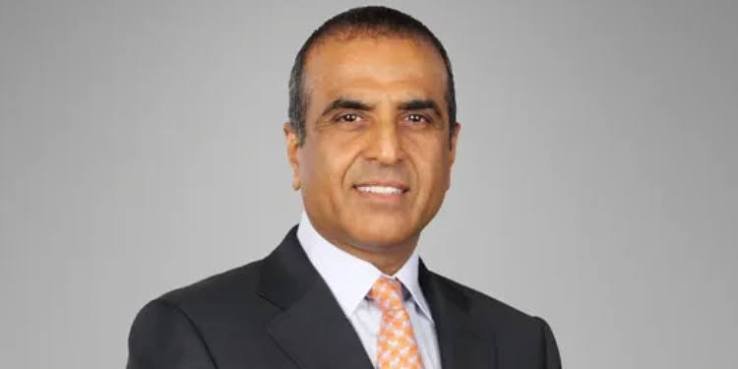
Oct 16,2026: Mukesh Ambani’s Reliance Industries on Friday responded to Elon Musk’s recent remarks about the Indian market and its role in Starlink’s entry into the country, saying it has never feared competition and that every player must abide by Indian laws and policies.
In a statement, Reliance said it welcomed competition in satellite communications, including from Starlink.
It also said all companies, Indian or foreign, must follow the same regulatory process, pointing out that Jio’s satellite services were also awaiting clearances.
The response follows Musk’s remarks accusing the Indian government of favouring established telecom operators over competing players.
The dispute resurfaced after Lauren Dreyer, SpaceX’s vice-president of Starlink Business Operations, told attendees at the India Mobile Congress (IMC) 2026 that the company was ready to begin operations in India but was waiting for regulatory approvals.
“In light of recent remarks about Reliance and the Indian market, we wish to place the facts on record. Like every Indian enterprise, Reliance has grown in an India that welcomes investment and innovation, homegrown or international, that improve the lives of the people,” Reliance Industries said in a statement on Friday.
The company also defended its record on competition, highlighting Jio’s entry into the crowded Indian telecom market in 2016 without any existing customers. It said Jio had since attracted more than 530 million subscribers and helped make digital connectivity more affordable.
“At Reliance, we have never feared competition. We see it as the truest test of who serves the customer best. Jio itself entered India’s crowded telecom market in 2016 as the newest player, with not a single customer. In just ten years, Jio has earned the trust of over 530 million customers and given Indians some of the best digital infrastructure and most affordable data in the world,” the company stated.
Musk first alleged on his social media platform, X, that Starlink was being blocked by certain “oligarchs” keen to keep a “monopolistic chokehold” on Indians.
India’s ministry of communications hit back the next day, calling any suggestion that the framework or its application was unfair or discriminatory “baseless and misconceived” and that the security assessment of the three entities was underway, with all at “broadly the same regulatory stage”.
On October 8, the communications ministry rejected the charge, calling suggestions of discrimination “baseless and misconceived.” It said India’s satcom framework was fair and non-discriminatory,
Hours later, Musk escalated his attack, saying Starlink was licensed to operate in more than 165 countries and had spent five years complying with Indian rules. “So why still no licence? Is Ambani the real boss of India?” he asked, referring to Reliance Industries chairman Mukesh Ambani.
Ahead of Musk in queue: Sunil Mittal
Bharti Airtel chairman Sunil Bharti Mittal on October 14 said his satcom venture Eutelsat OneWeb is significantly ahead of Musk’s Starlink in the satcom queue in India, with the licence applied five years ago, and added that he would be happy to receive the go-ahead at least a few days before the US tech billionaire.
“I think I am significantly ahead in the queue from him. I applied five years back,” Mittal said at the Bloomberg New Economy Forum 2026.
September 15, 2026: U.S. Air Force Secretary Troy Meink on Monday revealed that the United States has deployed space-control weapons in orbit, while also disclosing new milestones for military satellite programs tied to missile defense and long-range targeting.
But it has not disclosed what those weapons are, how many exist, which satellites carry them, their orbits, or when they were launched.US Secretary of the Air Force Troy Meink said the “on orbit” weapon was necessary to safeguard US forces against hostile enemy action.
Speaking at the Air, Space and Cyber Conference on Monday, Meink said the US was ready for “evolving threats”, but did not elaborate on the weapon’s capabilities or when it was put into orbit.
Senior military leaders have previously said they planned to boost military capabilities in space, citing Russian and Chinese programmes developing ways to attack and disrupt US satellites in a future conflict.
China responded on Tuesday by warning against an “arms race” in space.
“We urge the US side to stop expanding its military capabilities and preparing for war in outer space,” AFP quoted a foreign ministry spokesman as saying.
Details of how the weapon operates have not been disclosed by US officials.
A US Space Force spokesperson said: “Space control encapsulates the mission areas required to contest and control the space domain – employing kinetic and non-kinetic means to affect adversary capabilities through disruption, degradation and even destruction, if necessary.
“These capabilities can be employed for offensive and defensive purposes at the direction of combatant commands.”
An expert on military uses of outer space noted that “precious little” was publicly known about the technology, and told the BBC there could be a “whole range of different weapons systems”.
Speaking to Radio 4’s Today programme, Dr Bleddyn Bowen, from the Royal United Services Institute (RUSI), said he was “totally guessing” but that the US could have been referring to “some kind electronic warfare or radio jamming platform”.
That would be the sort of weapon that already exists on Earth and could disrupt radio communications, Bowen said.
An alternative would be “a kinetic kill vehicle of some sort – so a vehicle that would release a projectile of some sort that would ram into a satellite and destroy it”.
But this was less likely because such a physically destructive tool would be capable of creating a lot of debris, Bowen added.
The Trump administration has said that space-based capabilities – and interceptor missiles – are a crucial part of its planned “Golden Dome” defence system to protect the US from missiles and other airborne threats.
Last year President Donald Trump issued an executive order underlining the US Space Force’s role in not only defending assets, but also as an attacking force.
The US Space Force – the first new branch of the US military for more than 70 years – was launched in 2019 as a way to protect American assets in space, including hundreds of satellites used for communication and surveillance.
A 1967 treaty banned weapons of mass destruction in orbit. Since then, key powers including the US, Russia, and China have been exploring other capabilities outside of the treaty, such as targeting rivals’ satellites – which are key for military communications, surveillance and navigation.
In early February, it was revealed that two Russian satellites had likely intercepted the communications of at least a dozen European ones since Russia’s invasion of Ukraine in 2022.
Such interceptions may have allowed Russian intelligence services to read the sensitive data they transmit, or hypothetically, even to take control of the satellites.
In 2024, the US said Russia had launched a satellite which it believed may be capable of attacking other such probes. Russia did not publicly comment on the issue.
The US Space Force says China “develops and operates space and counterspace capabilities as part of a military modernisation strategy,” while Russia “views space as a warfighting domain and believes space supremacy will be a decisive factor in future conflicts”.
Moscow, Sept 8,2026: Artificial intelligence poses an existential threat to humanity, which must be addressed promptly, UN High Commissioner for Human Rights Volker Turk said. “I share the concerns of industry insiders that advanced AI could pose an existential risk to humanity … I am calling here, today, for an all-out effort to put cast iron guarantees in place around the safety and security of AI, before it is too late,” he said at the 63rd session of the Human Rights Council, as quoted by his office on Monday.
Turk added that he would send a corresponding letter to all leading AI development companies in the coming days. At the same time, he said that only a handful of people hold “almost unlimited power over AI.”
“At a minimum, we need countries hosting AI and those involved in its supply chains to come together around agreed red lines,” Turk said. In December 2025, Chief Economist for the Asia-Pacific Regional Bureau of the United Nations Development Programme (UNDP), Philip Schellekens warned that the military application of AI could pose an existential threat to humanity and lead to mass casualties, stressing the need for highly responsible regulation.
HORROR’ AT AUTONOMOUS DRONES
“I share the concerns of industry insiders that advanced AI could pose an existential risk to humanity,” Turk told the body in Geneva.
“I am calling here, today, for an all-out effort to put cast-iron guarantees in place around the safety and security of AI, before it is too late.”
Turk did not elaborate on the nature of the risks but a spokesperson for his office said failures involving powerful AI systems could disrupt critical infrastructure and democratic institutions.
She referred to the “dangerous agent-training behaviours” in July’s so-called Hugging Face incident where a swarm of OpenAI agents hacked an open-source platform, saying it suggested that frontier AI capabilities are advancing faster than the safeguards.
Turk warned that just a handful of men held “almost unlimited power over AI” without naming any. Top AI companies include Meta, Anthropic, OpenAI and Google(GOOGL.O).
“At a minimum, we need countries hosting AI and those involved in its supply chains to come together around agreed red lines,” he said.
In January 2025, UN Secretary-General Antonio Guterres called uncontrolled AI an existential threat, alongside climate change and nuclear weapons.