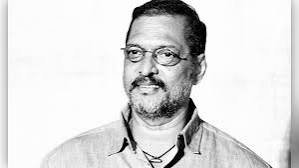
Actor Nana Patekar passed away
Goa,Oct 08,2026: Veteran Actor Nana Patekar passed away at his Goa residence during the early hours of Thursday.
Actor Nana Patekar was known for his versatility and powerful screen presence. Mr. Patekar’s contribution to Marathi and Hindi cinema and theatre were immense. He was 75 years old.
Patekar was known for his roles in several Hindi and Marathi films. His notable Hindi movies include “Parinda”, “Prahaar: The Final Act”, “Tirangaa”, “Krantiveer” and “Khamoshi: The Musical”.
Patekar was a recipient of three National Film Awards, several Filmfare Awards, the Maharashtra State Film Award and Filmfare Awards Marathi. He had also received Padma Shri, the country’s fourth-highest civilian honour.
President offers condolences
President Droupadi Murmu said in a post on X, “The passing of veteran actor Nana Patekar is a great loss to Indian cinema and offered her heartfelt condolences to his family and admirers.”
Patekar to be cremated with full State honours
Maharashtra Cultural Affairs Minister Ashish Shelar said that the mortal remains of Nana Patekar will be cremated with full State honours.
The actor passed away during the early hours on October 8, 2026. He was brought to a private hospital after he was found unconscious at his apartment in Dona Paula, near Goa’s Panaji region.
The body has been sent to Goa Medical College and Hospital, Bambolim, where the postmortem would be conducted to ascertain the exact cause of death.

Ottawa : Shots rang out at a school in western Canada today, leaving four people dead and several others critically injured . Authorities did not disclose the age and identify of the shooter and victims.
Several witnesses reported seeing a “boy,” who was either a student or formerly attended the school, opening fire inside the building.
“I ran outside the school,” Noel Desjarlais, a Grade 10 student at the school, told public broadcaster CBC.
“There was lots of screaming. There was about six, seven shots before I got outside. I believe there was more shots by the time I did get out.”
The town’s hospital told AFP they were treating the victims for gunshot wounds.
The high school and a nearby elementary school were locked down as police responded.
The suspected shooter was taken into custody after police received an emergency call about “a person discharging a weapon in the community,” RCMP superintendent Maureen Levy told reporters.
“Obviously, this is every parent’s worst nightmare,” said Prime Minster Justin Trudeau.
Trudeau held a news conference in Davos, Switzerland, where he was attending the World Economic Summit, to announce the death toll in the remote northern aboriginal community of La Loche in the province of Saskatchewan.
Trudeau said five people had been killed and two others were in critical condition but a Royal Canadian Mounted Police spokeswoman later revised the death toll down to four.
La Loche students said they heard six or seven shots ring out at around 1:00 pm local time (1900 GMT).
Located deep in Canada’s northern boreal forest, 600 kilometers north of Saskatoon, this town of about 3,000 is particularly isolated and authorities had to send in police reinforcements and dispatch a medical helicopter to airlift some victims to a hospital.
On December 6, 1989, a 25-year-old man opened fire at the Polytechnic School in Montreal, killing 14 people, including 10 female students.
Unlike in the US, shootings are rare in Canada, where firearms are more regulated than south of the border.
@Agency report